Paying it Forward: Terry Brown of Asana Partners

I think one of the most impressive things someone can do in their career is pursue a new passion outside of their comfort zone after doing the same or similar thing(s) for decades.  Peter Drucker (father of management thinking) wrote one of my favorite Harvard Business Review articles called Managing Oneself.  In it, he talks about this idea and how one can re-invent themselves for the second part of their life and career.  Unfortunately, many people aren’t proactive enough earlier in their lives to set themselves up to pursue what he likes to call “second life endeavors”.  Drucker says,

 “People who manage the second half of their lives may always be a minority.  The majority may “retire on the job” and count the years until their actual retirement.  But it is this minority, the men and women who see a long working-life expectancy as an opportunity both for themselves and for society, who will become leaders and models.”

I had the great pleasure of spending time with a wildly successful commercial real-estate executive who is in the midst of living out his second life endeavor.  As impressive as his accomplishments were at major large organizations earlier in his career, starting his own venture (that has also happened to be wildly successful) resonates with me on a different level.  Sure, I’m biased. I love stories of entrepreneurs starting things from scratch and creating value for others in the process more than the average person. However, when you meet someone who created their business to help other people and future generations of industry professionals be successful, you cannot not be inspired by their pursuits.

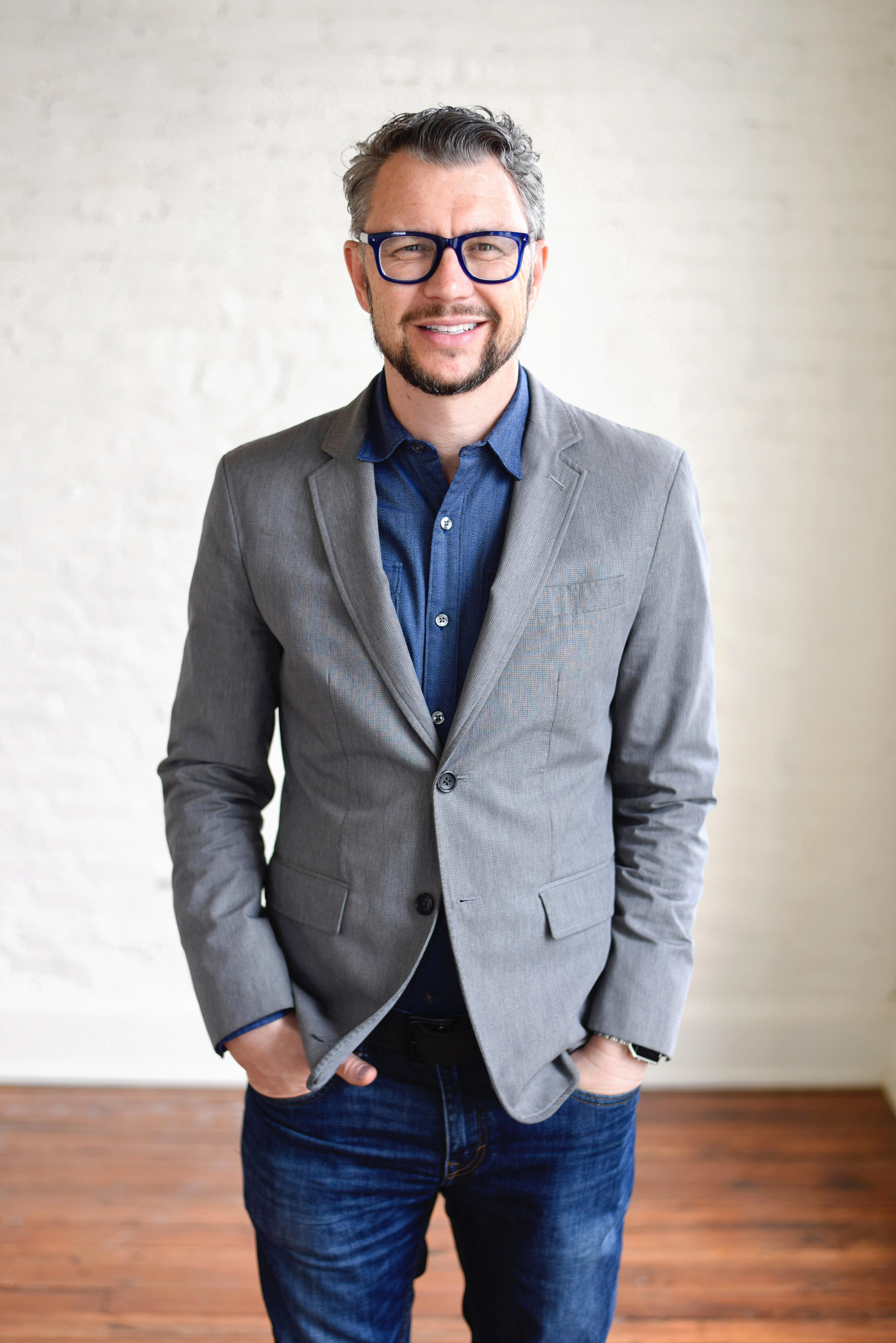
Meet Terry Brown, Managing Partner and Co-Founder of Asana Partners, a fast-growing retail real estate private equity investment platform that owns some of the more distinct retail properties across the U.S., including those in Atlanta.  Terry achieved incredible success at Arthur Andersen, becoming the CEO of Andersen’s U.S. Merger & Acquisitions Subsidiary – and then with EDENS, one of the largest retail real estate companies in the U.S., as its Chairman and CEO for 13 years.  To the average person, finishing his or her time as CEO of one of the largest institutionally capitalized real estate companies in the U.S. might have led to years of relaxation, travel, golf, etc. For Terry, at age 53, he wanted much more. His desire to position others for success and to inspire young professionals led him to re-invent himself and take on a challenge he had never experienced before: starting a business from scratch.  Now, in less than five years, this business (started from scratch) has raised more the $2.0 billion of equity for investment and has invested more than $3.5 billion in real estate in more than 40 urban neighborhoods across the country.

We sat down with Terry to hear more about his experience running companies both large and small and some of the lessons he’s learned along the way through leading others and investing in future opportunities.  Fortunately for all of us, our transcript below is a picture into an incredibly wise business mind and forward-thinking leader in the commercial real-estate industry.
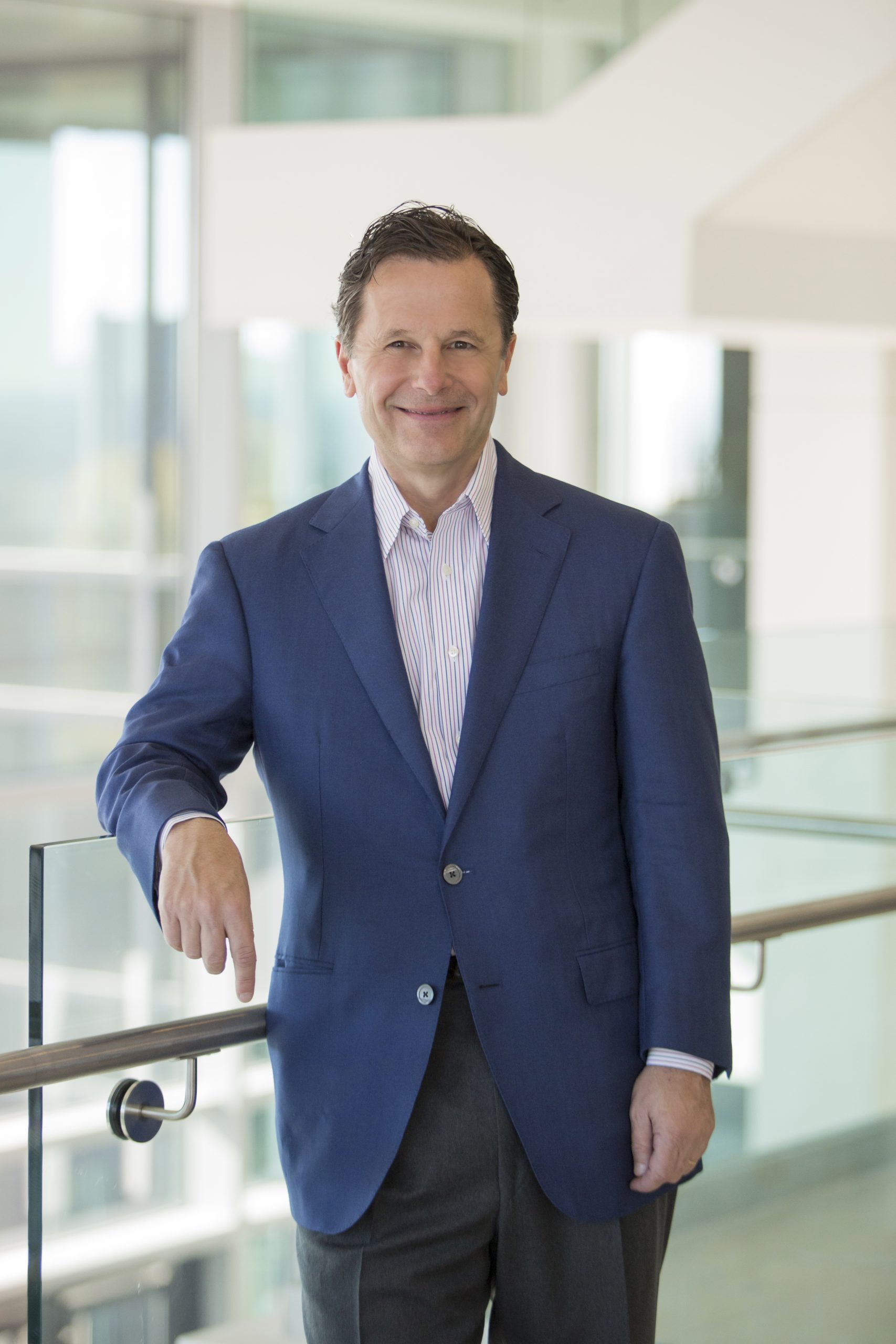
Terry Brown

Managing Partner and Co-Founder – Asana Partners

Charlotte, NC

Tell me a little bit about your upbringing and how that influenced your desire to do what you’re doing now?

I was born and spent my childhood years in Elberton, a small town in Northeast Georgia. No one in my family had ever gone to college. My father was with the postal service for more than 45 years, and my mother was a stay at home mom. It was always important to my parents that I stay focused and accomplish those things neither of them had the opportunity to achieve.  And so, my father pushed me aggressively early on to set goals, to achieve, and work harder than others at everything. My parents also infused in me a belief that if I did those things, I could outcompete, outperform and succeed at whatever I dared to dream.

As importantly, my parents really believed in serving others and treating people in all walks of life well.  Elberton is a small town. Community is important; a person’s reputation is everything; taking care of other people is really important; family is important; and being spiritually grounded is critical.  In fact, my basic core values were instilled in me long before I left Elberton for college. 

Growing up in Elberton, the only people there that had great educations, who traveled and were financially secure, were doctors and lawyers.  So instinctively I believed the right professional path for me was to become a doctor. I went to the University of Georgia to study pre-med until I realized that I could not handle the sight of blood.  As I gained an understanding of all of the professional opportunities in the business field, I quickly switched my major.
How old were you when you started at Arthur Andersen?

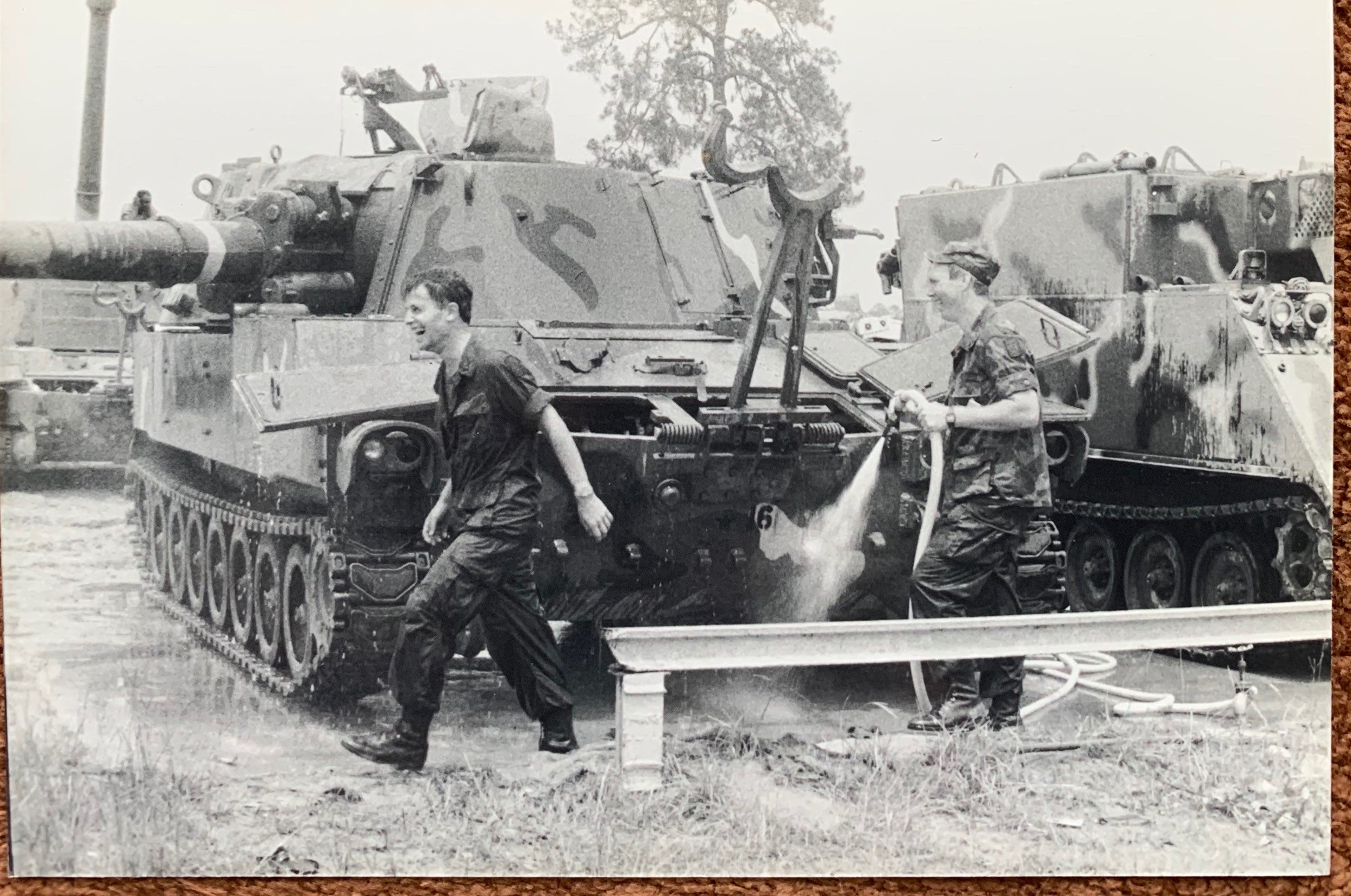
I went to UGA on an Army ROTC scholarship and it was a great way to pay for college.  After graduating from UGA, I completed my active duty service obligation at Fort Sill, Oklahoma, and then returned to work at Arthur Andersen in Atlanta. 

My undergraduate degree was in accounting, but I had no idea what I wanted to do (I would argue at 57, I still don’t really know what I want to do).  Accordingly, I always took an approach of leaving as many professional doors open as possible. Arthur Andersen created more opportunities than I could ever have envisioned when I began. Quickly I discovered, or at least my supervisors did, that I was not a very good accountant – when you have ADD, accounting is a tough discipline in which to excel.  I also discovered that I had much more of a passion for strategy, business, finance, and organizational development.

After a few years at Andersen, I transferred into a new business the firm was launching globally.  The new area would provide merger and acquisition and capital markets advice to middle market clients on a global basis.  I was one of the first people inserted into this new division – and certainly the most inexperienced – but it provided an amazing platform for me to grow professionally. Over time Anderson named me CEO of the U.S.-based broker-dealer organization and part of the global executive team of a business that grew to more than 1,500 professionals.

I was fortunate at Andersen to have several mentors over the course of my tenure that took a very active, personal interest in me.  I frequently tell people, “No one is smart enough in life to succeed without the help of many others.” There are a few Bill Gates or Steve Jobs types, but I certainly was not one of those.  I was the beneficiary of the inculcated training and mentoring culture at Andersen. It was my first view of generational succession and sustainability.   

During my 17 years at Andersen, it seemed like I had 10 different professional roles.  I never for a day felt that I was not learning and growing, personally and professionally.  Many people around me helped me succeed there – most of whom I remain close friends with today.

So, fast forward a little bit, you move into a role as the CEO of EDENS. How did that come about?

Starting in 1994, EDENS was one of my clients at Andersen. I worked directly with the CEO/Founder between 1994 and 2002, advising the company on a number of large transactions to raise institutional capital to recapitalize and grow the company.  Over those years, I developed a strong relationship with him, gaining his trust and earning credibility. In late 2001, when he was 60, he asked me to succeed him as CEO to develop a new strategic plan and create value for the shareholders. 

As the opportunity with EDENS was developing, Andersen began to unravel in the wake of the Enron scandal.  It was clear to me that I would need to move on to a new opportunity. Doing so with a Founder/CEO who was a known commodity and a company that I knew well from the outside seemed the most logical to me.

Also, as much as I loved Andersen, the pace and especially the international travel was starting to take a toll on my health and life at home.  So the opportunity to move to a bit smaller city and exit the client service business (because clients really control your time) was attractive.  Furthermore, the ability to focus my energy on creating strategy, rebuilding and transforming an already successful organization and yet have more control over my own schedule was important. All of this made the move to EDENS an easy decision.  Because I was so intimately involved with the company, I knew exactly what I was walking into. I had a strong sense of what we should do strategically to change directions, elevate our game, build a generationally sustainable business, and create much more value for our stakeholders.
Speaking to work/life balance, what advice do you have for young people about trying to manage that?

Work/life balance has consistently been the single biggest challenge for me.  It seems Gen Z and the millennials generation do a much better job with this challenge and make the necessary sacrifices to have better balance. In hindsight, the single career attribute I would change would be related to work life/balance.  Physical fitness, exercise, nutrition, being “present,” investing in relationships with friends and family – these are the ingredients for a better and happier life.

Realistically, starting and building a successful business requires sacrifices by many people – those involved directly and peripherally. You have to work harder, think more, and invest your heart and soul into driving a successful business. Creating a successful business and growing it will never be a 40 hour a week job.  So just remember that work/life balance has to be measured over a period of time, not in a day. 

The advice I give to others is this: define who you are and what you want to be about professionally and personally, then go from there.  One thing I learned early is that people actually need real vacation time. When you’re young, you don’t grasp the importance of recharging. You think you can just keep working and working.  Professionals need physical and mental recovery and periods of restoration.

How long were you at EDENS?

13 years.

When you were there, did you ever have the itch to leave and start something?

I would like to say that I always had an itch to do it, but that’s not true. I grew up in a family where my dad worked at the same place for 40+ years. If it were not for the Enron related demise of Andersen, I probably would still be there. I loved the place and it created huge opportunities for me. I envisioned myself as a “company” man.

After leaving Andersen, we began to quickly transform the EDENS business, modified our investment strategy, decentralized the operations, and shifted the culture. We transitioned from a family-owned business orientation to a performance-oriented culture, while retaining those legacy attributes that cause people to want to work with each other and to genuinely care for each other.   That shift was a tough, tough process to lead. I was extraordinarily lucky. The people at EDENS both then and now are amazing. Those people were talented, ambitious, creative, and committed to becoming a company recognized as high-performance – but with a differentiated approach to doing business. We tripled the size of EDENS and delivered very strong returns for our shareholders.  We maneuvered our way through the financial crisis from 2008 through 2010 and positioned the business for the post GFC era.
But over time, my focus and time became consumed by dealing with investors.  I had very limited time to be out in the marketplace. And I became further and further removed from the things that I enjoyed – developing external relationships, motivating and mentoring our people, driving strategy, and spending critical time with retailers and property owners.

Reflecting back on that period, 13 years is a long time to lead a single business. My energy, passion, and conviction were impacted by longevity and those things I was forced to focus on.  Now I see that I needed renewal. I needed recovery. I needed to think through what I wanted to do with the last chapter of my professional life. I wanted to get back to the things that I enjoyed and that gave me such satisfaction.

And so, in late 2014 and early 2015, I started to think about what I could do, where the opportunities in the marketplace might be, who I wanted to be in business with, and which opportunities would allow for economic success and personal contentment.

Interestingly, EY named me a finalist for Entrepreneur of the Year in 2011 in the real estate industry. The EY recognition was around changing and shifting the strategy of EDENS and being an entrepreneur within that organization.  However, four years later, I was forced to deal with the reality I had never been responsible – directly responsible – for making a payroll. I never had spent a night wondering where the capital was going to come from to invest in a business in which I owned a significant stake.  I was considering doing something that I had never done.

Regardless of this inexperience, we launched Asana Partners in the fall of 2015 with only the capital of the three founders. We had confidence that we could create a lot of value for investors and a valuable platform.  We had a strong track record recognized within the industry. We had confidence that we could raise significant capital. We believed that we had a differentiated and compelling investment thesis. And we believed we could do business differently from our peers.
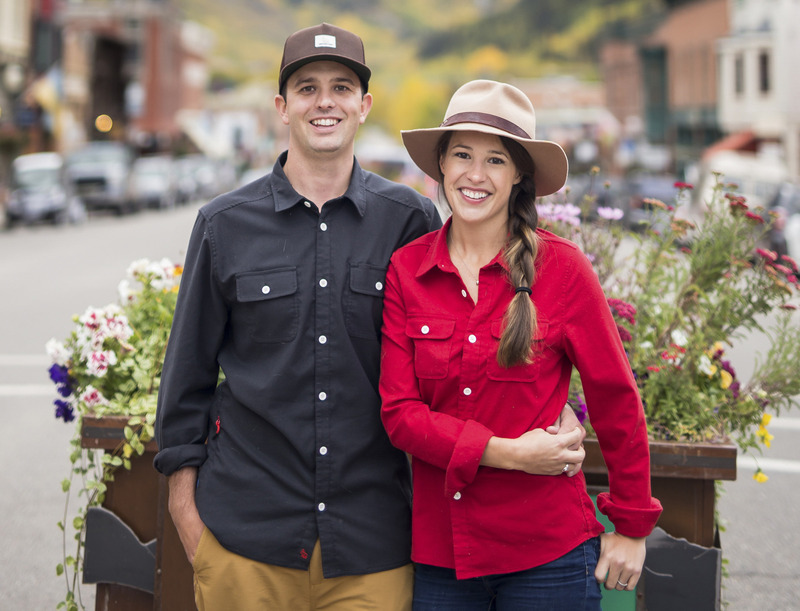
Our objectives were simple.  We wanted to have fun.  We wanted to have an amazing reputation.  We wanted no drama internally or with our partners in the marketplace.  Our objective was to create a platform where talented professionals could grow and succeed and work there for a long time.  We wanted to build a business that could evolve as investment opportunities change and as the ambitions and goals of the Asana stakeholders change and evolve.  To be successful, our integrity and performance standards would have to be high, the Asana reputation pristine, and the economic outcomes for our investors and people superior.

I really like those values or ideas you mentioned you infused into the business right from day one. What were some of the other things you did early on and day-to-day that helped establish that structure of those characteristics of the culture?

Well, when we started the business, we thought we’d have about 10 or 12 people. We wanted to fit everybody who worked at the company in a minivan.  Now, we have more than 70 people in offices on the East Coast and in Los Angeles. So, the business has grown more quickly than we initially expected, and the investor support has exceeded our early expectations as have the quality investment opportunities.  We also have evolved to meet the requests and expectations of our investors.

What’s key for us is trust among our people.  Our partners, the entire executive team, our staff and associates – our interests are aligned. I trust the judgment of our people. I trust that my interests are the same as our people. We may disagree on the things we need to do or how things should be done. But I do believe the intent of our people is pure — let’s call it “purity of purpose. “ 

I think I’m the only person at Asana Partners who is over 50 years old, so it’s a very young culture. We almost always take potential over experience when selecting the members of our team.  If we have really bright and ambitious people with aligned interests who do business the right way, we will certainly do great work. We will make mistakes for sure. But we enable people to make decisions in the marketplace at a very early age.  For our senior people, we spend much of our time supporting the younger professionals. That support could be as simple as a request to make a call, fly to a meeting, send someone an email, or providing real time deal transaction advice. There’s much joy in watching people build their own place in the business and build their own industry reputations. 

Not every day has been perfect, and we certainly have our issues. But compared to when we started, I have way more confidence today that our approach to building a high performance, sustainable organization will work.

You talked earlier about success and how that looks different for different people. What does success mean for you and how has that changed if it’s changed?

With age and time, success seems much more a matter of contentment and satisfaction, a happiness with who you are, and where you are, much more so than financial success.  My definition of success has evolved to be much less about business headlines, much less about personal belongings. Today it’s about people who make an impact. Teachers, coaches, doctors, nurses, missionaries and others who really do important things to change lives and communities – the work of these people helps keep success as a business CEO in perspective.

At this point in my career, what gives me the most joy is seeing young people succeed in business and life. I told you before I had five or six people who made an extraordinary impact on my professional career. I talk to most of them about every month. These long-standing relationships are very important to me. These are people who have changed the trajectory of my life and in many respects the lives of my children. I work hard to make sure they understand my appreciation and loyalty.

And this is what drives me to do the same for others.

Do you think in order to create that environment and sustain it, that hiring is more important or the actual systems and culture that’s in place?

Yes – hiring the right person is more important than processes or systems. People make the culture.  Every hire influences and changes the overall organizational culture. We cannot change who people are, what they believe, their integrity, their ambition, their intellect, their personality, or their engagement. There are some amazing people who are looking for a place that supports and enables long-term professional growth and opportunities.  Finding those people who will flourish in our environment is important. If a professional needs to sit with a supervisor each day, needs a to do list, is timid about decision making, or is afraid to fail, then Asana is likely not the right place for him or her.

What has been the greatest failure you’ve experienced at this point of time in a business sense?

I was one of some 1,700 partners at Andersen.  Being part of a business that goes away, a place that you love and where you love the people, that would have to be the most significant business failure I’ve experienced. I did learn from that very difficult period.  I learned about leadership during periods of crisis, economic alignment, being a partner, the power of the media and much more.

Leading EDENS during the financial crisis of 2008-2010 and my failure to see the financial crisis coming was also a failure on my part.  One of the most difficult things you have to do is down-size a business in a challenging environment.  Terminating employment – people whose families counted on them for their livelihood – is so tough. Knowing that there were not a lot of other jobs or opportunities available to those people made the decisions more difficult.  I tried to handle the necessary decisions in a way that minimized the damage to those families. At the business level, we managed through this period successfully, but it was very painful and certainly caused me to feel that I had failed.

I’m guessing there’s a lot of emotional and mental stress and anxiety that happened after the financial crisis. How did you work through that?

As much as I agonized about the decisions I was forced to make, a lot of talented people actually found themselves in better professional situations over the long run.  As an organization, we had many resourceful people. They were very entrepreneurial and could find opportunities in distress. A lot of them bounced back quickly, capitalized on great opportunities, and achieved good success. 

As a business, we could not linger in the pain of those decisions.   We had to move forward and immediately focus on how to execute our strategy and create opportunity in a recessionary environment. We acted quickly and decisively with the support of our investors.  By 2010 and 2011, we were developing real estate at a time when there was not a lot of new development. We weren’t heavily leveraged, and we had investors who believed in our strategy. We were able to build when others were not building and deliver new space to retailers as the economy recovered.  Our strategy across the downturn created a lot of shareholder value in the ensuing years and energized the organization. We also went through a branding change and organizational shift – a re-evaluation of who we wanted to be and what we wanted to be about – that energized our people. Looking into the future is always more energizing than reevaluating history.

What are some of the thought processes you use to decide whether or not you want to get involved in something – whether it’s a real estate deal or the business to invest into?

Making a decision about real estate investments is a lot easier for me than non-real estate investments. Outside of real estate, I have had enough winners and losers to at least know what not to do. I have a couple of rules I always try to follow:

First, I don’t invest in things that I don’t understand or cannot explain.  So, the things I invest in are simple things like ice cream or packaging or vitamins or other businesses whose products or services I can see and touch. Second, I invest alongside smarter people, and I choose not to be the only investor in a business. Third, I only invest in businesses where I believe in the people. The people have to have the right strategy, and they need the experience to execute and the capacity to attract other good people.  Finally, I must be absolutely sure my interest as an investor aligns with those of the people driving the business.

You’ve partnered with a lot of successful brands either through real estate or as an investor. What are the common characteristics that you see across those companies that have been really successful?

The one factor that is absolutely required for successful brands today is emotional connectivity to consumers.  Those emotionally connected brands have a story that resonates and is communicated consistently with clarity. Consumers expect a story, whether it is in the food they eat, the shoes they wear, the cars they drive, their exercise methodology, where they travel, etc. 

It’s this story that makes the business interesting. I was with the founder of an extraordinary high growth business a few weeks ago. The founder told me that she spends 3.5 hours per day on social media connecting directly with her consumers. Think about the story she’s creating!

Stories drive the retail industry today. Take fitness attire – Lululemon, Outdoor Voices, On Cloud, brands that are proliferating. Each has its own unique and well-known strategy built around a story.

There was no prerequisite for this connectivity with the consumer a decade ago, maybe even just five years ago.  Much of the consumer is social media driven. Think about the power of it, the ability to create and communicate a story way more quickly, with much less capital.  But the price for having this opportunity to connect with our consumers is expediency. You have to continually evolve – quickly – because consumers will disconnect emotionally as quickly as they connected.

You think all those things you just mentioned will hold true in five or ten years?

I believe that brands and consumers will be connected emotionally even more so in five to ten years.  Nimble, well capitalized brands are going to have a lot of success. Businesses, especially mega businesses, that do not continually reinvest in their brands, do not stay true to their consumers, or do not live up to their brand promise will not survive. The millennials have driven much of the brand story demands over the last decade, but the next generation of consumers is demanding and will require even more customization and more connectivity.

What are some resources or things that you use on a weekly basis to kind of stay in touch with what’s going on and what’s not?

I am a voracious reader. We do business in more than 25 MSAs across the United States.  As a result, I spend the first two hours of each morning with a cup of coffee and my iPad.  I plow through ten or more city business journals/feeds from across the country a day. In our industry sector, we have to read a variety of business magazines and news.  Travel magazines, fashion magazines, restaurant magazines, etc. are all part of the business. We have to absorb and process that information to be able to determine what is relevant and what is not relevant. So, I bury myself in this material to stay on top of constantly changing consumer demands, much of which is technology enabled. 

Separately, I believe that every experienced, older business person’s worst fear in life is becoming irrelevant.  To remain relevant, you have to work harder and smarter. The worst thing when you are 57 years old is to have some 25-year-old think you’re a dinosaur.  Staying relevant at work and to my family is one of the primary drivers of my motivation.

Last question, what non-business thing are you into right now?

The thing I am going to be into (which no one believes) is a farm.  I want to have a farm with a greenhouse, a tractor that I get to drive, and a place with a few animals. I want a place where I get my hands dirty and one where there are no mobile phones.  Of course, I plan to grow and market a few premium, award-winning food products – ones with great stories, no less.


For information on Terry Brown and Asana Partners, be sure to check out their website below:

Asana Partners

Building Brands Worth Talking About: Jesslyn Rollins of BIOLYTE


What does it take to build a brand worth talking about and supporting? If you’ve ever listened to the How I Built This podcast then you’ve heard the stories of successful brands rise to cult status.  What was it exactly that got them there?  When I hear those stories, something about them feels different than other founding stories.  They weren’t just entrepreneurs trying to figure out a way to disrupt an industry to make money.  They didn’t even always have the best product on the market.  Yet, over time, their brand became the preferred choice of many.   What was it that set them apart?
 
We briefly touched on what it takes to build a cult following in our last interview with Dan Garrison (who had great insight), but it’s something I’ve been interested in exploring more deeply for some time now.  After having worked with one particular brand for the last 6 months, I’m starting to get a better idea of how to answer those questions.
 
Let’s start with this: the founder/businesses’ vision and motivations behind starting the business are intertwined with how a business operates everything.  There’s no separating the two.  That means the vision gives a business initial momentum and lays the groundwork for the foundation of how a company operates (good or bad).  If there’s a good and strong foundation, the vision will continuously serve as a memento for inspiring passionate work and guide how decisions are made. 

What this all means: when a business is born out a deep understanding of what a customer needs, created by great people, and built for the purpose of having a positive impact, it’s a beautiful thing.  The business becomes so much more than a business.  It’s a living and breathing entity that gives life to those involved in the day-to-day operations and becomes infectious to those on the outside.    
 
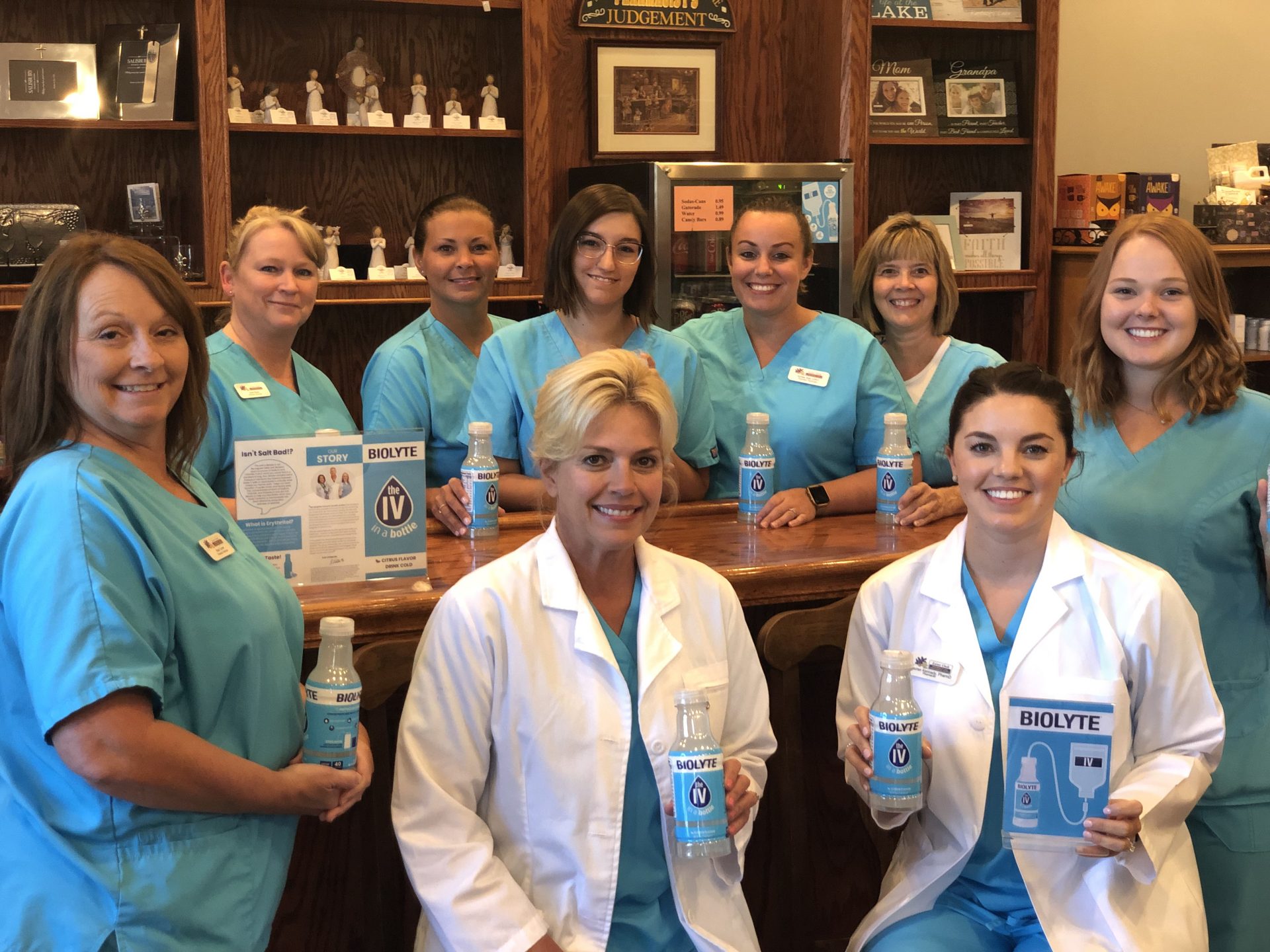
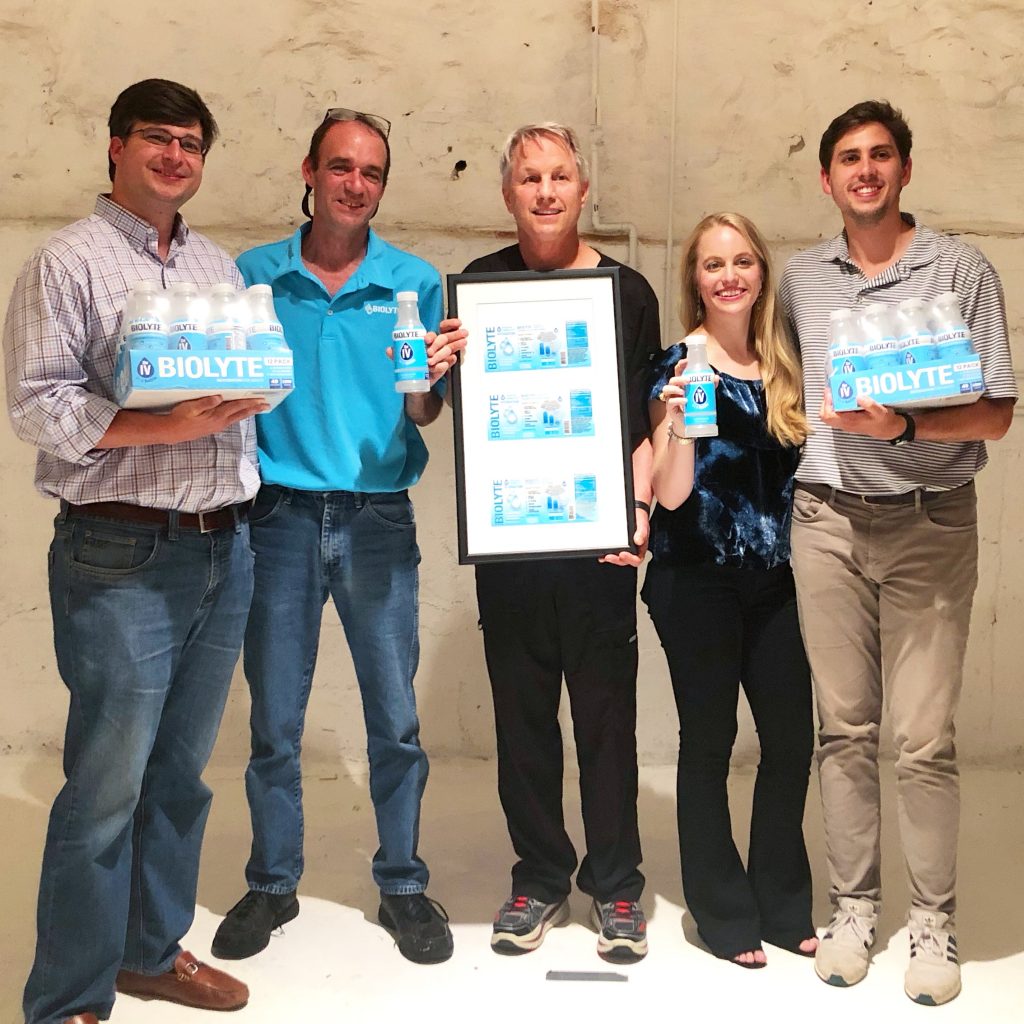
Before I go any further, meet Jesslyn Rollins, Director of Sales of BIOLYTE.  Jesslyn is the daughter of the Anesthesiologist who, a little over 2 years ago, created the best rehydration product in the market.  The idea of BIOLYTE was born out of a desire to help Jesslyn’s mom, Jeanine Rollins, cope with the debilitating effects of chemo treatments.  Fast-forward to present day, with Jesslyn running the show, BIOLYTE has become a product that is quickly gaining a large cult following.  The product is amazing and if you haven’t tried it you should.  However, as amazing as the product is, without the story behind the product and how that has shaped the organization, it would not be where it is today.  Jesslyn and the family are passionate about improving people’s lives and that shows up in weekly meetings, email threads, and decision-making.  As someone on the inside, it’s been eye-opening to see in action.  Last month, I asked Jesslyn to share about some of the beginning days of BIOLYTE and how her passion for improving people’s lives has been the seed that’s helping grow a brand worth talking about.

Jesslyn Rollins

Director of Sales of BIOLYTE

Atlanta, GA

Let’s start with this, how and why BIOLYTE was created?


BIOLYTE was created because my mom had breast cancer.  When she was going through chemo treatments, she was having a really hard time getting treated regularly because she was so dehydrated and sick.  My sister and my dad were buying her all kinds of different sports drinks and nothing was working.  At the time, IV hydration stations had just started getting popular and my sister asked my dad if he knew about any product in the market that would, in a way, “bring the IV bag” home to mom. 
 
My dad is an Anesthesiologist and knows a ton about IV fluids and what it takes to get your body back to homeostasis.  So this question really peaked his interest and he started doing some research.  Over time, he realized there wasn’t anything on the market like this.  After that, my dad and sister got to work and that’s really how it all got started. 

So, for those who don’t know much about the product, what makes it similar to an IV bag?

BIOLYTE is the first rehydration drink with the same amount of electrolytes as an IV bag. That’s the equivalent of drinking 7.5 sports drinks or a jug and a half of the leading children’s rehydration products.  Dad also included other ingredients that help you feel better when you’re severely dehydrated; ingredients that help clean out your liver, helps with nausea and give you a natural boost of energy.

What were you doing at the time when this was going on?

I was at the University of Georgia studying Theater and Communications having absolutely no idea that my sister and my dad were working together on this for 4 years.

Ok, so four years. That’s a long time. What all was happening during that period?

So, BIOLYTE’s not the type of product that you can make in your kitchen, you know what I mean? They spent a lot of time looking into beverage groups that could help them make something that actually tasted good and bring it to market.  It took a really long time to get the flavor just right because IV fluid tastes like you’re drinking the ocean.

Fast forward a little bit, you found a beverage manufacturer to work with and y’all are figuring things out. How long did it take before the manufacturer and your dad started to believe this could be a big thing?

This is where I step in the story. By this time, I had graduated and was working as a recruiter in Atlanta.  One night, my dad sat me down and told me that they had been working on this thing called BIOLYTE.  He went through his pitch about how it was the first hydration drink with the same amount of electrolytes as an IV bag.  Then, he told me he wanted me to be the Director of Sales because he thought I would be good at it.  No joke.  I was offered the job as easy as that (laughing).
 
My initial response was, “I really appreciate the vote of confidence but I have no idea if this stuff works.  I need to at least try the product out before I have a clue of what I could be getting myself into.”  My dad was fine with that and told me to try it when I needed it.  This is off the cuff, but he told me that he would recommend trying BIOLYTE after having one too many glasses of wine.  He said that the way our body metabolizes alcohol would put my body into a state of dehydration and it would be a perfect time to see if the product “worked.”  He said, unlike an IV bag you won’t feel it immediately, so be sure to give it about 30 minutes.
 
A few days after this, 10 pallets of BIOLYTE showed up in a tractor-trailer at our house in Atlanta (laughing).  So, I went out with some friends that night, drank too much, and woke up the next morning for work with a pounding headache.  I opened up a BIOLYTE, poured it over ice and drank the whole thing.  10 minutes passed by, and I’m still feeling bad.  20 minutes go by and I’m thinking to myself, “Oh no!  Dad’s drink doesn’t work.  This is horrible.  How am I going to tell him?”  Sure enough, 29 minutes in, I started to feel better.  It wasn’t like I wanted to bust through a wall or anything, but I went from sick to normal.  It was crazy to feel that. 

Was getting involved in selling a random product like this something that you ever imagined you would do?

I don’t see it as random.  This product is my family, and I am so family-oriented. I love my sister. I love my dad. I love my mom, and they blew me out of the water that they created a product like this. And so when I was invited into the business, and figured out that it actually worked, there was no turning back.  I don’t have any formal business training, but probably one of my biggest skills is improv and acting on my feet.  

The first places that came to mind, were high schools and country clubs.  So the first thing I did was loaded up my cooler backpack with BIOLYTE and went to my old high school, Lovett, to meet with the head athletic trainer.  I gave him my sales pitch and told him to put it to the test at their football game that Friday.  He definitely seemed skeptical, but first thing that Saturday morning after the game, I get a call and he was like, “Jesslyn, I want more of that product.  It’s unbelievable.”  Normally he had 10 guys that would cramp during games and after having BIOLYTE, 9 of them did not cramp. 
 
I thought, “Alright, I might be on to something with high schools.”  I spent the next few months figuring out the top football teams on the Georgia High School Association website and then driving around the state to meet with their athletic trainers.  They all had the same response as Lovett.  Reluctant at first, but always calling me back asking for more.

So at this point, you were testing out the product. How long ago was this?

This was fall of 2016. We had a product with very limited knowledge of what to do with it and who would want it.  I had my own ideas and experience with it but I knew that didn’t mean much.  Potentially, I could have had some internal bias because I wanted it to work.  I wanted to get feedback and hear what people thought.  Did they like it?  Would they buy it?  What did they use it for?  So, I focused on finding places in the community where people go and talk. 

When did you first approach a business to try and get the product in on their shelves?


My brother-in-law, Adam Szabo, is in wine sales, and we started talking about how he had connections with beverage distributors.  He thought it was great that I was hustling BIOLYTE out of my car, but he explained how we should go about getting into retail stores – what “normal” beverage companies did (laughing). 
 
He eventually connected us with a distributor named Savannah Distributing, which is a big alcoholic distributor here in the state of Georgia.   He got us a meeting, but at the time I did not have any accounts with any stores.  I thought I was going to walk in that meeting and they were legitimately going to laugh at me. 
 
So, I did some research and I learned that Savannah was family owned and the CEO (and a multitude of CEO’s before him) were all UGA Alumni and members of SAE.  My dad was an SAE at UGA.  That was my in. 
 
About a month before our meeting, I went around to a bunch of different convenience stores, pharmacies, and small independent stores, around UGA, walked in and tried to sell BIOLYTE to them.  We didn’t have any formal pricing structure set up but we actually got into some stores.  Then, I scheduled a few speaking events at fraternity chapters, including SAE.  I told them that the doctor who made the product was an SAE and explained the benefits.  They were all on it like white on rice and so excited to try it.  It was such a hit that right before our meeting with Savannah, SAE bought 900 bottles for their parent’s weekend. 
 
To be able to go into that meeting with Savannah and be able to say we were in a few independent stores but also talk about the purchase SAE made was huge.  The meeting went really well but a little bit after we met, they came back to me and said, “hey, listen, we’ve got a connection at Kroger.  We’ll give you an introduction and if you can sell BIOLYTE to Kroger, then we’ll bring you on.  If you can’t, then we aren’t interested.”

So then what happened?


It was pretty overwhelming.  I was selling to these tiny independent stores and now I have to go talk to one of the biggest grocers in the US.  I worked really hard on my pitch.  I went to the Atlanta Tech Village and had them critique my presentation.  I had plenty of other people critique it.  I was expecting to be at the head of some boardroom, you know, talking to a larger group and having to point things out on slides. 
 
Day of the presentation, I show up to the district office for Kroger in Atlanta and I’m feeling ready to go.  I was really prepared.  As soon as Randy Waters, the head of the all-natural division of Kroger, came and got me and took me back to his tiny cubical. I started shaking like a leaf and was sitting there with my computer ready to show a presentation.  He looked at me and was like, “Alright, so talk to me about it.”  I started mumbling about it and caught myself.  My expectation of how this meeting was supposed to go was completely throwing me off.  I said, “You know what Randy, can you give me a second?”  So I gathered myself and give him a copy of the presentation and we start over. 
 
The whole time I’m talking to him he’s sitting there stone cold like a brick wall.  At the end, I’m thinking there’s no way he’s interested.  He finally says, “Alright, so here’s where we are going to put it.  We’re going to put it in all the coolers that Savannah owns in Kroger.  We’ll sample it in about 90 Kroger’s.”  I was shocked.  All I could think to say back was, “Okay, Randy sounds great. Just to confirm, you like the product?”  He said, “Yes of course!  I want to put it in my stores.”

Did he say anything about why he liked the product?

He said that so many water companies come into the office and 99% of the time he says no.  The reason he said yes to us was because he liked my passion and my enthusiasm.  I walked out of the meeting with my rolling cooler (which by the way, he didn’t try any of the product) and I called my Mom and just lost it. 

Beyond just Kroger, what do you attribute all of the early success to?

My Dad and my sister made an unbelievable product.  The only thing that I did was ask people to try it and get their feedback.  Getting it into people’s hands, truly listening to them, and applying this feedback is what made this take off. 

So you’ve talked about some really cool success stories, tell me about a time where you fell completely on your face. Or maybe a time where you caught yourself thinking, “Man, I have no clue what I’m doing.”

I constantly have to push through feelings of doubt and nervousness.  Even though we’ve had great successes, every single success that we’ve had, I’ve walked into it saying, “I’m shaking like a leaf, but I’m going to do it anyway.”
 
As far as failure, I hit a breaking point in trying to do everything the company needed.  Whether it was selling, or packing/shipping, working on marketing, I was doing all of it.  I remember taking a quiz back when I was a recruiter that shed light on strengths and weaknesses.  I got a 10 on positivity and a 0 on logistics (laughing).  So, naturally, people were missing packages, getting things late, product was being destroyed, and it was horrible. 
 
I remember one afternoon when I had about 100 orders that I was sitting on.  I had no help and called a few family members to help and no one could.  I think I got through 25 boxes and sat down on a wooden pallet and started crying.  I had a total breakdown and was feeling this mixture of guilt and anger. I was falling into this trap or idea that I needed to wear all of these different hats and do it on my own.  That’s when I realized I had to hire someone.  I ended up finding our Logistics Manager who is a master at his job and makes our customers so much happier.  Whenever I feel that way, I know now we need a new hire.

What would you say has been the most rewarding thing you’ve done since you’ve been involved with BIOLYTE?

The most rewarding thing that I have done is creating relationships with the people that I work with. BIOLYTE has given me an opportunity to meet such amazing people and positively impact their lives with this product.  The life of building a business and having relationships with employees is so fulfilling and rewarding.  Where BIOLYTE started as just my family, it is now extended into pretty much an extended family.  The people that we work with whether our pharmacy partners, or our Logistics Manager, Operations Manager, Financial Director, they are all part of the BIOLYTE family, and it’s just so neat to get to build our story with them.

What has it been like to try and balance decision-making when it comes to what the family wants for the business versus what you think is best for the business? Has there been conflict there?

Probably the biggest thing that I’ve had to learn about that dynamic is recognizing the difference between an opportunity and a distraction.  When you are a fast growing business, you have so many opportunities and directions that you can go.  Everyone wants to give you advice and tell you what to do.  With me being the youngest, there wasn’t necessarily a lot of faith that I would make the right decisions about growing.  There was a lot of push to go national and go bigger and I’ve had to push back on that because I haven’t thought we were ready.  Things have turned out favorably so far and so I have really earned their trust.
 
That’s not to say I make all of the decisions, but I’ve learned to have conversations with the right people about certain decisions.  For example, if a decision I make is going to directly impact our pharmacy partners or distributors, I will go to them and have a conversation about it first.  I don’t feel like I make any unilateral decisions.  I take what many people tell me and mix it with my own decision-making process and intuition

What do you think it takes to build that kind of environment where people can still disagree and commit to the direction that you’re heading?

What I found is that a lot of companies rarely ask their people things like, “What do you think? How can we improve? Are you happy? If not, how do we fix that? What do you see is something that we should be doing?”
 
I really value our people’s feedback, and I think having your people understand that their opinion and their thoughts about the company matter, and you want to hear what they have to say really empowers people.  It helps give this sense of camaraderie and an understanding that we might not agree all the time but we are going to make decisions based on what is best for the business.   It’s important to create an environment that says there’s not such thing as stupid questions or ideas.  Everyone’s got creative ideas and those should be valued.

How has your opinion changed on what it takes to run a company? You didn’t have much of a business background.


I used to think everything needed to be linear and everything needed to make sense.  So many times when you actually look behind the curtain though, it’s a total mess, and that’s okay. The feeling of being under construction is normal, and it’s not going to go away 10 years from now.  Sure it will be very different, but we’re still going to be under construction.

There’s an image that I come back to when I think about this.  I think I was Googling things about what business looks like and I found this picture that explains it perfectly. 

It was a picture of an arrow shooting upwards and the caption was, “how you think business looks.”  And then there was an arrow right next to it and it was shooting upward but the entire arrow was like squiggles and doing loops through itself but still slowly moving upwards and it said “how business actually looks”.
 
That’s really been the biggest takeaway is getting comfortable with being under construction and messy.  Not knowing the answer but doing your best to figure it out.

Where do you hope BIOLYTE ends up 10 years from now?

I hope that BIOLYTE is the new standard for hydration. I know that it’s the best product on the market. I hope that when people are severely dehydrated from working outside, cancer, drinking too much, or anything else, they think, “I need a BIOLYTE,” rather than, “I need a sports drink.”  BIOLYTE is the most effective rehydration product on the market, and I want people to know that and be able to buy it wherever they live.  In 10 years?  I want it to be a normalized that that when you are dehydrated you get a BIOLYTE. 

What are some of the challenges you’re looking forward to figuring out the next couple of years?

I’m really excited about building our team. I can’t wait to see who is a part of it and the next few years. I can’t wait to see what they’re like and really keep extending the size of our family.


For more information on Jesslyn Rollins and BIOLYTE, be sure to check out the following:

BIOLYTE

Amazon

A Lesson in Servant Leadership & Tacos: A Conversation with Ford Fry

Scroll Linkedin for 20 minutes and chances are high you will see the term “Servant Leadership” headline an article. It’s everywhere in business culture these days, but rarely is it practiced. If you don’t believe me spend 5 minutes talking with a friend about what their boss is like. Your friend may not use current “business speak”, but the tone used to describe their frustration is enough of a clue that they aren’t witnessing it day-to-day. This begs the question, if we intuitively know what servant leadership doesn’t look like, then what does it actually look like?

It’s Friday night and you are going to dinner with your significant other for a nice date. Immediately, you are greeted with a warm smile by the hostess and shown to your table. You can’t help but look around because every single detail in the place is so meticulously thought out. A specific vibe permeates throughout the building and quickly takes you to another place. So much so, the busy traffic you had to drive through to get there seems like a distant memory. The rest of the night is spent enjoying conversation and amazing food. The lighting and the music enhance the entire meal, and your waiter is someone you actually want to be friends with. You leave feeling refreshed, carefree, and likely with a pocket full of matchbooks.

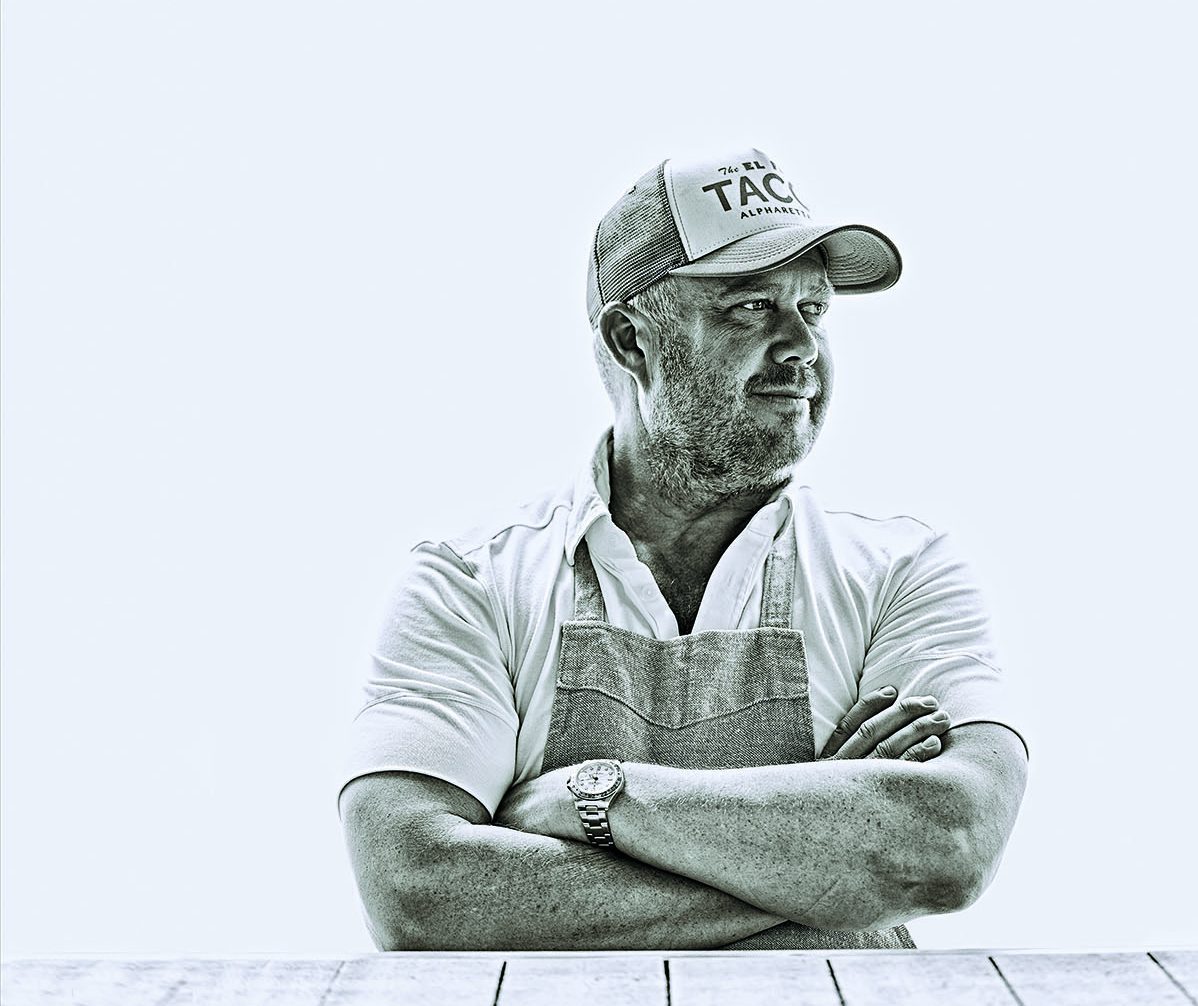
Those of you who have experienced a night like this in Atlanta probably recognize that I am describing a Ford Fry restaurant. A restaurateur and chef of 16 restaurants across 3 states, Ford has a deep understanding of how to translate thousands of details into an unparalleled restaurant experience.

Over the years of experiencing his restaurants, I’ve tried to pin point what I think is so special about eating there. The subtle, cool details come to mind, and of course the food, but I’ve always known it was something else. Not until recently did I come to understand that it is the foundation of a servant’s attitude that makes it stand out. You can see it on your waiters’ face, you can hear it in the conversation with the bartender, and you can taste it in the food. At the root of all of this? Ford’s desire to serve others, which is defined by a humility rarely seen in successful business leaders.

I sat down with Ford to hear more about his story, his passion for food, and how he’s been able to build such a strong culture through servant leadership.

Ford Fry

Founder of Ford Fry Restaurant Group

Atlanta, Ga

How did your upbringing influence your desire for entrepreneurship and specifically starting restaurants?

My grandfather was a doctor but also a businessman because he had his own practice. My dad did all kinds of random things real estate and stuff like that. So I imagine that played a lot into it. When I went to college, I didn’t really study. I’ve always been a learner by doing as opposed to studying. School wasn’t really my thing but I can remember contemplating having my own business. I think when I started thinking about that, my family really played a role in pushing me towards that more than ever before.

I remember one point in time when I was trying to make up reasons why I couldn’t go out there on my own to start something. I would make up excuses like “well, I need a partner” and my grandfather would say, “Why do you need a partner? Can’t you just hire someone to do that?” My family continually spoke into me if I was trying to go down a direction that I shouldn’t go.

Let’s go back a little bit though. Early on, I always loved restaurants. I loved going out to eat. We traveled a lot and we ate out. I always loved the experience of a restaurant, but being a chef or getting involved in that angle never seemed like a possibility because it was viewed as a blue collar or trade job. You know what I mean? Back then, the manager in the suit out front was the cool guy. Whereas now, the chef is the cool guy, but it wasn’t that way when I went to culinary school.

Deep down there was always something that drew me to the experience of food and the experience of eating around a table with my family and grandparents. I don’t think that was clear to me until I started thinking about getting into cooking.

When you got out of culinary school, you spent some time in corporate restaurant environments. At what point did you think to yourself, I can do this my way and probably better?

At one point in my career I was in Aspen, Colorado and that’s when I thought about being ready to have my own place. So, I looked into Boulder, Colorado and met up with a chef in Denver and talked about starting a place in Boulder. I started going down that road and ended up pulling out, luckily because I wasn’t ready. I didn’t really know what I was doing. It wasn’t until I came to Atlanta and was in a corporate chef role running a place called Eatzi’s that I started to feel ready. It was this massive food production for people who didn’t want to cook. You’d go in and everything was made for you and you’d buy it and take it to go. Everything was made from scratch and there were thousands of pounds of food.

I really learned the business side there. Before Eatzi’s, my experiences were all about the art of cooking and fine dining and never really about making money. At Eatzi’s, we were forced to run things efficiently or we would be let go. So when it was finally time to start my own restaurant, it was pretty easy compared to what I as doing.

Who were some of the key hires you made when you first opened JCT?

When I first opened there was a guy I worked with at Eatzi’s who had run restaurants for a long time. He was the general manager and I really needed someone like him who knew how to run the front of the house and servers. So he focused on setting that up and I focused on the design/experience side as well as all of the food and kitchen.

Second was a chef that I brought on (who’s still with us today) who’s name kept coming up from other chefs. He was kind of a quiet guy, but just a solid cook. So I met with him and he did a tasting for me and we immediately saw eye-to-eye on how we like to cook and how we like to eat. He was pivotal. He made a lot of impact on what we are doing today. He enabled me to be able to look forward and into the future.

I know things with JCT went pretty well from the beginning. What were some of the valuable lessons you learned through the expansion process?

Yeah, JCT kept going forward even during a recession. At that point, I was making decisions based on my gut, with things like what the prices should be and what the concept should be for a location. I took all the responsibility on myself for making the right decisions for the business model. After I opened 246, which was our second restaurant, I hired my old boss, Toby. He was my old boss in Aspen and Santa Barbara. He’s also a few years older than me and from Scotland. I always thought about him as the best boss I ever had and I loved the way he managed.

He wasn’t buddy-buddy with everybody but he treated everyone with respect. I hired him as our COO and at that point everyone started reporting to him and he reported to me. That move was truly key to keeping me focused on growth. My vision for what I wanted to build totally lined up with what he wanted to do. Toby had just gotten done with 10 years of consulting in Asia and had a place here in Roswell actually where I lived. It was just very random that we reconnected and only lived a couple miles from each other and had no idea.

So really putting someone in place like that who was just an incredible general that also saw eye-to-eye on things was big. We’ve never had an issue where we disagreed on something, and we just think really similarly.

In your model you really give a lot of autonomy to each chef in the specific restaurant. How have you learned to manage the experience across the restaurants while chefs are still making it their own?

For the most part it’s been about education as opposed to dictating things from our office. We constantly educate on our philosophies and educate on why we feel certain things work. It’s more than cooking, it’s also how we do things from a PR, Finance perspective. It’s all about training them in the way we think. By setting up these things we call “modules” and having employees take them, they prepare themselves for the next level of job.

We’ve hired people from the outside for upper level jobs before and they rarely work. The ones who have really thrived are the ones who come up through the ranks because they are more passionate about what we are doing and they understand how we think about things.
A lot of it is empowerment and servant leadership. We approach conversations from the perspective of wanting to help chefs as opposed to getting mad. From that educational standpoint, we are saying, “hey, we want to teach you to be a great restaurant operator or a great chef from all of the angles not just about food.”

That approach is pretty new for most chefs because typically they go into a restaurant and they’re asked to perform a task and to hit a number. Here, we are talking about all kinds of things. For instance, they are heavily bonus based on social media scores. So we are forcing them to really be aware of not only what’s going on with the food, but a lot of other things as well.

Correct me if I’m wrong, but every employee goes through the same training right? What inspired that and at what point was that established in the company?

Early on when we hired our COO, Toby, our orientation became a big part of the company. His passion is training and inspiring people, so he took that and single-handedly set it up. He came from resorts and a lot of times that’s a big thing with resorts.

One of the things he does early on when people are hired is let people go if they are nodding off during an orientation. If he sees something that is off, he lets them go right then and there. It doesn’t matter who you are, even if you are at the lowest level. He’s executing our orientation and he’s seeing how everyone is engaging. It’s nice because sometimes we might not have the best hires, but this is a way to protect our culture.

What would you say are the two or three most important characteristics you look for employees?

The current state of the market right now makes it tough, but we typically try to find people with strong attitudes and then train everything else. I’m also looking for people that we can relate to and I think are going to understand the culture. That’s a culture of empowerment and not managing every move.

We’re here to listen to employees, so people who conform to that kind of environment and bring great ideas to the table, perform well. A lot of people come from restaurants like a Houston’s or a big chain restaurant and they can’t perform because they’re so used to being told what to do. We want people to be able to think for themselves. We definitely have systems and guidelines and things like that, but we typically generate people who can perform in this industry, even when they move on from us. A lot of times when we get people from other restaurants and they are applying for a general manager position, they are really more like a low-level manager in our eyes.

Jct Andrew Thomas Lee 2

Who or what have been the biggest inspirations in your life that have helped you get to where you are?

I never really had a mentor chef. I’m kind of independent. I probably would go back to my grandparents. They were the types of grandparents that always spoiled you but everything was done with the purpose of education. They taught me food and I’m lucky that I experienced traveling and food with them. I may have wanted to eat a burger somewhere or something like that, but I’d be forced to eat duck. Our vacations were always educational and we always had to learn something or read something.

You’re making this all sound really easy. What would you say has been the greatest business failure you experienced and what did you learn from it?

The way I look at myself now is as a producer as opposed to a chef. I definitely lean towards the chef side of things but I see myself as a producer of restaurants and restaurant experiences. Everything from the entire concept, to the food and menu, to the graphics and the design. Early on, I may have been a little bit too trusting and not speak up when I thought something wasn’t going in the right direction. I would see a decision, not feel right about it and be afraid to say something. It could have been a menu item or design element. It never failed, whatever that thing was, it would come back to bite me.

For example, something like chairs in a restaurant. I would let a bar stool pass because I thought the designers knew what they were talking about. At the time, I was thinking to myself, these stools look like they are going to break and not be that comfortable. Next thing I know, we are getting reviews that they break and aren’t comfortable.

So, I’ve learned to not let anything go. If I feel something, I should speak up about it. I’m a little bit more on the passive side and I never thought I was a great manager. I may be a good leader, but I always wanted to be the nice guy. I’ve gotten past that and I’ve hired people to help with that.

Marcel Employees

What do you think makes a great business leader? And how has your opinion on that changed over time?

Every time I think about a leader, I think of Braveheart and that scene where he’s on the horse and he’s in the frontline. Sometimes I fall short of this and I could have been a little passive at times, but a great leader is someone who is out in front in the trenches with his people.

I’ve always felt that leading by serving and putting others before yourself is huge in leadership. It has a big impact on staff retention as well. You can do it in a fake way, so you have to truly embrace it and care more about someone else’s well being than your own. By pouring into and serving someone it never fails to be helpful to them and it’s always come back and been great for me.

Is that something you’d say you’re doing on a day-to-day basis?

Yeah, everyday. I remember early on when we had to watch money, my wife would be like, “Why are you giving them a raise? Why can’t you give yourself a raise?” And I would just say that they need it more than I do and they deserve it. A lot of times I’m leaning towards that mindset.

What are some of the daily rituals you have that are really important for you to get stuff done?

I’ve been going to the gym and that has been so amazing for feeling better. I’ve always been one of those guys in the past that would sleep and sleep and never wanted to get up. Now I wake up at a somewhat decent hour and my mind is so much clearer and I can see things. I’m a better person, a better leader. I can inspire a little bit better now that I am taking care of myself.

Early on, my goal out of the gate was to learn everything. So everyday, I had the same ritual and I did everything everyday. I never wanted to be in a place where I didn’t know how to do something in the business. Am I a pro at managing servers? No, but I understand everything. I know how to run payroll and all this stuff.

There was this book that one of my roommates in Aspen told me I needed to read called The E-Myth. I remembered it being a story of a woman who started a pie-making business. She didn’t have time to look at the future or focus on the future because she was so busy making pies all day. I realized that clicked with me and that I needed to be in a place where I can be looking towards the future while staying connected to the current.

I can remember working with a chef from New York one time at a charity function and he told me he was off on the weekends. I was like, “How are you off weekends?” He said he made sure the restaurant was big enough so that it could afford him to walk away when he needed to walk away. I still don’t take weekends off because I don’t want to, but I don’t have to be there anymore. If my son’s playing tennis or my other son has something going on in Georgia then I’m there. I don’t have to be anywhere though, and that was the goal. It’s taken 12-13 years but I’m there now.

So you always hear about restaurant culture being a huge grind. How have you learned to balance those demands with being a husband and a father?

Early on, I made sure that my time off was focused. With my sons, we’d call it bro time and that was time I could take them away from my wife, but it was also time that I could really bond with them. We’d go out to the park and act like we’re dinosaurs or whatever. We just made it a ritual and it was something we didn’t miss for anything.

With being a husband, I started dating my wife when I was working a hundred hours a week so she knew it going into it. I do think about other Industries and I don’t know that other Industries are really any different. You know, really anyone who’s an entrepreneur is putting in a grind. I’ve never seen anybody be successful by not doing that.

What are the most rewarding aspects of what you do?

I’ll give you an example. When we first started JCT, I told the designer going into it, I wanted it to be a place that’s nice enough for a date night, but casual enough for weekly visits. I remember one time I was standing outside and saw someone talking on the phone to somebody saying, “You need to come see this JCT place. It’s cool because its nice enough for a date night but also casual.” In the moment, I’m just like, “man, that’s exactly what I set out to do.” I love hearing that confirmation.

It’s happened with The Optimist too. I wanted it to feel like you are down at Rosemary Beach or on vacation so that whenever you come, it takes you out of work or whatever and into another place. I hear people saying that they feel like they are on vacation when they are there. So, I guess it’s just that confirmation that what you set out to do you achieved and I don’t know any better fulfillment than that for me.

What kinds of filters or thought processes do you use when you’re thinking about a new restaurant concept? What are the steps you use to decide if an idea is worth doing or not?

Number one it starts with the location and what does the city need that at that location. So let’s look at The Optimist.

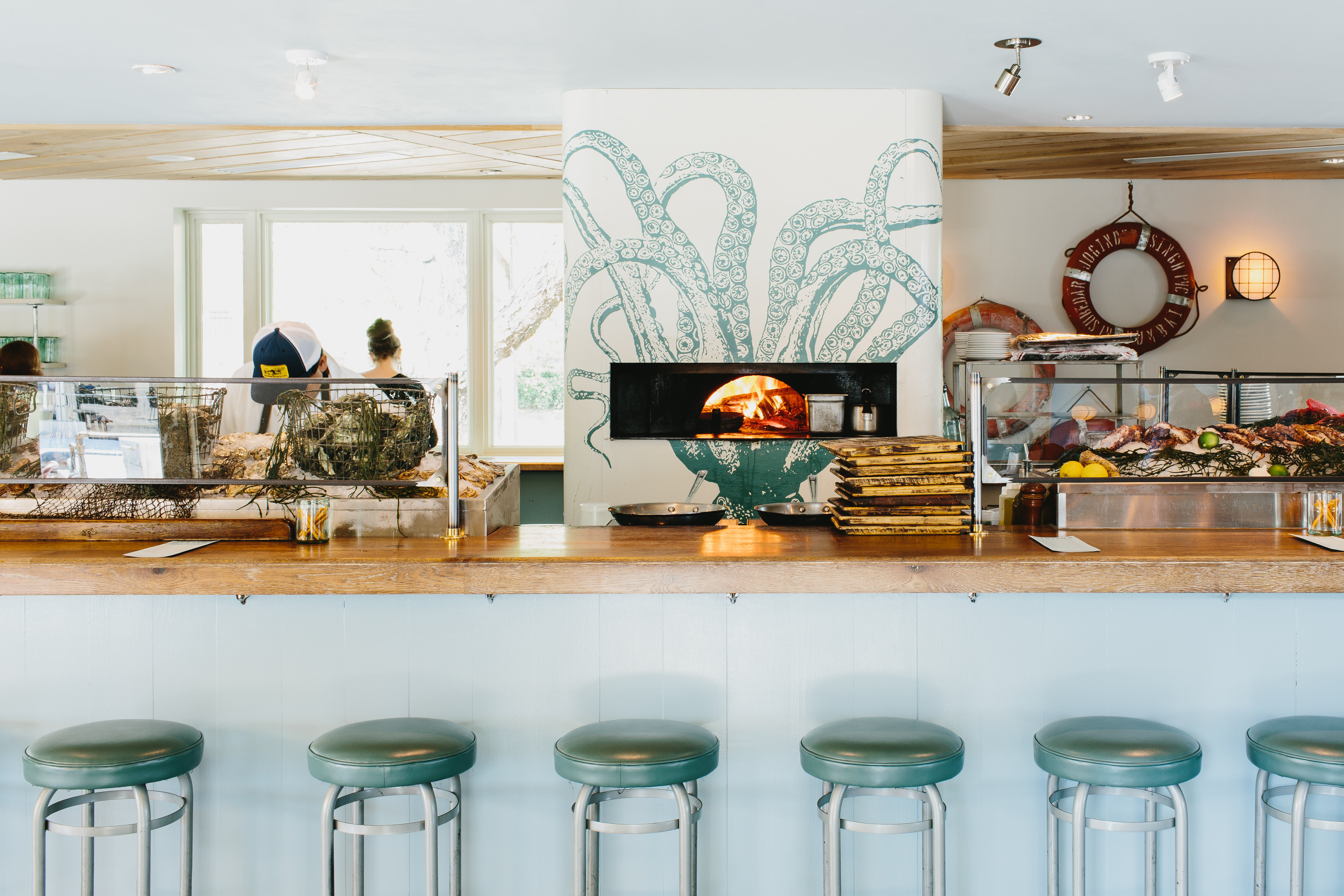
There weren’t really many places to get oysters at the time in Atlanta. I mean there was Fontaine’s and a couple corporate chain restaurants where you could get oysters, but there was nothing that was similar to what I saw in the Northeast Coast: something that was right by the beach and had a cool oyster bar. So I thought the city needed this concept.

Second, what am I passionate about cooking? Say the city needed some goulash restaurant and I didn’t have any passion for making that, I wouldn’t do that. So once all of these things starting fitting together, it then goes into what is the price point for going to be for this neighborhood? Does the price point work for that neighborhood? Does the neighborhood have that kind of money to spend $65 a person on average? Once those boxes get checked then it gets into what’s the lease and the rent? What’s the cost to get going? It’s just a basic feasibility study.

We projected for The Optimist somewhere around $4.5 million a year. I thought it would do $7-something but that’s me being an optimist. Coming out of the gate we did about $8 million a year. But all of those things and questions are factors that come into play on whether or not it’s going to work.

There was this place in East Austin, and it’s a good example of something that actually didn’t work. There was a restaurant there called LaV and the person that started it was into wine and so it was really fancy and had a lot of fancy wine. I remember thinking this restaurant doesn’t fit this neighborhood. Some guy bought this restaurant and was trying to turn it. The numbers he told us he needed for rent had no chance of working with our projections. I was going to casualize it a little bit and make it a little funkier to fit into East Austin, but he could never get there.

So we had to walk away even though I really wanted to do it. The numbers just didn’t lie. It’s pretty basic, but the numbers never lie. I used to be the one who had to build all the spreadsheets. I’m not sure I can do it anymore.

What does the future look like? What things are you looking forward to figuring out and doing next?

I don’t think it’s any hidden thing that Superica is a growth vehicle for us. So in the future, there’s probably going to be some sort of a liquidity event of an additional investor coming in, taking some money off the table for us, and throwing in some money to grow Superica throughout the country. Then there will probably be some sort of liquidity event after about five years that I don’t think is retirement money but definitely life changing.

I want to be more of a mentor/investor in certain things or continue to kind of do what I’m doing but start something on my own. I realize that at my age you think you’re creative and going to think you’re still with it, but I still have listen to those in their 20’s and 30’s. I’m trying to keep myself grounded and listening to understand versus thinking that I know better.

I’m really passionate about nostalgic types of restaurants like Marcel and it is really fun for me to go back and cook from my memory and do a retro stuff. I’m not looking at doing anything modern but who knows? I don’t know what things will look like after 5 or 6 years, but things do change. Any other entrepreneur will tell you when they start seeing some success they’ll feel that it’s a big breather. You go from budgeting by putting $20 in this envelope and $50 in this one to not having to kind of worry about stuff. Just live life, have more fun, and give back a lot more.

What’s your favorite hidden gem restaurant in Atlanta?

Masterpiece Sezchuan out Buford hwy. It’s a bit farther than the other cluster of ethnic restaurants but it’s fantastic. Other than that, Floataway Cafe has been around but has fallen out of sight out of mind but is always a super great spot.

Andrew thomas lee

In light of Little Rey opening, what’s the best taco you’ve ever had and why?

How about two (both different styles)? One is from the back of this Texaco gas station that’s out on Alpharetta Hwy and it was classic Mexican street style. What I liked was the simplicity of it: Just a corn tortilla (fresh), meat, cilantro and onions, plus salsa. What made it the best was the ratio of meat to tortilla. The meat needs to be full enough where a little falls out when taking a bite.

Two, a taco I have made for events a few times that’s not classic but super yummy. A just-made flour tortilla, smoked pork belly, fried plantain, sweet peanut drizzle, a little red chile mayo, shaved serrano chiles, mint, cilantro, and crushed peanuts. It falls in the banana and peanut butter thing with some fatty pork belly.


For more information on Ford Fry, be sure to check out the following:

Ford Fry Restaurant Group

Creative Mornings

Tex Mex Cookbook

Photo credit:

Andrew Thomas Lee

Johnny Autry

Heidi Geldhauser

Seeing Value Where Others Don’t: A Conversation with John Marsh

“There’s gold in every person if you just dig for it…” – John Marsh

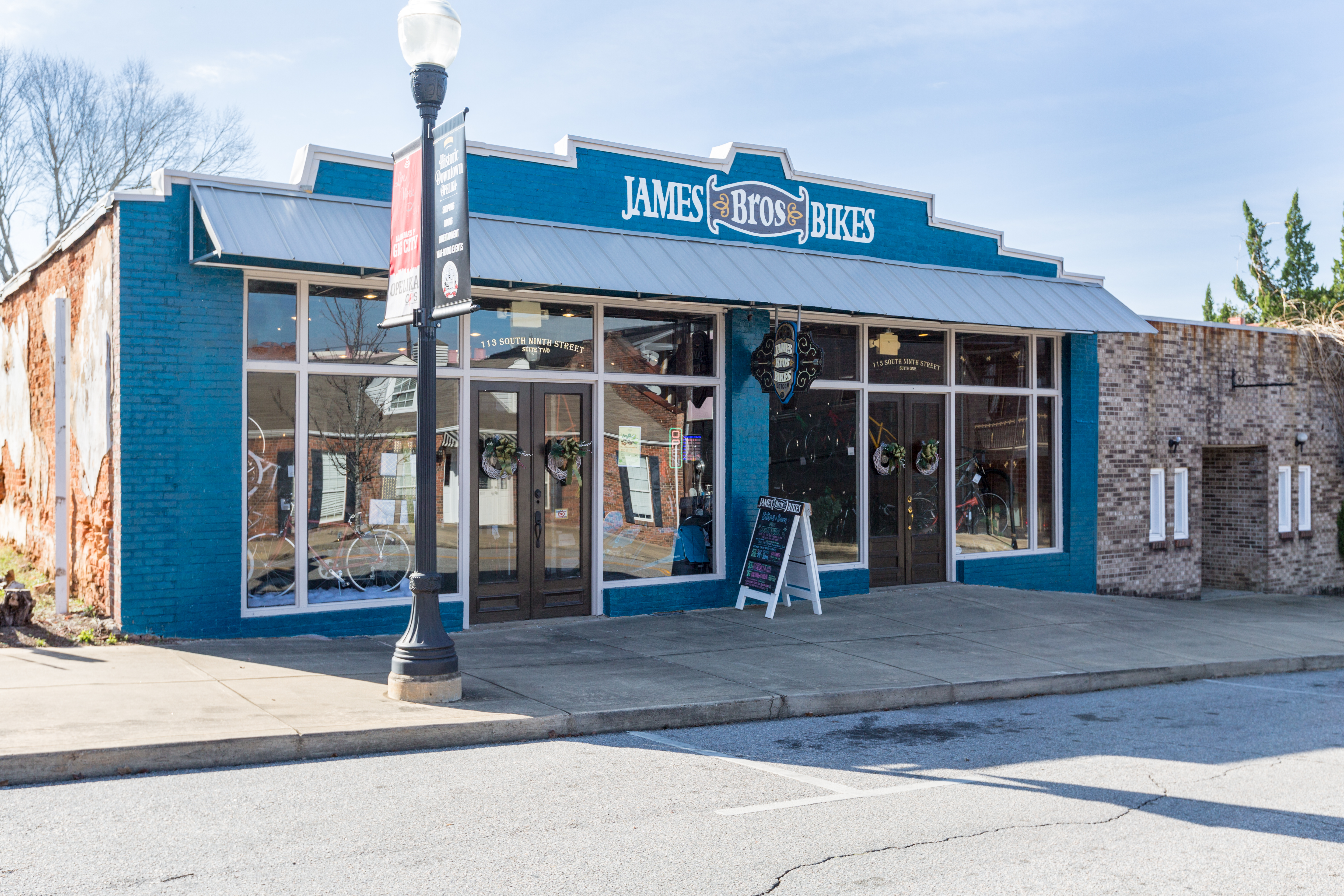
A phrase I hear multiple times during a long conversation in a 150 year-old restored warehouse. It echoes throughout the building and the 10 surrounding blocks of what was once a sleepy Alabama town. It’s no coincidence that the man behind that phrase is driven by a greater purpose and conviction to redeem that which was broken. It’s the story of his life and the story of the 200 or so buildings he’s restored to change the future of Opelika, AL.

Meet John Marsh, serial entrepreneur, CEO, and founder of Marsh Collective. Passionate about bringing about redemption and restoration to people and places, John and his team see value where others don’t. Taking what they’ve learned from their experience turning Opelika into the Gold standard for small town revitalization”, they are in the midst of restoring cities and helping people with a redemptive vision for companies, all over the country.

We sat down with John to hear more about decades of learned wisdom around business and life. Thankfully for myself, (and anyone reading this) I didn’t have to dig too hard to find gold.

John Marsh

CEO and Founder of Marsh Collective

Opelika, AL

Tell me a little bit of your background. How did your upbringing influence your desire for entrepreneurship and redemptive work?

My parents tried for 13 years to have a child, couldn’t and adopted me. My mom had so longed to be a mama and I think that had huge impact on me. A lot of kids don’t have this growing up but my mom and dad told me growing up, “You can do anything. You’re amazing. You‘re a world changer.” and I believed them.

I didn’t really fit in school.  I made decent grades until I started chasing girls and lost my mind. I can remember feeling a call on my life all the way up until I did something I thought God and my parents could never forgive me for. I stepped across the line with a little girl. She was 12 and I was 13. I rode my bicycle to her house and we slept together and it changed everything. Once I began to rebel, I didn’t stop rebelling until it hurt too bad and cost too much.

So I had a huge benefit of a mom that loved me. I had this situation that happened to me that caused me to rebel, and by 17 years old I tried drugs for the first time and I was a drug addict until I was in my early 20’s and found myself at a really deep place.

One thing I can tell you is that we don’t change till it hurts too bad and costs too much and for a lot of people that’s slow. For me, I went fast. My dad said, “Son, you are going to have a lot of problems because motion creates friction and you want to go fast.”

So I ran into a wall at 20-something years old. My wife and I were going through a divorce, I was $1.5 million in debt, $99,000 overdrawn. I was about to hang myself and my whole life was transformed. God came and touched me and I wasn’t looking for Him. To be honest I wasn’t looking for anything, I was just in so much pain.

I kept hearing, “Kill yourself” and God kept going “die to yourself” and it sounded so simple. So instead of taking my life, I laid it down. I was absolutely transformed.  Lightning struck me and every hair on my body stood up in two hours for the first time in my life. I didn’t feel the weight, the pain, suffering, the regret I felt. I felt free. I came out that place forever on fire for the work that I was going to do.

So having someone that loved me so much with unconditional love and then crashing my life extravagantly early were two things that deeply impacted me in the work I’m doing.

There’s a creator and man plans his ways but God orders steps. And so everything I’m doing today came out of tremendous pain and brokenness. There’s beauty in broken things and I can say that and have hope because you comfort others with the same comfort you’ve been comforted with. That’s the story for me.

How many businesses since that time frame would you say that you’ve started or been really involved with?

40 something.

Ok. Wow

That was a learning process. I felt like I was running for the longest time what I called a rent-a-dream program. You’d have a dream and I’d be like, “Oh, let’s do it!” It was good because I learned about startups but it was hard because I had some real mistakes.

Number one was I thought that if you don’t think you’re anything, you’ll think that if you accomplish something, anybody should be able to accomplish it. I missed the fact I had unique giftings that allowed me to do some things that I thought anybody could do because I misjudged my own giftings.

So if you don’t know yourself, you can’t grow yourself and you don’t see the world as it is, you see it as you are. That cost me millions of dollars and cost us years of our life.  It was painful.

When did you find out what you’re really good at?

Six or seven years after being born again. First work I ever did was in the high-end audio business.  I owned a high-end audio business, did high-end car stereos. Then I went into automobile repair business building totals and had a salvage yard. Then I went in the restoring historic houses business and moving historic houses.

I started thinking, “Well, I’m gifted with my hands. I know how to work on stuff and I have a vision to get the stuff done, maybe I’m good with my hands.” That was true. I was pretty good with my hands, but that wasn’t it. So I had to start peeling back the layers.

What’s behind everything you’ve already been successful at?  There’s some real core things behind it and it’s hard to get to them. People wonder, “What am I good at?” The question should be, “what is it you’re made for by God that ends up showing up in the things you’re good at?” That is the question behind the question.

My unique gift is a gift around miracles. I love them. I want them in the lives of other people and in my life. My purpose is that people love Jesus more because they’re with me and that I leave a legacy on the hearts of men. When I’m doing that, whatever I do, I can’t lose for a minute.

I should have been bankrupt, drug addict, homeless and divorced.  I was saved at a very high price. That’s what I’m about and what I’m here for. I’ve been spending 80%+ of my time doing exactly what I’m really, really gifted at and it just keeps propelling.

I’d say I feel like a mosquito in a nudist colony. Every day is full. I’ve had so much fun today in every conversation, and every person I meet. Because I’m built for it and it doesn’t drain me, it restores me.

Going back to this number of businesses question. Of these 40, what was the general motivation behind all of them and did that change over time?

It really did. It started when I was looking for meaning and purpose and the feeling of doing something. Then money started coming in and I was looking for money. Money is a physical way you can measure someone’s belief in what you’re doing. It gave me some way to assess value to the things I was doing. I became hungry for that.

But then it changed and what was once my value, I became a victim to it. I had to learn that money has laws and principles around it. Still today, I care less about the money in the work we do than I do the meaning. I struggle often times charging enough, or scaling in the way exactly we should because I can’t think of a business I built for profit. We don’t grow tired of hard work, we grow tired of meaningless work.

I do it, not just because I need the money, I want stories.

I want to know how my life has impacted someone else so that living this thing well it is a bit of a testimony to the fact that it was worth the great price that was paid to redeem an idiot. So that’s what I work for, the stories of somebody who was impacted. It’s the value that was added to them and then they saw the world differently and their lives became better and that their children’s children may be different.

What has been the most challenging business opportunity you’ve taken on and why?

I think the most challenging thing is what’s been a part of a couple of businesses and that is the fact that money and economic principles are things like gravity – you can’t ignore them. I’ve had to learn without going to school, I’ve had to learn how to be thoughtful and disciplined in the accounting, operations and team-building and building a platform and not just products.

In the beginning, I would find the need and build what people wanted. But over time, I’ve needed to build a platform. So our platform is the accounting, HR, compliance, marketing – all these back-end systems and a team that are available to do whatever we’re doing. So if I’m going to start a restaurant, I’ve got the platform. If I want to start a car wash, I got a platform. If I’m going to start a technology company, I’ve got a platform.

So taking the time to do that and the sophistication of what that really looked like took a lot of time. My focus for the last 3 years has been to have my team ready for this next season. We’ve got new dreams. I’ve got a vision of new things I want to do and I want to add value to more people and make a difference on a different level. We are going from stewarding a city to stewarding cities.  We’ve had to retool to go from the work we did here with over 200 properties in our city and starting these 40 businesses to now helping 7 cities.

It’s funny. Every 7 years or so, I just had to retool and learn again. It’s really been difficult. You better love learning and changing and having to kill those old ideas and stuff you hung on to so dearly. So that’s been the hardest thing as building a platform. Building products and doing diving catches with smart people was easy.  To build something that will work and where everybody’s not doing diving catches every day to make something run is a completely different set of skills.

“I do it, not just because I need the money, I want stories.  I want to know how my life has impacted someone else so that living this thing well it is a bit of a testimony to the fact that it was worth the great price that was paid to redeem an idiot. So that’s what I work for, the stories of somebody who was impacted. It’s the value that was added to them and then they saw the world differently and their lives became better and that their children’s children may be different.”

What was the most common business advice you got when you’re in your 20’s? I’m guessing it had to be something like, “you need to focus on one thing and do that really well”?

I got that all the time and the fact is it looks like a failure to be as curious as I was. Nobody would have picked me to be somebody who has been able to do what we’re doing.

People would say, “You’re doing stereos? Man, there’s no future in that.  You’re going to be on somebody’s couch at the rate you are going.” Or “So you’re fixing up these junky houses in the hood? Who wants to live in the hood? That is dumb!”

You see what I’m saying? All along the way my heart was pulling me and I feel that you shouldn’t get trapped in how you use it. There’s gold in every person I meet. The key is digging for it. And once you find it, how do you use the gifts you have across multiple things not being trapped in a vertical of a career, but working skills and giftings? My love is for people. If I put this love I have for people in their growth, it’s going to grow.

The worst part of a gift is when it is unrestrained. The power is in focus, and so I would say focus on the gifts and not on the career if I can recommend something.

What’s it like to work for you?

First, I’d say it’d be hard to be on the other side of me. I don’t know but I don’t feel like most people feel like they work for me. I feel like they’re going with me. I don’t want it to happen to them. I want it to happen for them. But people tell me it’s exciting but exhausting.


I would think and I hope that it’s an environment where growth is modeled and expected.   People who have moved on to other things have told me how much they miss growing like that.

In your mind, what makes a great business leader?

I think first, you’ve got to know who you are. If you don’t know yourself, then you are going to be deceived. If you don’t know yourself, you are going to hurt people.
The second key is there needs to be some way to complete people and not compete with them. Most leaders compete with the rest of their team for who’s the most valuable, but when the leader feels like he’s the most blessed guy in the world to be with these folks, it changes the game.

I think leading the business is like a marriage. I tell people, “So, you want to know if I’m a good husband? Look at the face of my wife. You look in her eyes and if something that doesn’t look incredibly different, and no spark there. I’m not doing it. But I tell you what, if she looks loved and believe me a lady that’s loved look different.” The yard that looks loved looks different. Pick-up trucks that look loved look different, right?
Love is a difference-maker. So a leader without love, I think, can’t build anything great. He’s got to love his people.

What’s the greatest business failure you’ve experienced to this point and what did it teach you?

It’s hard to pick one. There’s such a big list. I mean we could do a whole series on this. It’s the fact that I went into business with people that I loved and were my friends and it didn’t work out and I lost the relationship. It’s happened a couple of times and I miss them dearly.

I still grieve it. I still grieve at people that I loved and the relationships I lost.  That may not have been lost if we didn’t do business together because it’s a volatile environment. Sometimes there’s no coming back from big business losses. Somebody’s got to be blamed.

What have you learned about choosing the right business partner or person to do business with?

I’m no expert on this. I’m an amateur. But with business, there’s got to be this common ground of a couple of things that are core.  I heard this teaching that TD Jakes did which really touched me. He said there’s confidants, constituents, and comrades.

Confidants love you and all they really want is you. They don’t want anything else and if you give them that they got what they want.

Constituents love what you love, and as long as you love what they love, they love you.

And as long as you’re going where they want to go, but if someone will take them there faster than you or loves it more than you, they’ll leave you.
And comrades hate what you hate. As long as you hate what they hate, they’ll hate it with you. But the minute you stop hating what they hate, they’ll hate you. I’ve learned that.

So I want people that love me, because I love them.  If I’m going to ask somebody to do business for me, to be a partner, I have a love for them. It’s like asking somebody to marry me. Love is the key. Love covers a multitude of sins. Love never fails, right? Powerful tool. I can’t say I got it down, but I’m trying. I mean, I don’t partner quick now.  I’m slow to partner.

What are some of your daily rituals that are really important to you getting things done?

I have a system that is called measure-manage-multiply, and it’s like a multiplication mindset. It’s based off of the idea that if I can measure something and I manage it properly, there’s power in multiplication.

I’ll give you an example. I started food journaling every piece of food I put in my body, I began to manage the type of food that I ate because the awareness came to it. And now it’s a multiplication factor in my life that I’m able to run with an energy source that most people at my age don’t have. They don’t feel like I feel. I’ve got almost abundant energy doing things I want to do.

Another way is I know what times of day I do what I do best. So my day is divided into three kinds of segments. The mornings are for practices. These are the things that don’t have an end. Reading, writing, filing, meditating, studying. That’s followed by some exercise because this body is built to move. Then I transition to some basic tasks like working on contracts or with different clients. The last part of the day is relationships, which is why we are all here.

It’s a big deal. Your daily disciplines determine a lot. When you look at my daily disciplines, they are aligned for success. My day is planned. I’ve got a hundred and sixty-eight hour, one-week framework and it has every category of everything in it. How much I want to sleep, how much time I want to spend with my wife, and how much time I want to spend with my boys, etc.

It’s all in there and then I just try to optimize to that. I could leave it to accident. I mean that’s how I used to live but an accident doesn’t work out that well. If they’re accidental, the results are accidental. I want to be intentional so I can get intentional results. I’ve been gifted this unique opportunity called life. I was born in America. I hit the dang lotto.

You’re designing all kinds of different environments and restoring a lot of stuff. What has been a big source of inspiration for you from just a creative design standpoint?

Huge one, Walt Disney.  He said you need a critic and an optimist and a realist and in every conversation to make good decisions. So I surround myself with that at the table.  But he’s inspired me because he said the artist should go first. Artists would paint something and he would force engineers to build to the art instead of the art built to the engineers.

And so I really use that as a continual thing. I’m not worried that people can’t build that and there’s more. We’re starting out with a design that makes my heart sing and will work back off of that.

So with your experience in restoring downtown Opelika and making that into what it is today, what are a few takeaways that someone should know from your experience doing that and what really mattered?

The overarching “why?” when looking back is God cares about places.  He said, “Go to Babylon and make Babylon flourish.”  So I believe flourishing is important for people and places. As far as some of the lessons I learned, there are 3 questions I wish I would have known in the beginning of doing it that I know now:

Who are you? Who do you serve? And who’s going to pay for it?

So, for who are you, Opelika is finally being itself instead of trying to be Auburn.  We’re funky. We’re artful. We’re food. We’re building and making things and we’ve got historic buildings in Opelika. Auburn is not that. Auburn is students.  We complete not compete.

So, for who do you serve, we serve people who want refined experiences or unique experiences. We are not franchised. Nobody goes to a city and says, “I had the most amazing meals at this place called Ruby Tuesday’s.” Nobody says that because it’s not awesome, right?

And then the third thing is who’s going to pay for it. We know that to build things, you got to have capital.  Capital should be patient, properly aligned and productive.

The number one mistake I made was believing renovation was revitalization and it’s not. So we renovated all the buildings and nobody came. Number two mistake we made is believing that once we built all this stuff – the city, or chamber, or somebody would come along and lease it all and I learned that cities are like wheelbarrows, somebody’s got to push them.

And then third thing is you can’t have this big dream without the right team and I didn’t know who was on the team. Now we say its patrons, proprietors, pioneers, visionaries, (which is the role we play most of the time) stakeholders, storytellers and salesmen are the minimum viable team it takes for saving a city. And so those are some of the biggest takeaways that I learned early on.

Why did you start your podcast (Redemptification)?

I said what if I could let other people be a part of the conversations I’m having and the people I’m meeting?  I mean, they’re dropping wisdom on me like rainwater. How do I let other people be in this? So that’s the reason.

I don’t want the biggest thing that people see about us to be what we have online or what’s in the videos. I want to be bigger on the inside than I am on the outside.

What are some of the filters or thought processes you used to decide whether or not an opportunity is worth pursuing?

It’s a really big deal and it’s really great question. Opportunities are everywhere, especially if you’ve longed for opportunities your whole life. And when you get them how do you have a way to filter those? Because everything you say yes to, you’re saying no to a bunch of stuff.

So now, if all of my team doesn’t sign off, or if Ash doesn’t sign off, (she’s got the veto power over everybody) And then if my mentors don’t give it a nod, then I don’t do it. I don’t care what it is. It’s like a board of people who see the world differently.

I’ve spent a lot of my time trying to sell things I want to do but it’s been helpful. There’s no telling what would happen if I did everything I want to.

What are the next 3-5 years look like for you? What are you looking forward to in this?

We’re looking for more margin: financial and time. We’re going to say no to a lot more and yes to a lot less. We’re going to do more convening here in Opelika more because I traveled 150-something days last year. People want us all over America but I want to all of America to come here. So we are starting to say if you want what we have, you’ve got to come here.

I’ve spent a lifetime doing push-ups, getting content distilled into things that really do work. So starting to get that down and transferring it. We will be selling some companies and transferring the leadership of the day-to-day operations to Ty, who I’ve been mentoring for about 8 or 9 years.

Once that’s lined up, I’m planning on pressing the gas heavily, you know. I’ve got a lot of dreams and we haven’t even got started with the stuff I want to do.


For more information on John and Marsh Collective, be sure to check out the following:

marshcollective.com

Redemptification Podcast

On Raising Leaders Up Within an Organization: A Conversation with Adam Williams of Magneti

Six years ago, I found myself crammed in a van with seven other people driving up the side of a mountain in Nicaragua. The views were breathtaking, but I was too distracted trying to figure out how to not sound stupid around a bunch of older men who had traveled and lived all over the world, primarily starting and growing businesses and organizations. They were all headed to a coffee plant, which was a part of a Young Life camp, to offer their advice and expertise on how to grow the operation. I just so happened to be along for the ride.

To try and pass the time in the van, I struck up a conversation with one of the guys there about sports. Little did I know that my conversation with a die-hard Denver Broncos fan would turn into a long-term friendship and source of advice for years to come.

Meet Adam Williams, serial entrepreneur and CEO of marketing and brand development company, Magneti. Although his company may be relatively unheard of, the clients he’s worked with and awards he has won, set him apart from most. Just this past year, Magneti was a part of the Inc. 5000 fastest growing companies in the country, nominated by Entrepreneur magazine as one of the top 360 companies in the country, and voted one of the top places to work in the state of Colorado. Accolades aside, A short conversation with Adam would tell you pretty quickly he knows a thing or two about starting and growing companies in a way that benefits everyone involved. We sat down with Adam to learn a little bit more about how he got started, what he’s done to make Magneti a great place to work, and valuable lessons he’s learned along the way.

Adam Williams

CEO of Magneti Marketing

Colorado Springs, CO

When did you know you wanted to be entrepreneur? What events in your life helped unearth that desire?

There were really two different points in life. The first one that comes to mind is when I got a paper route when I was seven years old. I did that in part because I grew up with just my mom and it was a good way to contribute to family. I would get up some mornings at 5:30 a.m., fold papers and go run my paper route before going to school. That instilled in me a particular work ethic and that was kind of my initial exposure to entrepreneurship.

During my formative years in high school and college, I thought all the time about how fun it would be to build a business. I remember one time in college I wrote a paper about how I was going to own all these businesses and retire by the age of 30, which I find hilarious now. I’m pretty sure I got a D on that paper because it was so unrealistic, but I always had this very bold idea of what I could create through business.

The second real inflection point was after I graduated college. I had recently spent a bunch of money on college and was also a newlywed. I had a hard time finding a job and had to get a job making sandwiches at a sandwich shop for $6.25 an hour. I actually ended up becoming the general manager and subsequently the managing partner of that restaurant. I loved every piece of what I did there from an entrepreneurial standpoint. That really started to build my entrepreneurial chops and helped me grow into a pretty good entrepreneur today.   When you have to manage food costs and labor costs and other things that come with running a restaurant, its actually really good training for growing a company.

The thing I always noticed during all of these experiences, and what made me gravitate towards entrepreneurship, was when I couldn’t get money or I couldn’t get what I needed, I knew through a business that I could make it out of thin air. That’s the real beauty of entrepreneurship and business ownership is that you can make something from absolutely nothing and create a life and create economic value in the world with it.

So fast-forward a little bit after your experience with the restaurant correct. You started Magneti, well, what eventually was acquired by Magneti out of your basement?

Yes my basement and it’s kind of embarrassing to say why I started the company. I read a book that most people know, the 4-Hour workweek and I was fascinated with Tim Ferris’ approach to automation. I didn’t ever believe in a 4-Hour workweek and I still don’t know that I’d want that, but the notion of how you create value through that was really fascinating to me.

I started thinking about what businesses I could actually create without going and asking for a lot of money. I’ve grown up a lot now, but at the time I didn’t want to carry the emotional weight of an Investor’s money so, it had to be something I could bootstrap. The first company that got us into marketing services was called Global Seven Agency. I had a day job at the time and with my partners built the entire company between 9 pm and 2 am.

How old were you at that point when you started this?

I was 33 years old. I had some good experience with some of the other small businesses I started in the past so I knew what I needed to do.

And this brutal schedule you were talking about how long did that last?

It lasted for a couple years and then I had a real traumatic event my life.  I lost someone who was very dear to me in an accident and I came to this epiphany that it was now or never. I could keep my day job and I could take a little bit extra cash from my side hustle or I could see this as an opportunity to potentially change my life and my family’s life. So, I walked in the next day and I gave my resignation, which was hard because I loved the company and people there.

I think the first few months I took a 90% pay cut. Thank God for a wife that is willing to put up with an entrepreneurial husband that will go on 90% reduced salary for a year to build something special. They don’t make a lot of people like that.

Thinking back to that time, did you think that you’d end up where you are now or did you have something else in mind?

It went beyond my expectations. I really had this idea in the beginning that I was creating a lifestyle for myself, but along the way I came to understand that Magneti was about more than just my lifestyle. I felt the Lord had given me stewardship over this organization and I was being called to lead. I really believed in what we were doing and believed we could create something greater. At first, my vision was small and it’s become a lot more than I ever expected in good and bad ways.

With this shift in perspective you are describing, would you say you changed how you’ve done things, if at all, once this happened?

You know, it’s funny, it’s been more of a psychological shift. I find myself having a lot more anxiety when I try to take time off, whereas with the initial way we were building the business, I would take time off and not even feel any anxiety about it at all. Now, I always have this looming sense that there’s something to do, so that’s not been a healthy thing for me. It’s less to do with the actual company and more to do with my own journey as a human. I think I’ve had to get more efficient in what I put my time into. I’ve tried to get better at delegating and choosing the mundane tasks that I used to involve myself in. Learning to trust my team a little bit more with everything from finances to how accounts are being delivered. I’ve had to really focus more on building leaders instead of fixing things myself.

How has your view of leadership and doing that successfully changed during your time running Magneti?

I started with one viewpoint, shifted to another, and have come racing back towards my initial viewpoint. I have always been a person that believes in hiring great talent that is smarter than me and more talented than me. I made a decision early on in the company to trust anyone I hired with a role and not micromanage. As we were really hustling to build this company, I started to really gravitate towards micromanagement and felt like the success of the company was dependent on my every move.

Now, I’ve come back to the point of understanding that the success of the company is dependent on how well I can raise leaders up. I’ve seen some of them grow into a better leader than I could ever be and that’s been a real joy to watch. Sometimes, it’s hard to give up that leadership from an ego standpoint. I’d like to be able to say that I don’t have any ego when it comes to my leadership but I think everyone does. Being able to learn to leave my ego at the door to build something greater and allow people to take the reins has helped me come racing back towards that initial point of view towards leadership. It’s really what a company needs to scale and grow.

What were some of the intentional things you did from the beginning that helped lay the foundation for the culture that exists at Magneti?

The focus from the get-go was always on culture. We knew as founders of the company could all go get jobs making a lot of money for other great companies, but how much would we enjoy that?

The first thing we wanted to do was create an environment that we all wanted to work in. That kind of environment is really centered on our three laws of gravity, which are: over-communicate, nail the details, and have fun. Those are the only three rules of Magneti.

Having fun is really not a trite comment. At heart, my nature is very playful and goofy. I’m always making a joke and can’t take anything seriously. So when we started we made sure not to take everything so seriously and that really became a core of who we are. If our team is not having fun, they’re not going to do good work and I think that’s

true for any work you do on a daily basis.
Enacting those laws of gravity really took investing in talent upfront which I was nervous about in the beginning but it’s helped us build a great reputation and execute from the get go.

What’s been the strategy behind working with the clients that you’ve worked with? I know you’ve worked with a lot of different nonprofits. Have those things fallen into your lap or has that been something you’ve been very strategic about?

It’s strategically fallen into our lap, How’s that?

[Adam laughs.]

By that I mean we invested in quality and did incredible, award-winning work for clients in the beginning and because of that they told all their friends. Your cheapest sales funnel is keeping the clients you have. Your second cheapest sales funnel is making them happy enough to refer you to all of their friends.

One of the beautiful secrets of Magneti is we are an amazing marketing and services company that has never had to market ourselves. The quality of work we are doing is so good, the phone rings all the time with people wanting to work with Magneti.

What’s great for us is, as we start to invest more in what we actually do for other people, our growth can be potentially exponential. We just want to make sure that we do that in a sustainable way. We don’t want to be another one of those case studies of a company that grew too fast and imploded the culture.

Who/what have been the inspirations in your life that have helped get you to where you are today?

Yeah, so from a people standpoint, I’ve surrounded myself with a lot of really good mentors, advisors and friends. One of the most influential people in my life that has inspired me on a daily basis is my business partner Jesse Marble. He is one of the most brilliant businessmen I’ve known and has a drive and passion to succeed far beyond me.  We’ve also got a couple of leaders on our team, Ben Rob and Ray Cameron who are both phenomenal inspirations to me.

Outside of the company, I’ve been inspired by my favorite book, Art of War by Sun Tzu.  The principles that he discusses in terms of how you treat friend and foe, how you interact in the world, and how you approach the world is some of the best advice I’ve ever gotten.

I’ve always been inspired by people who have conquered adventures or athletes who have overcome challenges. People like Peyton Manning that were written off and let go from a team only to resurrect from the ashes.

I’m glad you brought up sports because I’ve got to know… Is Joe Flacco elite?

[I couldn’t resist giving Adam a hard time.]

That’s good. It’s a great question. If you rate him over the past 10 years on the metrics that we rank quarterbacks on, he’s not. Does he give us an upgrade and give us a better chance to win? Probably yes.

What has been the greatest failure you have experienced up to this point in business and what did you learn from it?

Several years ago, I went through a really bad, what I’ll call, a business divorce. My partner and I were building successful businesses together and I realized made a decision to go into business with a person that I wasn’t emotionally, spiritually, morally aligned with. I had to make a very difficult decision to walk away from that. It was a very painful and difficult process that made me feel like a failure. What I realized long-term is that, that challenge in particular helped me learn to have a harder shell and emotional resolve on how I deal with setbacks and failures. There’s this really good book I read a while back called Anti-FragileIt talks about conditions that keep a person from being fragile about the things that happen in their daily life. It helped me get a whole new perspective on failure and this failure in particularly. It was the absolute best thing that I ever went through in my career. I never want to do that again though.

What are some of your daily rituals that are really important to you getting things done?

I like to get up early and spend quiet time in the morning. It’s the most sacred time to me and I find that when I don’t take the time for myself in the morning, I don’t ever have time for myself during the day. So spending time there in the morning sets me up for success during the day. Probably the best habits are the habits that David Allen Green talks about in his book, Getting Things Done around delegating and doing things. I’m a huge believer in it.

How have you learned to balance the demands of your job with demands of family/personal life?

It’s really hard. I think it’s harder emotionally than it is physically. I go in at normal time in the morning and I come home at a normal time at night. So from a physical standpoint, it’s incredible. I’ve been at every swim meet I possibly can be for my son. I’m home for dinner every night and I get to travel a lot with my family.

The hardest thing to manage is being emotionally present. Being an owner of a company carries a lot of weight emotionally and my mind wanders a lot wherever I am.

When I get home at the end of the day and I don’t want to talk about my day, that’s usually the first thing I get asked about. I’ve had to learn to be cognizant about walking in the door and forcing myself into this place where I realize I have an opportunity to do something that no other human in the world has the opportunity to do right now: sit down with Aiden and Jess and intentionally engage them on life.

What’s one thing you are into right now?

There are two things that I’m always into and I will probably be into for the rest of my life. It’s winter right now so I’m skiing as much as I can. I’m passionate about it and it helps keep me centered. You know when it gets warmer it will be fly fishing and traveling to the ends of the earth with a fly rod in hand.

What are some major challenges you see on the horizon you are looking forward to figuring out?

From a Magneti standpoint, it’s figuring out how to continue to scale a business where the culture is not defined by me or my business partner Jesse.

We’re creating a culture that goes far beyond who we are and a culture where our names never even get mentioned. I see the next few years being focused on building greater processes, building greater scalability and building a greater culture and team.

Taking the business to that next level is really the challenge. When the business was just a handful of people, we could do whatever we wanted and get immediate results. Now, there are a lot of steps that have to be taken to create buy-in and belief in decisions that we are making. Doing all of that while keeping the same level of fun and enjoyment will be really challenging.

Last question, What’s your ideal weekend?

There’s a small town in the Rockies that shall remain nameless for purposes of this interview because I don’t want anybody to show up there. An ideal day is waking up in this small one-stoplight town in the heart of the most beautiful mountains you’ve ever seen and going down with my family to our favorite coffee shop. Once we’ve had some great conversation and some breakfast, heading down to the river and doing a little fishing or playing with the dog. After that, head over a great Thai place and then the local brewery. Finish the day off watching the sunset over the mountains with my family. That’s the dream.


For more information on Magneti, visit their website at magneti.com

Be sure to give Adam a follow on Linkedin and Instagram

On Pursuing Creative Passions and Storytelling: A Conversation with Tyler Sharp of Modern Huntsman

We are all wired to be storytellers. It’s an act of piecing together our lives into a (sometimes) succinct narrative to make sense of things.   We use stories to explain decisions we’ve made or experiences we’ve been through. At their peak, they are sources of inspiration, conviction, and encouragement. To say storytelling comes naturally to some people is probably accurate, but chalking it up to natural ability doesn’t quite do the art of storytelling justice. It requires personal experience.

Meet Tyler Sharp. He’s been telling stories with images and/or words for most of his life. To say he is good at what he does would be a two-dimensional statement failing to describe a four-dimensional life. If you’ve been followingNational GeographicGarden & GunFilsonYeti, or other outdoor brands for the last 5 years, chances are high you’ve seen his photography, editorial, video, or branding strategy. Tyler’s life is deeply integrated with the stories he tells and helps others tell. Spending years in Africa capturing wildlife, and hunting and fishing all over the world are a major part of his personal experiences that are revealed in each piece of work.

Growing tired of the way hunting is often misrepresented, Tyler decided it was time to tell a new story about conservation and its impact on the outdoors. The end result? Modern Huntsman. A book that is dripping with authentic, first hand experiences from Tyler and many other contributors. We sat down with Tyler to learn more about the inspiration behind Modern Huntsman and what a day in the life looks like for an entrepreneur honing his craft of creative style every day.

Tyler Sharp

Cofounder & Editor in Chief of Modern Huntsman

Livingston, MT

I am very curious to hear more about the steps you have taken to get to where you are today. At what point in life did you recognize you wanted to chase all of these creative pursuits?

When I was younger, I was into drawing, painting and creative stuff but it wasn’t really until high school that I got into photography and digital media. I was always frustrated with drawing and painting because I could never produce an accurate representation of what I saw in my head. It was always kind of an illustration or representation. So, when I started working with digital media and learned to work with photographs and manipulate them in a photorealistic way, it opened up a lot of possibilities for me. I entered a couple of art contests and ended up winning a state art competition in Texas and that was when I thought this might be a career I could pursue. I followed that path and ended up going to USC at Los Angeles to study photography, video, and digital media. After I graduated, really through serendipity, I got a job in Tanzania doing photography and film work for a safari company. I was there for five months in the middle of nowhere filming expeditions and hunts and it was a life-changing experience. It didn’t matter how much school I went through because nothing could have prepared me for that. The first iPhone hadn’t even come out yet and the only form of communication we had was a radio at the home base in Dar Salaam Tanzania or satellite phones. It’s really where I started to get a taste of exotic locations and living sort of a “Hemingway-esque” lifestyle. I became addicted to it and I knew that I went down a road that I never could go back on. There was no chance I could go sit in an office after that. That really became a theme throughout my life (much to the frustration of my parents) that I never really wanted to do what other people were doing.

So, when you are offered that job right out of college, was that a tough decision to make or was it something that you really knew you wanted to do?

I always wanted to go to Africa and it’s not something that I had considered as a career path. I’ve never thought I was going to work for Safari company. I didn’t even know that was a thing and I also didn’t know about Dallas Safari Club which was how I made the connection. They were looking for photographers and filmmakers to help them produce DVDs for their clients. Other than the fact that I knew how to use a camera and liked being outside, I had zero qualifications or previous experience. That’s one of the hardest parts in this industry is you have to be published before you can get published. A real Catch-22. So, I just kind of got lucky stumbling into a company that needed help and was willing to hire somebody who wasn’t necessarily the most seasoned filmmaker/photographer.

And since, you’ve really morphed into much more than just a photographer. When did opportunities to work on branding and strategy for companies start popping up?

I think it goes back to the first few forays in Africa. They gave me some equipment and said basically go figure it out. Slowly it started to escalate into different projects from DVD production to content that was a little more story telling. At the time, I didn’t realize the stuff I was doing had separate job titles. In 2012 I started making contacts with folks at Garden & Gun and some people at Filson. In an attempt to shamelessly promote myself and try and land a gig, I would say, “How about rather than hiring three people to do photography, writing and video, why don’t you just hire me because I’ll do all three.” Looking back on that, I think what kind of idiot would take on that much work for that little pay? But I really used that to my advantage to get my foot in the door and develop relationships with different clients. Some clients didn’t really know what they wanted and that’s when I started doing a lot of creative direction. While working with them, I started learning how to do the work of a producer, stylist, and an art director all at once.

Somewhere along the line, I stopped doing work with people who didn’t fit my personal lifestyle. Of course, a lot of times you don’t have a choice, but eventually I decided I didn’t want to do any work if it wasn’t what I really cared about, believed in, or was willing to put on my site. Fortunately, it worked out and now I’m at a point where I’ve been recognized and known for a specific style. I think it really helps to know for yourself what type of person you are, what you are into, and what you stand for. Then, you can focus on applying that to your business and try to align those with your professional virtues as much as you can.

What is the most challenging thing you have done in your career and what did you learn from it?

It’s definitely been Modern Huntsman, partly because I’m so emotionally invested in it. Everything I’ve done in the last 10 or 11 years has sort of been a culmination of all that is Modern Huntsman. I’ve experienced a lot of people react poorly to the fact that a lot of my work has been in the hunting industry. I’ve heard things like, “How can you be over there in Africa filming these jerks killing animals?” They don’t understand the role that hunting plays in conservation and creating funding for local villages, schools, wells, and medical care. It also pays the salaries of anti-poaching rangers that protect animals from different warlords trying to poach for ivory and other things. On the other side, hunters can sometimes lack couth or sensitivity in being able to communicate with non-hunters. It’s very confrontational. There’s been times that when I’ve thought differently than the hunting community, I was labeled as this liberal, communist hippie. So, it’s something that I’ve always really cared about. The conversation between the two hasn’t been productive and it’s always frustrated me.

It’s been an idea that me, Brad and Elliott have literally made it happen from nothing. We’ve had to bootstrap and take on freelance stuff on the side to make it work. We’re blessed to be at a place where people perceive it to be something bigger and more successful than it actually is, but we’re not anywhere near where we should be in terms of hiring people and being able to finance growth. So, it’s been incredibly challenging to wake up every day and know that this is important to work on but not necessarily be paid full-time.

You’ve been at this for 3 years or, so right?

This idea started probably two and a half years ago and we kind of kicked it around for a while. When I started to see things pop up online that were similar enough to give me a scare I came back to my business partners and told him if we don’t do this now, when else are we going to be able to do it? It took us really forcing ourselves into action and that’s when I wrote the script for the Kickstarter film. In late summer, early fall of 2017 we launched the Kickstarter and raised $100k. We put together the first volume and shipped it out in February of this year and sold almost 8,000 copies of Volume 1. We just placed an order for 7,000 copies of Volume 2, and have sold about 4,000 copies of that the past 3 months.

With Modern Huntsman, what is the creative process like? How do you decide what to focus on, how much control you have over each step of the process?

We sort of divide and conquer. Brad is not a hunter but he owned a creative agency in Dallas that did branding, content creation and distribution strategy. He’s coming at this from a marketing and PR perspective, and trying to figure out ways to break into markets where people may wear Filson or Orvis but have never hunted. The goal with that is to make hunting more appealing and accessible to that market. Brad’s also more involved with the brands and organizations that we feel align with our mission.

Outside of that, we are trying to source contributors that are more than just photographers and writers. We’re looking for people with different perspectives but at the same time are thinking about the outdoors the same way we are and ideally, have a voice online. Part of the way I structure the magazine is that a good portion of the contributors get a percentage of sales. It creates incentive to talk about what we’re doing, promote it, post about it online, and share it with people because the more issues we sell the more money they make off their story. In the past, I can remember working with other magazines and not getting paid enough or getting paid way too late. That’s the way that a lot of the editorial world is structured and I just didn’t like experiencing that and wanted to set things up differently.

Where do you hope Modern Huntsman ends up in 5 or 10 years from now? What do you want that to look like?

People liked the first one and they were kind of thinking, “All right, Well, let’s see if they can do it again.” Volume 2 is much better and I can confidently say that. We got some incredible brands involved like SitkaYetiEpic Bars,Chama Chairs and Red Wing boots. I’m hoping it continues to gain traction and people continue to support the magazine itself. As we grow our relationships with the brands, that opens up the digital side of things. We have a web platform where we can showcase photo essays, product features, additional film ideas that we’re helping produce and promote.

We haven’t really announced this yet, but we started a non-profit arm that will be doing events and fundraisers as well as a grant program to give money away to young filmmakers, photographers, and conservationists. There’s also an organization I want to get involved with called Hunters for the Hungry where they teach inner-city kids how to hunt and provide food for their families and in areas where nutritious food is not available.

Big picture, this is absolutely going to grow into more of a multimedia company and ideally one that has some philanthropic efforts. People are much more open and accepting of hunting when it’s tied to food and it would be great if we could use that as a way to actually address some of the hunger issues in the United States.

What motivates you to do what you do? How has that changed over the years?

I’d love to say that I wake up every day and feel amazing and I’m so excited to start working on all this stuff but that’s not true. I feel better today than I did last week, but I was at the end of my rope. I was sleep deprived, stressed out and anxious. I’d been pulling all-nighters trying to get this magazine done and lost my enthusiasm for the project because of the sheer amount of effort and energy and stress to finish it. I’ve had to learn how to recover from that stuff. Fortunately, I live in Montana so I’m able to go outside and be in the mountains or go hiking, fishing, or hunting.

As an outsider, if you look at my website it probably looks like I’ve created a successful photography career, accomplished some things, and have had an interesting life. What it doesn’t show are the 500 projects that have crashed and burned in the last 11 years. I think that having a strong sense of resilience has allowed me to continue to push myself and go after things despite them not working out at times.

I know you referenced that film on my website but when that was made back in 2014, that was really a turning point of mine. That’s when I figured out that if I don’t care about something and I’m not actually emotionally invested in the outcome, it’s harder to be dedicated. Since 2014, I’ve been able to focus on work that I care about and that has given me more motivation and helped me stay the course. If I’m invested in the outcome, well, I’m going to run myself into the ground to get there. But it’s the little things that help keep things going. It’s nice every now and then to get an email or a message from someone about how much we have inspired them and how thankful they are for standing up for hunting and conservation.

How do you deal with and try and balance your life with the pressure you feel from needing to put out content all the time or grow your following on Instagram?

Well, if it makes you feel any better, I don’t feel like I have a balance. I’m really trying to create more balance in my life between, let’s call it a digital and analog life. Being on your phone verses being on your own in the outdoors or running with the dog or whatever it is. I don’t feel like I have a good balance and it becomes a ball and chain. I’m forced to sit in front of the computer and answer emails, edit photos or something else and I got to a point recently where I resented it and still do. So, I’m really trying to find ways where I can take back some of that time. I am not required to be constantly posting on my personal Instagram account and so that has been an area where I’ve felt like I could cut back. I stopped caring and it started to go down and I’ve accepted that. I don’t have the energy at the end of the day to come up with a content calendar and go out and shoot stuff. I would rather be doing something that I feel inspired to do and not obligated to do.

What has been the greatest failure you have experienced up to this point in life and what did you learn from it?

I worked on a project for almost 3 years with the Texas Historical Commission. We were trying to organize a trail ride on the Chisholm Trail, which is a famous cattle trail. At the time these guys were trying to finish placing historical markers along the route and they needed to raise money and awareness about it. So, we had this idea that we could put together a cattle drive from San Antonio to the Red River to help. In 2010 we started and got really close to raising the money we needed but I worked on it full-time for a long time and it totally bankrupted me. The project never happened and I was out of money, destitute, burned out, and having to take stupid photography jobs to pay my rent. It was almost 4 years of work, but once I accepted that the project wasn’t going to happen it was okay. It was a big step forward because it felt like this looming cloud that followed me everywhere. I felt I had this obligation to people to make the project happen and it didn’t happen. And so, we came up with another one and started doing Modern Huntsman.

What are some of your daily rituals that are really important to you getting things done?

So, I’ve been meditating and there’s an app called Headspace that I use and it’s really good. Admittedly, it’s not anywhere near as consistent as I should be. Kung Fu has been a passion of mine the last 11 years and now that I live in Montana, there’s not very many Kung Fu schools around. That’s something that when there’s times in life where I feel down or dejected or stressed out, I kind of look at the situation say, “Okay, am I meditating? am I writing? am I disciplined in Kung Fu?” And if the answer to those are no, well then that probably explains why I feel that way. You could sub in soccer, jogging or hiking for Kung Fu and now that I’m in Montana we might have to make a realistic substitution there.

What one thing are you really into right now? (can be anything)

Because this recent issue was on public lands, I’m trying to spend more time exploring all the public land out here in Montana. This is the kind of place that people dream of living and I don’t want to be so focused on work that I can’t enjoy it

What’s an ideal weekend for you?

I’ll tell you what we’ve got planned this weekend and that’s pretty ideal. Tonight, I will probably cook some elk meat from a friend of mine that hunted it the other day. Kadie and I are going to wake up early and drive into Yellowstone and go to a place called The Boiling River. It’s where some of the hot springs in Yellowstone spill into this river. You can go sit in it in the early morning, drink coffee, and watch the sunrise. Then we’ll go on a hike in Yellowstone and take some binoculars and the spotting scope and look for wildlife. We’ll probably do a little fly fishing as well. Depending on where we fish, sometimes there’s invasive or non-native species and if you catch one of those you’re actually required to kill them and remove them from the river. That will be nice if we can bring some fish home for dinner. On Sunday, I’m going bird hunting with a friend of mine. He’s got a bird dog he just trained and we’re going to go walk around in public land and try to find some Hungarian partridge, quail and grouse. Hopefully bring some of those home, cook dinner, and then try to get to get some rest and prepare for another week of email war.

What advice or resources would you recommend to someone interested in pursuing all of the creative fields you are involved in?

The most important lesson is being able to think about it from the perspective of the person who might be hiring you. Think about how many photographers are out there. How many people who want to create films or shoot forYeti or work for Filson? A lot. You have to have some sort of personal style, right? Because if you’re creating work that looks like what other people are doing, it’s hard to stand out.

I figured out that if I made it easier people to say yes, they generally did. For instance, say there was a brand I wanted to work for and rather than saying, “Hey, here’s my name with my website. I’d love to do some work for you guys.” That requires effort from the marketing director or the creative director to figure out what you’re going to do for them. Instead, I started giving very specific ideas and saying, “Hey, I’m going to this place on these days and I would like to create this story. Here’s what I want. You send me these products, pay me this small amount. This is what you get back. This is where you can post it.” Laying it out this way, made it really easy for them to agree because it made sense and was a fair deal. So, I think it’s just a matter of perspective and thinking about the person you’re asking for something. They’ve got a hard job so it made a big difference when I started to find ways to make their job easier, which helped increase my chances of success.


For more information on Modern Huntsman, visit their website at modernhuntsman.com

To see more of Tyler’s work, be sure to check him out on instagram (@tylersharpphoto) or his website (tylersharp.com)

The Power of Vocation and Lessons in Leadership: A Conversation with Lawrence Sheffield of Magic City Woodworks

I can remember watching Michael Jordan growing up as a kid and being in total awe of what he was able to do on the court. As an aspiring basketball player, I wanted to be able to do the same moves he did, shoot the same shots he did, etc. Sure, I could practice those things, but reality is pretty stone cold. I wasn’t going to be able to jump from the free throw line and throw down a dunk any time soon (or ever). However, there was one thing Michael Jordan did better than anyone else, that I could try and understand. He made everyone else around him better.

I’m convinced that a big part of being a great leader in the business world looks really similar to what made Michael Jordan so great. Being a leader means creating an environment that takes all of the attention off of you and on to the team. It means helping people reach their full potential and feel comfortable being their true self. It starts with investing in others and getting commitment to the vision of what started it all in the first place.

Alright, alright, enough of the feel-good phrases, what does that look like practically?
Meet Lawrence Sheffield of Magic City Woodworks. Our two-hour conversation about his business felt a lot more like a conversation between two best friends that hadn’t talked in a while. He’s got a slow, simple draw that quickly puts you at ease, but more importantly, a true genuine interest in you as a person. He’s building one of the more successful business minded non-profits I’ve witnessed, but you’d never know it if you talked to him. He’s been featured in Southern Living, been recognized for his work by Plywood People, and recently called Chip Gaines to talk about helping move the mission forward. However, none of what he is doing is about any of the recognition or accolades. For Lawrence, it all starts with investing in people. It’s the reason why everyone who knows him can’t help but want to get involved in his vision to change the lives of men who have fallen on hard times.

Lawrence Sheffield

Founder & CEO of Magic City Woodworks

Birmingham, AL

How and why did you start Magic City Woodworks?

I started Magic City Woodworks through taking a bunch of small steps. The idea really took place in 2012 but actually got it going and took steps in 2013. During the idea phase, I spent about one year sitting in coffee shops Googling around to see if I could join someone else doing this kind of work. I found that the vision I had didn’t match up with what was out there. It took a year to muster up the resources and the courage to hire the first guy. The idea phase then turned into moving into a 400 square foot shop and working our way slowly from there. It’s really been a series of plateaus that we have ridden out for a while and have kept calling in more and more people to help.

As to why it got started, I don’t know of another way to say it, but it was a calling. I am very passionate about creating opportunities for idle young men in Birmingham. Vocation is a powerful tool to tell a bigger story about people’s lives and a space to learn more about who you are and how you can impact the world around you. Magic City started as a way to invite new friends to a company and woodworking is the medium I decided to use to do that.

How did you identify that medium? Did something spark the idea or was it just something you had experience with?

I was an entrepreneur growing up. I had a little lawn care business as a kid and I used to wash cars. Before I started Magic City, I was a fireman but I had a little side job working with wood. I had all of the tools and understanding and I was making a little money here and there. I actually got saved during my time working as a fireman. During that time, I realized I couldn’t invite guys to come work at a fire station, unfortunately, but I could invite them to come back to a woodshop. It just seemed like a natural step.

So, did you completely start doing this by yourself or were other people involved early on?

Yeah other people were involved. I’m a big fan of asking for help. I probably didn’t ask for help as much as I should have. There was a group of very special people that helped get the organization off the ground. One of my lieutenants actually gave me space to work out of in his one car garage.

Looking at where you are now, has it lived up to your expectations?

It has surpassed my expectations. I wrote a five-year plan in 2014, and it’s really fun to see what God has done with everything. We have a lot going on. I’m actually figuring out ways to slow our growth in a healthy way so that we can focus on the main mission. I want to be able to really stay true to what we are supposed to be.

Slow growth in the sense of not taking on as many people through the program?

Yeah, we of course want to hire more but it doesn’t necessarily make sense at our location. I was asked a question last night about what it would look like with 40 apprentices. It’s not that that’s not where we are going, but we’re not trying to be a mile wide and an inch deep. I’d rather be a quarter of a mile wide and a mile deep. We’re trying to scale up to 20 apprentices at our current location and do it really well.

The way I look at it is like this: I like regions field a lot, you know the Barons? The stadium is beautiful and it’s been built in a way that they aren’t adding seats every week or trying to figure out how to jam more people in there. They’re just trying to figure out how to do it really well with what they have been given and what they have. We talk a lot about what things look like to do what we are doing with excellence.

What has made starting Magic City Woodworks more difficult than you expected?

I worked full-time as a fireman for the first four years. Some nights at the fire station were longer than others. It was a lot of lack of sleep. I also got married in that time frame as well. Here I was, growing as an entrepreneur and growing as a leader and people were depending on me, but I was trying to do everything and so that made it really hard. It felt normal at the time but those that were closest to me told me that I was starting to burn out and couldn’t keep doing both. Looking back now, I didn’t realize how much I lacked margin.

What does a typical day look like for you?

Wake up and go to the gym at 5:30 which gets me to the shop about 6:30. I get some quiet time before anyone else gets there. It’s good for me to get there early and reflect. Our first meeting is at 7:40. That involves leaders across the organization talking about the day and the goals that we want to hit by the end of the day. By 8 am I’m meeting with team members to brief each other on where they are. Then we stretch as an organization. We will literally go out there and stretch before we get started.

I used to work in the shop every day, but now I meet with a lot of folks inside and outside of the organization in the morning. At lunch we all like to come together and do a family-style lunch. A lot of times we do a lunch and learn where we have different folks come in and speak. At 1:00 we do a team huddle up. Everybody puts their hands in will say something like “let’s get it on three.” The guys love that and it’s a good rhythm for us. We work until 3:00 and then we play basketball. We play every day. From 3:15 to 5:00 I turn into a backstop and try and handle anything that is slipping through the cracks. I’m usually out of the door by 5:30 and going home to eat dinner with my wife.

How much of your budget is from donations and how much is from the stuff you are actually selling?

So right now, we are covering about 86% of our budget through our sales right now, which doesn’t include capital campaigns.

Wow, that’s awesome. What’s the make-up of customers for you?

We do a lot of contract work with companies that are doing remodels right now. We’re working for a large construction firm helping them put new tables in their Atlanta office. We also have relationships with a few restaurant chains that are growing like crazy. Some reoccurring customers as well as one-time things for different companies. We just did a bunch of company gifts for a major league baseball team which was a lot of fun. We also work with families that want pieces in their homes.

I should have asked this earlier, how many guys have come through the apprenticeship and have moved on to go work somewhere else?

We have had about 25 apprentices come through and fully commit. We do 6 to 24-month apprenticeships so that looks different for a lot of people. When someone has been there over 2 months we have about an 80-85% graduation rate. Once they get out, we’ve had 100% job placement. That success rate is really due to the apprentices because they’re ready to go find a new job.

They go to work in a lot of different spaces. We’ve had apprentices that have gone on to write code. We’ve got a former apprentice that works at a very large bank here in Birmingham. We’ve got guys that work in cabinet shops and one that started a painting company. There are some really neat dreams that the apprentices are dreaming up and actually going for, once they graduate.

What has been the most rewarding aspect of starting and running Magic City Woodworks?

When I look up and I see a full shop of people working together. At our events when I hear stories of how people enjoy being a part of Magic City Woodworks. When I get to zoom out and see the bigger picture, that’s when it becomes most rewarding. When I get to see that this is actually a thing now and people work here for a living and the culture is constantly getting better.

What do you think is the biggest misconception about non-profits?

That you can’t make much money. I didn’t understand that when I first started. I was very confused about that and I think that’s a big misconception. A lot of nonprofits don’t have the ability to make money and there’s nothing wrong with that. It’s a lot different if you’re doing vocational training. We’re a social impact company producing a product.

The other misconception is that you have to suffer as a non-profit. For instance, the misconception that people shouldn’t have benefits or should be sacrificing income. We want to pay people competitively based on their talent, you know, and we want to hire the best people we can because it ultimately that will serve the mission better.

Who/what have been the inspirations in your life that have helped get you to where you are today?

My faith and definitely my wife. She has encouraged me lot to help me get to where I am today. I’ve also got a handful of mentors that have walked beside me and really helped guide this path.

Sounds like based on your experience working at the fire station that there were probably some guys there that were pretty inspirational.

Yeah for sure. The fire station shaped who I am in a major way. I was in 19-year-old kid when I started. I was always the young punk, you know. I worked around older guys that I looked up to a lot. At the age of 20 I lost my dad, and at that point in my career, I owe those guys a lot of credit. They taught me how to buy a house, they taught me a lot about manhood.

Where do you see this thing headed? What is a dream scenario for you?

We just released our newest product that I think is the future of Magic City. It’s called the Impact Kit. I see us having a huge opportunity to become 100% sustained through them. An Impact Kit is something we are building that kids can put together with a mentor or a parent. We make them from pine trees that were otherwise going to go to the landfill. We plan on releasing two new ones every year.

One of the cool things about it is our donor dollars are really being put to work through them. When people give to Magic City they’re actually going to receive double Impact because donations will allow us to make kits which will be sent to different nonprofit partners at no cost to the nonprofit. We will see this spread all around the country. We actually launched the night of Plywood Presents and sold 1,700 of these things in one night. I think we will make about forty thousand of those things next year.

Outside of that, the future of Magic City Woodworks looks like having 20 apprentices that are going to be cycling through. At this number, we will be able to work with a good number of apprentices without being a mile wide and an inch deep. We will also be running our lumber yard wide open next year. Last thing I see happening, is starting another organization to help answer long-term employment opportunities for graduating apprentices.

Outside of growing the Impact Kits, what does the next year look like for you? Any major challenges you are looking forwarding to tackling?

We’ve got to focus on building the team and make sure that people are good and are in the right seat. I think we have the right people on the bus, but now it becomes really making sure they are in the right place within the organization.

Any advice on figuring that out?

There’s this scary question. It’s just asking people “Are you happy?” I try to spend time with our full-time employees and ask them if they are happy doing what they are doing. That opens up a dialogue that might result in them coming to the realization that they had rose-colored glasses looking at this responsibility early on, or maybe they changed a little bit as a person and are ready for the next thing. It creates conversations. We have kind of an unwritten policy that says you need to be able to answer the question, “where are you right now?” across the board.

As in, “Where are you with your work?”

As in, “Are you feeling full right now? Are you feeling like you are in the middle of the mission or on the sidelines?” “Are you burned out?” It’s a really important question that we should ask ourselves. If you get a sickness in the family, knowing that is important when you are as close as a team as we are. It keeps people first and keeping people first is the best thing we can do.

Have you ever had to let anybody go?

Yes. I’ve had to let multiple people go.

What was that like? The way you describe your culture and how you relate to everybody makes me think that would be really difficult.

It’s the hardest thing I’ve had to do professionally, but in some cases, it’s been the best thing that could happen. The people that have been let go have completely owned up to it and we left on good terms. That’s not saying it wasn’t hard.

In one case there was an employee that had an amazing startup idea and it was obvious he wasn’t taking a step towards that if he was going to stick around. It wasn’t really like a letting go situation, but more like a “hey, why are you still here?”.  He needed to go through that and now it’s working out pretty well.  At the time, it was hard to have that conversation though.

What’s one thing you are you really into right now? (can be anything)

Culture. I think about our culture and I think about other companies’ cultures constantly. Andy Stanley says culture is defined as the personality of an organization. Everywhere I go, I think about it all the time. With every restaurant I walk into, any company I experience, it’s all I think about.

Are there any any resources you can recommend to others that have taught you a lot about culture?

Walk in to Chick-fil-A and tell me how you feel. Getting out there and asking the question “would I want to work here?” is a really powerful question. If you don’t want to work there based on how you feel when you’re there as a customer, imagine how the employee feels?

There’s some great podcasts out there I listen to. I love How I Built This. There’s a great episode on Masters of Scale about Netflix’s culture. Their leaders are more thermostats rather than thermometers. They are setting the tone and it gets carried out through the organization.


Ideal weekend in Birmingham?

Friday, I’m trying to rally my pregnant wife to go hang out with friends because she’s super tired from in her second trimester. We have a great group of people that we do life with here in town. So, we’ll go to a new restaurant or go over to someone’s house.

Saturday, trying to find somewhere to do something fun. We knock out a lot of chores on Saturday as well. Sunday, we pull the plug. We go to church at 4:30 in the afternoon, which gives us Sunday mornings. John Tyson gave a really good talk on the Sabbath that changed my perspective. He says the rhythm of the Sabbath is cease, rest, embrace, and feast. With that in mind, we make sure to not work, and really try to relax. Sunday night, we listen to cheesy old country songs, cook something good and get in bed at an unreasonably early hour. So that’s our weekend.

If someone should learn anything from your experience starting and running Magic City Woodworks, what should they know?

You can’t do it alone. You can’t wait for it to be perfect. It’s a marathon not a sprint. it’s not all about scale it’s about the people. I struggle with that word a lot. I like scale, but I don’t think we should just scale to scale. I think that’s what I’ve learned a lot about Magic City. You should know that it’s going to be really stinking hard and there’s going to be days where you’re not sure what you’re doing. You’re going to say things you don’t want to say and you need to be prepared to be humbled and you need to be prepared for a lot of work.

What advice would you give to someone that has similar passions for helping others, but doesn’t know where to start or how to find an outlet for that?

Have a 30,000 foot view but also have a 10,000, a 5,000 and a street level view of what you’re doing. The 30,000 foot view is going to affect the future. The 10,000 view is going to affect the next few months, and then you work all the way down. The street level view is what can you do right now to take that next step.

A buddy of mine during the hardest part of your Magic City Woodworks looked at me and gave me some advice that I’ll never forget. He said, “yard by yard is where it gets hard, take it inch by inch, it’s a cinch.” He has no idea what he was telling me because he said it to me in passing when I made a generic comment about feeling overwhelmed but it has been very accurate.

When you are leading a team, trying to take it yard by yard is not how a team moves together. A team moves together at a much slower pace, but it’s actually rapid growth because you have unity towards a goal. But if you’re sprinting ahead too far, you’re leaving everybody else behind and it causes nothing but frustration


For more information on Magic City Woodworks, visit their website at http://www.magiccitywoodworks.org/

Or watch his pitch at Plywood Presents here: https://www.youtube.com/watch?v=81VAQgw0Dkk

A Fresh Perspective on Entrepreneurship in the Age of Workism: A Conversation with Kelly Watters of Western Rise

Work/Life balance.  If you work in a large corporation, you have probably heard an HR professional give a 20-minute power point presentation about what it means, coupled with 5 practical steps to achieve better “work/life balance”.  If you are still awake, you know exactly what I am talking about.  Sounds well and good, but what does it actually mean?

If you are an entrepreneur, you probably shake your head whenever you hear the term.  In that kind of environment, it doesn’t seem possible to take a company to the next level without neglecting some, if not most, areas of your life.  Maybe I am wrong, but I’ve seen it happen enough to not wonder.  This begs the question, what does work/life balance look like in a startup or demanding work environment?  How does one create or achieve it?

Recently, I spent time with someone who seems to have more answers about it than most.  Meet Kelly Watters, CEO and co-founder of Western Rise.  She and her husband, Will, have been at this thing for over 3 years now, but around family owned business for much longer.  Having both been raised in entrepreneurial families, they are no strangers to the stresses of running a business.  While I love their product and think they live pretty awesome lives out in Telluride, I can’t seem to get over what work/life balance looks like for them.  It all starts with passion outside of work.  It’s passion outside of work that re-fuels Kelly and Will and keeps them committed through the grind of growing a startup. It’s foundational to how they recruit and hire as well as how they treat employees.  It’s what sparked Western Rise in the first place, and ultimately what keeps moving the business forward.  I sat down with Kelly to learn more about Western Rise and came away thinking about the success someone can have focusing a little bit more on life and a little bit less on business.

Kelly Watters

Co-Founder & CEO of Western Rise

Telluride, CO

How and why did you start Western Rise?

I started Western Rise with my co-founder and now husband, Will.  We started thinking about it close to seven years ago now, which is kind of crazy to think about.  We met when we were both in Vail and he was a fly-fishing guide/ski instructor and I was managing an art gallery.  That mostly meant we had very busy and active days. During the day we did a lot of fly-fishing, hiking, rock climbing and at night I would have to go into work and meet clients at the gallery.

We naturally had a lot of outdoor and performance clothing but nothing that transitioned to other activities We noticed a huge gap in the market for performance clothing in everyday styles, that turned into a discussion of, “what would it look like if we made this?”  That was how Western Rise was born, founded out of a personal need from the founders and a larger opportunity in the marketplace.

How much experience in apparel did y’all have before this?

I have an undergraduate degree in art and definitely had a lot of experience with textile through that and Will is a third-generation textile developer.  His grandfather started a synthetic yarn company back in the 1940’s in northern Georgia.  His dad, pivoted the company into a Marine textiles and carpet producer.  Now they make pretty much anything that goes inside of a boat.  Will used to do R&D for that company which meant he was responsible for finding and bringing new products to market.   Through that he got a lot of experience in textiles, fiber development, and international sourcing.  We combined both of our backgrounds and use a lot of that experience every day at Western Rise.

In one or two sentences, how would you define Western Rise?

At Western Rise, we create performance apparel for every day. We are reimagining what clothing can be and the wardrobe of the future. It is our goal to simplify down your wardrobe so that you can experience more with less. We really think that it is possible to have one set of clothing that works equally well for outdoor, travel, and every day.

I love that that Vision. I’ve got one of your Oxford button-downs and it’s probably my favorite shirt. It’s one of those things I could wear all the time whether it’s the office or weekend. With that vision in mind, how does that translate to the day-to-day culture with employees?

We’re based out of Telluride, Colorado and Western Rise was really born in the mountains. We have tried to be intentional about what that mountain culture means to our company as we continue to expand.  We think about structuring things in a way that enables the team to pursue their passions.  That gives them more excitement from their outside life which helps people fulfill their roles at Western Rise at a higher level.

Right now, we are almost an entirely remote team.  Will and I are in Telluride, Colorado but we don’t require any of our employees to be here. This means we have fully flexible hours for all of our employees, including our head of customer experience, which means we work on the honor system.  In order for that to work, we have to hire people who are highly self-motivated and great communicators.  We don’t really care if you take the afternoon off to go biking as long as the work that needs to get done, gets done.  It also requires people having the vision to keep working on company goals when they finish a project.

Have you had a lot of issues with employees that can’t work in that kind of environment?

Knock on wood, we’re very lucky that we have not had those issues yet. We’re also very intentional and pretty rigorous in our on-boarding process. We hire people who have been vetted by other people we respect in the space.  We also hire much more for characteristic style than we do for hard skill sets. Obviously, there are certain things with the product line manager, designer, and things we need hard skills for, but we care a lot more about what intrinsically motivates you and drives you.  If you’re eager about learning and attacking new problems, if you like to learn, if you’re empathetic and interested in other people’s perspectives and self-motivated, you tend to be a great remote worker.

How has your view towards leadership changed especially while working with a remote team?

It’s interesting because I’ve been managing teams from multiple different cultures for the last 10 years.  I think my management style has definitely become less controlling. I think part of that has to do with myself personally maturing, but also moving from a situation where we’re all in the office together to being a remote team and having to trust my team even more.  Right now, I’m focusing on how I can better enable my team and set them up for success so that they can take control over their areas and kind of run with it.  I want employees to be really successful and be able to make those decisions without having to talk to me to make decisions.


It’s taken really learning to independently motivate and incentivize the team so that they’re bought in and really understand the goals and the mission of the company.  Figuring that out is tough.  It’s always in flux because every person is slightly different.  I am always very intrigued with what makes individual people motivated and tick.  Knowing that changes my approach based on the person

Is there one kind of motivating factor you’re looking for and every person?

Generally, no, there isn’t one specific thing across the board. Most of the people that we hire are very proud of the work that they do and they take a lot of pride in its’ quality.  Generally speaking, they also hold themselves to a higher standard than I necessarily hold them to. Honestly, we hire a lot of entrepreneurial personalities even if they’re not in leadership positions.

Most of them are also highly passionate about something that is not work-related and we find those passions to be really valuable.  It means that they really care about something and are willing to sacrifice and put in the effort to get better or to do those things.  Those characteristics tend to be really valuable in building a startup team.

What would you say has been the most rewarding aspect of starting Western Rise?

I personally really like the challenge of building things and figuring out how to make things work.  Obviously, when you start a company there are a lot of hats to wear.  Doing that is, personally, very validating to me.  I like having my hands in all of the different areas and figuring out how to get us to the next level.  That’s something that makes me tick. I know that everybody else on the team has different motivators but that’s definitely a motivator for me.  It certainly is something that keeps me getting up every morning for the challenge.

Who or what have been the Inspirations in your life that have helped you get to where you are today?

Lots of people to be honest, I would say one of the earliest contributing factors were my parents. I’m a third-generation entrepreneur and I watched my parents start and run a company together for 30 years before they sold it.  That was definitely very inspirational to me from a very young age.  I never really found myself sitting in a nine-to-five desk job.  Climbing the corporate ladder was really nothing that really appealed to me in any way shape or form and they definitely had a big influence in that.

Just curious, what was the business they started?

They owned an Olympic level gymnastics school in the Midwest.  It was never very big but it was a very successful company and I watched them really put their hearts and souls into it, which was really cool thing.

What would you say has been the greatest failure that you’ve experienced up to this point in life and what did you take away from it?

The most recent painful ones are professional.  One of our biggest failures we experienced that was in the second year of the company.  One of our manufacturers, who was making 90% of our line, had to pretty much shut down when one of their suppliers was acquired.  That supplier pulled everything from their factory over Chinese New Year and the manufacturer didn’t tell us which caused all of our Spring production to be five months late.   This was incredibly challenging because it’s really hard to hit your goals and keep things moving when all of your spring production arrives in July. At that point, you’ve missed the season entirely.

Through that, I learned the importance of diversifying and strengthening your supply chain. I was really impressed with how the team handled it. Will and I actually flew to Portugal when we found out and reworked our entire supply chain for fall of that year.  We flipped everything in four months, which was a feat in and of itself, but I think it took us longer to recover from that than I initially anticipated.  That period of time has made me very conscious going forward about strengths and weaknesses in the supply chain and where the potential weaknesses are and how we can how we can make those stronger and more efficient.

You know, we’ve had lots of other ones.  We’ve had trademark disputes with massive publicly traded companies.  I think we had to change our warehouse four times in one year, which was ridiculous.  There’s been lots of big ones and lots of small ones.  At the end of the day, what you learn from them makes you so much stronger going forward. I always anticipate that there’s going to be other big ones and a lot of other big lessons to learn.

What are some of your daily rituals that are really important for you being most effective?

I am a very strong believer in physical activity.  Working out in the morning before the day gets busy is really important to me, especially if it’s going to be a crazy day with meetings.  I am also a strong believer of check-ins with the team.  I check in with Will first thing in the morning.  Even though we live together and his desk is right across from mine, we still do check-ins to see what is on the top of his mind for the day.  I also always check in with the team just to keep a pulse on how things are going.  That’s generally how we start every day and I don’t function well when we don’t start with that routine.

How have you learned to balance the demands of your job with the demands of family and personal life? I’m sure this is a really interesting dynamic with you and your husband.

Yeah, It’s interesting. I used to be really strict about not talking about work when we were with friends or at home.  I think the reality is, that balance is never going to work the way that you think it does, especially when you work with a bunch of friends who are entrepreneurs.  We do focus really hard on having workspace and personal space to make sure that the majority of work is done at the office, but we can’t always avoid that.

It helps us out a lot to get out and unplug on the weekends. We’re very fortunate to have our backyard back up to over a hundred thousand acres of National Park land and a lot of it doesn’t have cell phone service.  On the weekends we make sure to get out and stay unplugged from our phones and reconnect on things.  Everybody’s always like, “you have a start-up in Telluride? That has to be so difficult.” That’s really not the case.  Having things based here actually makes the balance easier because I don’t have a 45 minute or two-hour drive to get somewhere and I can walk out the door and go for a 20 minute trail run.

So, what about the relationship with your husband? You’re the CEO, correct?

I am. Yes.

You’re obviously making decisions as a team, but do you kind of have final say at the end of the day on things?

It really depends on the thing.  Will and I have very different jobs and I think that that is the saving grace for married couples that work together.  I think it’s really important to own your own space.  I am the CEO and Will is the Creative Director.  We took a lot of our structure from the world of fashion where the Creative Director is frequently the face of the brand and frequently more important.  The CEO makes the ship run and the creative director is the visionary behind it all.  Will and I have equal power on voting decisions, but when it comes down to it, he really has the creative vision and goals of where he would like to company to go.  It’s my job to manage the finances, investors, the operations and the team to make sure that all are in line to successfully achieve that goal.  Having that separation works really well.  I can sit next to him all day and not know specifically what he’s working on because our projects are so different.

What’s one thing that you are really into right now?

A couple different things.  I just got this awesome Asian cookbook and cookbook encyclopedia so I’m learning how to make Asian food at night, which is super fun.  It gives me a creative outlet for my days that are hyper analytical and numbers oriented. I also just started a cross fit class, which has been a really good physical challenge for me.

There’s so much going on professionally though.  One thing that comes to mind is I’m trying to work on my leadership skills.  I’m trying to train myself into being the CEO for the next stage of our company and keep an eye on what I need to do to personally develop.

What’s an ideal weekend for you?

An ideal weekend for us generally starts on a Thursday night with packing backpacks and then successfully getting out of the office at 5:30 on Friday.  Then hike into a spot and camp with friends and probably hike further the next day.   Spending maximum amount of time with the dogs and our friends outdoors and getting in some trail running and some mountain biking. If it’s the wintertime, the ideal weekend involves about 12 inches of fresh snow on Saturday and Sunday on a non-tourist weekend.

What advice would you give to someone who might be aspiring to start something similar to Western Rise?

I would say find a good Advisory Board.  Also, know your numbers and be prepared. It will be more expensive and take more time than you originally planned for.  We would not be able to be here without our amazing advisors that have lots of experience and have helped us through lots of different changes and growth of the company.

What does the future look like?

Western Rise has a really strong future outlook.  We are currently working on growing and expanding the team and keeping up with what’s going on.  We’re currently growing at about a hundred and twenty percent year over year, which leads to awesome and challenging logistics. We will be starting some brick and mortar locations sooner rather than later and really working on becoming a household name.  I’m trying really hard to stay out of the way of the things that are working, and enable our people that are killing it to do better, and continue to do what they do.

I think Will and the team have really hit their stride with product and found the right fit of what they want it to be for the company.  Trying to keep those products in stock is definitely becoming a more daunting task than I had originally anticipated.

We have a bunch of really fun challenges coming up in the next year, but also some new partnerships and collaborations coming out in the spring, which we’re pretty excited about.  You will probably see some of it starting in April.


For more information on Western Rise visit their website at westernrise.com

Photo of Will and Kelly courtesy of Abie Livesay

The Mindset of Success: A Conversation with Matt Lowe of Swift Straw

Have you ever met someone you instantly look up to? I’m not necessarily talking about someone famous or someone that you know a lot about and respect. I’m talking about people who have a certain presence about them. They carry themselves in such a way that you can’t help but watch their every move or hang on to every word they say. I don’t experience people like that often, but when I do I immediately know they are destined for, if not already achieving, a high-level of success.

Oh yeah, that word. It’s a big one. It’s what most of us are trying to figure out the meaning to, even if we don’t know we are. Don’t worry, I’m not going to try and tell you what success is. I have my own definition that is continually being refined, but I don’t think it applies to everyone. There’s certainly not a definitive answer for what success is, but there are people that everyone can agree are successful. Usually, people with the presence I described earlier meet this criterion.

Recently, I spent part of a Friday morning with an individual who had that kind of effect on me. We talked about his business, the way he lives his life, and how he challenges people to be better every day. Yes, he was inspiring and encouraging in his own right but I left feeling much better about society as a whole because of him. To know that there are leaders out there who live in a principled manner and are bringing about positive change and influence through business is really refreshing.

Meet Matt Lowe, CEO and founder of pine straw distributor, Swift Straw. He’s completely turning a more-or-less unknown industry on its head and not stopping any time soon. They’ll do $35 million worth of business this year and continue to sustain incredible growth rates for years to come. In an industry solely centered on pine straw, this is impressive. It would be easy to say that building a business of that size equates to success. While I don’t necessarily disagree with that thought, I can’t help but think about Matt’s mindset and its’ bias towards success. It’s a mindset that is constantly learning and trying to be better. A mindset that invests in people and brings out the best in them. A mindset that ultimately helps everything flourish around it.

Matt Lowe

Founder & CEO of Swift Straw

Atlanta, GA

How and why did you start Swift Straw? Has the initial vision lived up to what you hoped/expected it would be?

So, I used to and I still work with an entrepreneur in town named Lee Woodall and he is a real estate entrepreneur but he’s a contrarian investor. A value investor in real-estate in the same fashion that Warren Buffett is a value investor with stocks. With that mindset, He’s typically doing the opposite of the greater market. I partnered with him just before the downturn and co-founded a company to buy back bad debt through 2007 and 2008. I was very fortunate to hook up with him because he was one of the only real estate guys around town that was in a position to capitalize on the downturn. I attribute so much of my, well any perceived success I’ve had, to Lee. I learned so much about the fundamentals of business and investing in real estate through his mentorship.

Due to our backgrounds in real-estate and being outdoorsmen, we’ve always had an interest and connection with land and timber. I also had a friend from Auburn that got into the pine straw business through a landscape venture. He needed help procuring land tracks that had pine straw that he could harvest himself. I started helping him do that on the side by lining him up with landowners that I knew had pine straw. The business started growing and he came to me with growth capital needs. The timing of this worked out really well because at the same time that he needed capital, the distressed real estate window was closing. The world had had enough time to get their feet under them and people were paying more for a portfolio of distressed assets than you could actually sell them for. When I would go to a cocktail party and everybody in the world was talking about buying distressed real estate, I was out. However, when I looked at a $600 million pine straw industry that hadn’t innovated since the 1950’s and literally the entire market was complacent, that to me was ripe for disruption.

Just by doing it on the side, we built a little operation up to $3 million in revenue.   I went to Lee and said, “Hey, why don’t we hire somebody to manage the real-estate assets we’ve acquired? I’ll move over to Swift straw and I think we can build a $100 million company.”

So, you said you were at $3 million at that point, but when did you realize that you were probably on to something with the pine straw operation?

Well, it worked out really well that doing it on the side was a way to test the market and test the players to learn more about it. At that inflection point where the distressed asset window was closing we knew there was something there. It was like a force pulling me towards it that I couldn’t fight. So back to your original question, the initial vision was to come in and totally change the industry through disruption. I can’t say the strategies have remained the same, but the guiding north star has been to come in and disrupt an entire industry through innovation. To really become the first dominant player and clean up the mess of fragmentation in the industry.

That was really what was most appealing to me. With real-estate it’s a lot of fun buying and selling on a value basis, but it was not fulfilling for my personal mission. My personal mission is to empower people to become the best version of themselves. That ultimately required an operating company and a leadership platform. Swift Straw was an opportunity to come in and actually build something that was bigger than the next real-estate deal.

How has your view of leadership and doing that successfully changed during your time running Swift Straw?

It’s changed a lot. I would say that the number one thing that has become apparent to me is that there are all kinds of leadership, but the kind of leader that I want to be is one that’s inspirational not motivating. I see a lot of bad leaders out there that try to drive people with fear, fear of getting fired or whatever and that’s not the kind of people that I want. I want people that want to be there because they want to be there. I want people that are growing because they want to grow and that’s a big part of what I want to do is challenge people. I have no problem challenging people and in a lot of ways, I think that’s my job.

Mindset is something that’s so important for our business and our culture. As the business has evolved and grown, the only people that we have outgrown are the ones without a growth mindset. If I’m not challenging people to push themselves and to grow mentally, spiritually, and physically then we’re not going be able to do what we want to do and they are not going to become the best version of themselves. My job is to lead by example, challenge people and push people, and hopefully give them a vision that’s inspiring enough to make them want to get out of bed and get their teeth kicked in every single day; But also, at the end of the day be able to smile and say “that was a great day”.

What has been the most surprising thing you have learned about running a business that you didn’t know prior to starting Swift Straw?

Well lots of things, but the most surprising thing has been how many forces are fighting against you when you are creating something new and growing it. I understand now why the failure rate is so high for startups and for young growing companies. Every single force on Earth is battling against you. People resist change so employees that don’t have the right mindset are fighting anything and everything you’re doing to improve or change. The competitive marketplace is fighting you because nobody wants you in there. We came elbowing into an industry that has been set for years before we got there. Nobody wanted that change. Banks don’t want to deal with a new company. They want five years of stable, no risk, low growth. Thankfully I’ve had an unbelievable experience with investors who have been great people and great mentors, but investors aren’t going to take a chance on somebody that doesn’t have a proven track record. I think it’s the reality for businesses that every force possible is fighting against you in the beginning and it’s a game of gladiators.

That didn’t deter me, it just changed my mindset for what to expect. Again, back to mindset, we have to have people on our team that are okay with overcoming the challenge of climbing a mountain and getting their teeth kicked in. That’s kind of what we signed up for. Looking back, it hasn’t necessarily been harder than I thought, but I would say understanding why it is so hard has been the most surprising thing.

Are you able to identify that type of mindset in the hiring process?

Yes, but we’ve had the most success recruiting from within. We’re very protective over our team and we’re very cautious to hire just because we know over the last several years we’ve got a really good team that that works together well. In terms of hiring we are very cautious to hire, but we view every hire with a 90-day trial period. We don’t make time for rigorous training or robust handbooks so everybody has to have the mindset that they can step in, ask enough questions to figure things out, and not require a ton of oversight. We move too quickly and cover way too much ground to try to box somebody down with very strict processes and procedures. We know pretty quickly if somebody can handle it.

What have been the most rewarding aspects of starting and running Swift Straw?

A big part of the way we built Swift Straw was trying to create alignment because I’m a very big proponent of our team becoming the best version of themselves. Part of that is having them understand how to create long term wealth. Side note, there’s a very important distinction between cash comp and wealth creation.   I’ve tried to balance and create alignment around stock vehicles where our employees can benefit and create wealth as the value of the company goes up. We were fortunate to have an event a few months ago where everybody got their first payout from a liquidity event. The most rewarding thing for me was pretty much everybody on the team tangibly seeing what they’ve been working towards.

On an ongoing basis, just watching our people grow is the most rewarding. John Babington started right out of school, now he’s managing a $35,000,000 distribution business. Ralson Goetz is the best leader in the industry. He knows our structures and processes and watching him grow into that and the leader he has become has been awesome.   Brent Hall started working for us while he was at Georgia. A few months ago, we had a quality of earnings report done by Bennett Thrasher, and they had no reason to tell us this but they said that Brent Hall is one of the the absolute best CFOs they’ve ever worked with.   So, watching these guys and girls grow, that’s the most rewarding thing for me.  I could say something similar about every person on the team if we had more time.

Pine Straw

Who/what have been the inspirations in your life that have helped get you to where you are today?

It’s a long list so I’ll try to go through quickly, but my immediate family, parents and grandparents, have been unbelievable from a faith, integrity, and character perspective. All my foundational character comes from them and they’ve been an unbelievable example, which is amazing.

In addition to them, well, a lot of my heroes I’ve never met. Robert Woodruff has been my hero since I was about five years old. Truett Cathy, Richard Branson, although I have spent time with him, most of what I learned, I learned through reading about him.  Lee Woodall, Cam Lanier, I’ve got a laundry list of people that have helped me tremendously and have been very inspirational but also some of the most inspirational people I’ve never met, I’ve just learned about them.

What has been the greatest failure you have experienced up to this point in life and what did you learn from it?

Well from a personal standpoint, my biggest failure is I did not take advantage of the learning opportunities in my earlier years. Making good grades and actually learning something are two different things.  I missed out on endless opportunities to learn things that I wish I knew now. Didn’t pay attention in Spanish class, but if I was fluent in Spanish right now, I will be so much more effective. In history I didn’t pay attention, and those are the things I’m now doing and reading about. I’m now very intentional about not missing an opportunity to learn something.

From a company perspective there’s not one big thing that I would consider to be a success or a failure. It’s a lot of little wins and a lot of little losses. We’ve made a million small mistakes, but they have all been learning opportunities. If you’re blazing your own trail and creating something that’s never been done before, the faster you can fail small, the faster you can actually learn to take the next step. In that way, we kind of lean into failure and embrace it. I’ve always told anybody and everybody, I do not care about mistakes, but I want to learn from it and take immediate corrective action.

What are some of your daily rituals that are really important to you getting things done?

I implemented the best version of daily rituals I’ve found personally about two years ago. I was struggling to build in to my schedule all of the important things that weren’t urgent. Through working with Tommy Newberry (founder of the 1% club) we created a custom-made early morning success routine that is two hours every morning. At the same time every morning, I walk two miles and listen to a book while I’m walking so get some mental stimulation in. As soon as I’m done with the walk, I stretch then come in make a very healthy smoothie. It’s usually a good mix of fats and a lot of vegetables. Mainly things that actually nourish the brain or body. I have about a 15 minute devotion and then usually will have about 45 minutes to focus on whatever I’m learning at the time. Right now, I’m getting my pilot’s license which is a tremendous amount of studying. I’ll usually use that 45 minute block to either study or use the time to write a few blogs, which I do a few times a week.

By the time my kids get up, I’ve already knocked out the physical, mental, and spiritual things I want to do for the day. That has been paramount and I don’t break my routine period. For a while, I was inconsistent on when I would come home, but now I’ve got a six o’clock appointment with my kids every night. So those two things have been the most impactful from a routine standpoint.

How have you learned to balance the demands of your job with demands of family/personal life?

What I’ve tried to do is trim as close to all the fat as I possibly can. So, in doing that, I made a decision that I’m not going to watch TV. It’s very easy to turn on Fox News and listen to political pundits talk about nothing and it’s just a complete waste of time.

Not even Auburn games?

Nope. I don’t watch sports. I know I don’t have the mental bandwidth to focus on keeping up with recruiting or keeping up with sports while also trying to be as effective as I want to be with our business and my family. So, anything that’s not directly focused on something important to me, I don’t do it. I’m weird from that standpoint, but like I said, I’m not smart enough to do it all so I have to stay focused.

Pine Straw

What one thing are you really into right now?

I’m a voracious reader. Whatever book I’m reading is what I’m into at that time. Right now, I’m rereading Blue Ocean strategy, which is one of the absolute best business books on Earth. I mean, it’s so good.

If someone should learn anything from your experience starting Swift Straw, what should they know?

One lesson learned is about the concept of comfort and easy. When you really understand the forces we’re all bombarded with through marketing and advertising and when you understand what’s behind the messaging. Whether it’s the idea of going to the beach for weeks at a time, or the idea of focusing on material items in order to get a small dopamine hit when you buy them or to make things more comfortable. It’s all a fallacy. There’s no fulfillment in easy. There’s no fulfillment sitting on the beach all day. There is no fulfillment in comfort. There is no fulfillment in doing things that are not hard.

You won’t be sitting on your back porch when you’re 80 looking back and be like, “man, I sure had it easy.” No, you’re going to be like, “When I was 25 I didn’t have anything, but I busted my butt and by the time I was 35, I did this.” Those are the things you look back on that are fulfilling.

So, the one principle is, don’t buy into the lie that comfort and easy and relaxation on the beach is where fulfillment is found. Fulfillment is found in the hard stuff. Once you wrap your brain around that, it makes life a whole lot easier. You expect hard things and you use it as an opportunity to grow. That’s why the hard stuff is the good stuff.

What does the future look like for Swift Straw? Any major challenges that you are looking forward to figuring out?

We’re are projected to grow about 30% this year and that’s all organic. That is a huge strain for us on bandwidth without adding any people mind you. With that kind of strain in mind, one big initiative we’re doing right now is overhauling our technology stack. Everything we do is with scale in mind and we constantly need to automate things that are unnecessary. We also have to invent better ways of doing things because the manual labor market is diminishing every year. People are not as willing to pick up the broom and work, and that’s fine, but it means that we have to innovate and mechanize rapidly in order to keep up and maintain our position. Really our biggest challenge in almost everything is innovating because we’re creating something that’s never been done before. It’s an expensive process and it’s also a very failure driven process. We have to fail quickly and come out on the other side with something that is going to create a new way of doing it.


For more information about Swift Straw visit their website at http://swiftstraw.com

Simplicity, Steve Jobs, and Creating Unforgettable Experiences: A Conversation with Blake Smith of Walden Retreats

I find it fascinating that everywhere around us, you see people striving to live more simply. It’s taken hold of just about every aspect of our lives whether it is the food we eat, the clothes we wear, the technology we use, the things we do in our spare time. Seriously, think about it. At what period of time would you ever find people obsessed with sparkling water with subtle hints of passionfruit and no other ingredients.

I’m not sure if the pursuit of simple is a fad, but I do think there are deeper motivations behind the attractiveness of the idea. There is real beauty in simplicity. I’m not referring to being simple minded, but rather distilling the complex into the simple. It’s what made Steve Jobs and every single Apple product so genius. He understood what people wanted, how they wanted to interact with technology, and most importantly, how to think through every little detail and present in a way that could be easily understood and enjoyed.

Walden Retreats is not only a concept that taps into our desires to live more simply, but it is a business built on thinking through thousands of details and distilling those into a relaxing weekend getaway. Spend any time with their founder, Blake Smith, and you will quickly realize his precise nature permeates throughout the beautiful, African inspired lodges that sit on the grounds of Walden Retreat’s first property.

Pretty early on in our conversation, I realized how thoughtful Blake had been in planning the entire business.  He went into great detail to describe every minute required to run Walden to the point that I now know how long it takes to vacuum each lodge (it’s 15 minutes by the way). Impressive? Yes, but not as impressive as the desire to do all of this in order to give people an unforgettable experience. I was fortunate enough to spend some time with Blake to get a behind the scenes view of what inspired Walden and what he is learning about turning the complex into the simple for everyone else to enjoy.

Blake Smith

Founder & CEO of Walden Retreats

Austin, TX

How and why did you start Walden Retreats?

The why behind starting Walden has both personal and opportunistic components to it.
Personally, I was looking to start a business that would fully utilize my strengths and passions. I am an outdoor enthusiast with a passion for building and creating things that other people enjoy. I have always enjoyed hosting people and providing environments for them to create memorable experiences in. So, hospitality seemed like a natural fit. I spent just as much time thinking about what I was meant to do in this season of life as I did thinking about what good opportunities were out there because I knew that if I wasn’t fully committed to it that it would never fulfill its potential. Fortunately, I feel like I found a once in a lifetime opportunity that is both personally fulfilling and has a lot of exciting potential in front of it.

On the opportunity side of things, the concept for Walden took shape during my time at the Acton School of Business in Austin. Prior to school, I worked for 6 years as the co-founder and Executive Director of a social enterprise in Uganda called the Akola Project. During my time there, I traveled to many of the eco-lodges and high-end safari camps throughout East Africa and wondered why there were not more unique lodges like that in the US. When it came time to come up with a business idea to pitch during my venture class at school, I began researching the glamping trend that had started to catch on in the States. What I found was that a lot of the sites that were being started, were mom and pop type of properties without the style, refinement or attention to detail of a high-end hotel. In fact, there were only two other multi-site glamping brands, both of which had properties in hard to reach places like Montana, Colorado or Utah. I felt like positioning exquisitely designed properties 1-2 hours from major cities would provide people with an easy and convenient way to have an outdoor experience.

At the same time, the concept of giving people an easy, comfortable but real outdoor experience made a lot of sense to me. We live in such a nonstop world these days that finding time to slow down and really reflect on where we are going in life seems harder and harder to do. Camping is one of the best places to do this and I just didn’t see why getting out into nature meant that you had to spend hours packing up gear only to sleep on the ground and not take a shower for three days.

After school I began talking with industry professionals, friends and potential investors to get their input. I got a lot of positive feedback and decided I wanted to give it a shot. From there I began looking for properties around Austin and raising seed money to get the first rooms built and test the concept. Getting a prototype up and running quickly has proven extremely valuable.

And by prototype, you are referring to your first location outside of Austin, right?

Yeah, you could look at it as a prototype. Right now, it’s just two rooms, and two rooms are never going to make any money. We will have to get this property to 16 or more rooms and have it pretty full for it to work out. But building two tents was important because a lot of people don’t really understand the concept and what the tents would look like. Having something that people can physically see and touch has really helped us learn a lot about what it costs to build and how to do it right. Most importantly, I also think it has given us a lot of good input from customers.

So, would you say it’s been a relatively cheap experiment or has it been more than you were expecting to spend?

I would not call it a cheap experiment but in terms of expenses, we were actually pretty on point with our budget. I spent tons of time, researching every little detail that was going to have to be done, every piece of furniture that was going to go in the room, how much it would cost, etc.

We went out and raised about $900,000 and a good portion of that was to put a down payment on the property. So, we’ve got equity in the land alone, but I’ve made sure to mitigate my risk by making it a really attractive piece of property in case it doesn’t work.

You mentioned a lot of things taking shape while you were at Acton School of Business, what class did you away take the most from during your time there?

100% “Customers” class. I am definitely a believer in the idea that if you don’t have customers you don’t really have a business, you have a hobby. Because Walden is a “build it and they will come” idea, I had to offset that by really understanding what people wanted to do and would pay for. I knew something like Walden alleviated a lot of barriers for people to go camping. I also knew that in order for this to be successful it had to be a dramatic place and it had to be visually attractive to people.

Initially, some people said, ‘Why don’t you just go get some really cheap piece of land, lease it from somebody and put up a couple tents there to see if it works.’ I knew doing it that way wouldn’t be a great way to test demand because I didn’t think people wanted to pay for that kind of experience. I think you’ve got to give them something that’s really enticing and unique.  All of these thoughts and ideas were coming from assessing and understanding what the customer wants which is all part of what I learned during that class.

How many people have stayed at the property at this point?

65, and our calendar is pretty booked up already. I think we have one or two weekends available throughout the rest of the year. It’s pretty much been that way since three weeks of opening.

That’s impressive for such a short period of time, and it seems like you’re really onto something. Up to this point, what has been the most rewarding aspect of running Walden Retreats?

Getting to see the expressions on the faces of our guests when I show them into the tents and knowing that they are going to get a weekend they won’t forget. One of the key reasons I wanted to get into the hospitality business is because I’ve always gotten a lot of pleasure out of getting friends and family together and providing them with a good time. So, to be able to do something that I enjoy and that gives joy to others is really amazing.

What does a typical day look like for you?

I typically wake up around 6:30, have some coffee, and plan my day before having breakfast with my wife and son. After that, there’s not really a “typical day” but I do have a pretty typical week. Mondays I am out at the property cleaning the rooms from the weekend and doing various maintenance projects. Tuesdays I’m in the office communicating with guests, planning for our Phase 2 expansion and managing the typical administration of the business. Wednesday-Friday I’m out checking in guests and cleaning rooms. Every evening from 7-10 I am keeping up with emails and other admin work.

Is that the kind of day or week that you envisioned when you started this business?

Yes, but I did not expect it to be this busy this soon. Now that we have a pretty full calendar it’s great because I know exactly where I have to be on what day.

In the planning process of the business I thought through how every little thing would affect scheduling. For instance, “When do people want to check in?”, “When do they want to check out?”, “How long does it take to clean the room?”. I seriously went through and timed out how long it takes to change the sheets, vacuum the room, etc. I definitely did this all with a lot of precision.

So, we had to think through all kinds of logistical details about how to make sure that the first guests get a really great experience. I also wanted to make sure that we wouldn’t treading water, making it up as we went because we didn’t have a plan.

What has made starting a business like Walden Retreats more difficult than you expected?

Starting a business from scratch in Uganda was far more difficult than what I’m doing now and really prepared me for the journey that I am on with Walden. One thing that is especially challenging is the sheer number of decisions that I have had to make on my own over the past year. At times, it can feel like an impossible burden not only because is it mentally draining but also because the potential for the business to succeed or fail comes largely from the decisions I make.

For those of us that are unfamiliar with Akola project, what was the goal of the social enterprise and what lesson learned from that venture has helped you the most with Walden?

The goal, well, we didn’t really have one. That was a huge lesson learned.

To summarize, when I came into the organization, the founder was helping provide the resources to build an orphanage for a local facility in Uganda. When I came in to help finish that project, we began wondering if we should be doing something more. We met a few people who proposed the idea of us teaching women to make jewelry so that the organization could be more sustainable (keep in mind this is right after the crash of 2008 and it was very hard to raise money from donors).

The goal turned into making the organization more sustainable and to work with women or people in a better way to provide income and other benefits. However, we didn’t have a very clear vision of how to do that. When we would hire people, we’d give them a long, complicated explanation of our vision, but it wasn’t very distilled into something people could easily understand. Having that kind of clarity is critical for people to know what they are working towards every day.

You have to have a vision. You have to have it in writing. People have to understand it, there should be no confusion about it. That predicates and dictates everything else you do.

When thinking through Walden, I spent a lot of time doing that. And even though it’s a new company, it’s there. It helps inform what I do, what it’s going to become and it really casts a path forward.

Is social enterprise something that you ever see yourself going back to or is what you are doing now satisfying that itch that initially drew you to social enterprise?

I loved the work that I did overseas because I was serving people in a much different way. What we were doing was radically changing lives by giving someone a job and income. It was an amazing thing to be a part of and I feel super lucky and fortunate to have been put in that spot. It’s hard to find something that is so crystal clear as to why it matters. I never had to ask myself “Is this worth doing?” But being in hospitality and giving people a really unique experience that they cherish, but also need, is fulfilling and rewarding. I know that people are able to relax, unplug, and have important time together during their stay. That’s all really fulfilling to provide in its own right

Who/what have been the inspirations in your life that have pointed you in the direction to where you are today?

My favorite inspiration as it relates to entrepreneurship is from an interview with Steve Jobs back in the 90s where he states that “Life can be much broader once you discover one simple fact: Everything around you that you call life was made up by people that we’re no smarter than you and you can change it, you can influence it, you can build your own things that other people can use.” I find inspiration in this for a couple of reasons. First, it’s 100% true and it tears down the idea that you have to be super smart or from a certain background to succeed in business. As I have learned and I think many other entrepreneurs will tell you that having courage, persistence and always be willing to learn new things along the way is far more important and something just about anyone can do. Secondly, it frames life as a world of endless possibility and that we can change what our lives become.

A last source of inspiration is a quote from Teddy Roosevelt that says “Far and away the best prize that life has to offer is the chance to work hard at something worth doing.” I really like this because too often I get the impression that working hard is somehow drudgery. I see work as a natural expression of one’s skill and talent and could find nothing more important than to exhaust myself with the one life that I’ve got.

What are some of your daily rituals that are really important to you getting things done?

This year I purchased the Productivity Planner and it’s been life changing. As the lone employee in the company, there is just never enough time to do all the things I’d like to in one day. So every morning I take 10 minutes to write down the 5 most important tasks I’m going to work on that day and commit myself to achieving them before working on anything else. It isn’t always perfect but this process has reminded me that all mountains are climbed one step at a time through small actionable steps.

I have also made it a habit of exercising 3 days a week. This is really a must for me just like eating or sleeping. I’m really not my best self if I don’t exercise, and re-committing to this has been a really positive decision for who I am at work and at home.

How have you learned to balance the demands of your career with demands of family/personal life?

I see everything through the lens that life is a never-ending learning and refinement process. So, as it pertains to work/life balance, I’ll happily say that I’m still learning but here are a few thoughts. I don’t believe in work/life balance in a strict sense, but rather see life the same way the seasons move throughout the year. Sometimes there will be months or years that require sacrifices to be made to personal or family time for the sake of the business. I’m willing to make those sacrifices because I know the why behind what I’m doing and have had many conversations with my family about it. We have a 1-year old son and my wife has a business of her own as well so it’s been a steep learning curve for us on many fronts. But, we know the goals we are working towards and why they are worth sacrificing for, which always provides perspective when we go through tough seasons.

Wow. Two businesses in one family. Just curious, what is her business?

Sarah has a home goods company, Ara Collective, in which she works with artisans from around the world, specifically those in Central and South America and some groups in Mozambique. She takes a lot of their traditional crafts or weaving techniques in just redesigns them to fit a more modern home.

What one thing are you really into right now?

The Ketogenic diet. It’s had a profound effect on my energy level throughout the day.

Ideal weekend road trip?

I’ll keep it local and share a few of my favorite spots around Austin. First would be a stop at Salt Lick BBQ in Driftwood followed by an afternoon at Hamilton Pool. Then heading over to Jester King for some large format beer and pizza. I’d then drive out to Walden to spend the night and spend the next day visiting wineries along the 290 wine trail. Capping off the weekend would be a concert in Luckenbach.

If someone should know anything about your experience starting Walden Retreats what should they know?

It’s been a lot of fun and I have learned so much along the way. To get to do something that I love, that gives others joy and is always an adventure has been a tremendous privilege. It’s not always easy but knowing that I am working hard for something I believe in has made all the difference. One key lesson I learned in business school is to begin with the end in mind. I took a lot of time to write about what I wanted Walden to become in 10 years and really put my vision into words. While this is certainly nothing more than a prediction of the future and things certainly won’t go how I plan them to, it sets the path for the journey and always gets me back on track when I get lost.

Last question, any next location or plans that you can share as far as what the next year or so might look like for Walden?

No other locations that I can say with any confidence, but right now I’m working on a plan to expand the property into 16 rooms. We will probably have a pool and a pavilion for events, weddings and even corporate off-site weekend retreats and meetings. I plan on developing the property into a fully developed lodge and running that for a couple years so that I can use that as a template for other places.

I think the next location that comes to mind is Atlanta because I’ve lived there, I’m familiar with the area and you can get up to the mountains within an hour or two, so it checks a lot of those boxes. There’s also not really much in the way of this type of experience around there either. However, we’ve got to make this first location top-notch before we think about other properties.


For more information about Walden Retreats visit their website at Waldenretreats.com

All pictures credited to William Graham Photography