Seeing Value Where Others Don’t: A Conversation with John Marsh

“There’s gold in every person if you just dig for it…” – John Marsh

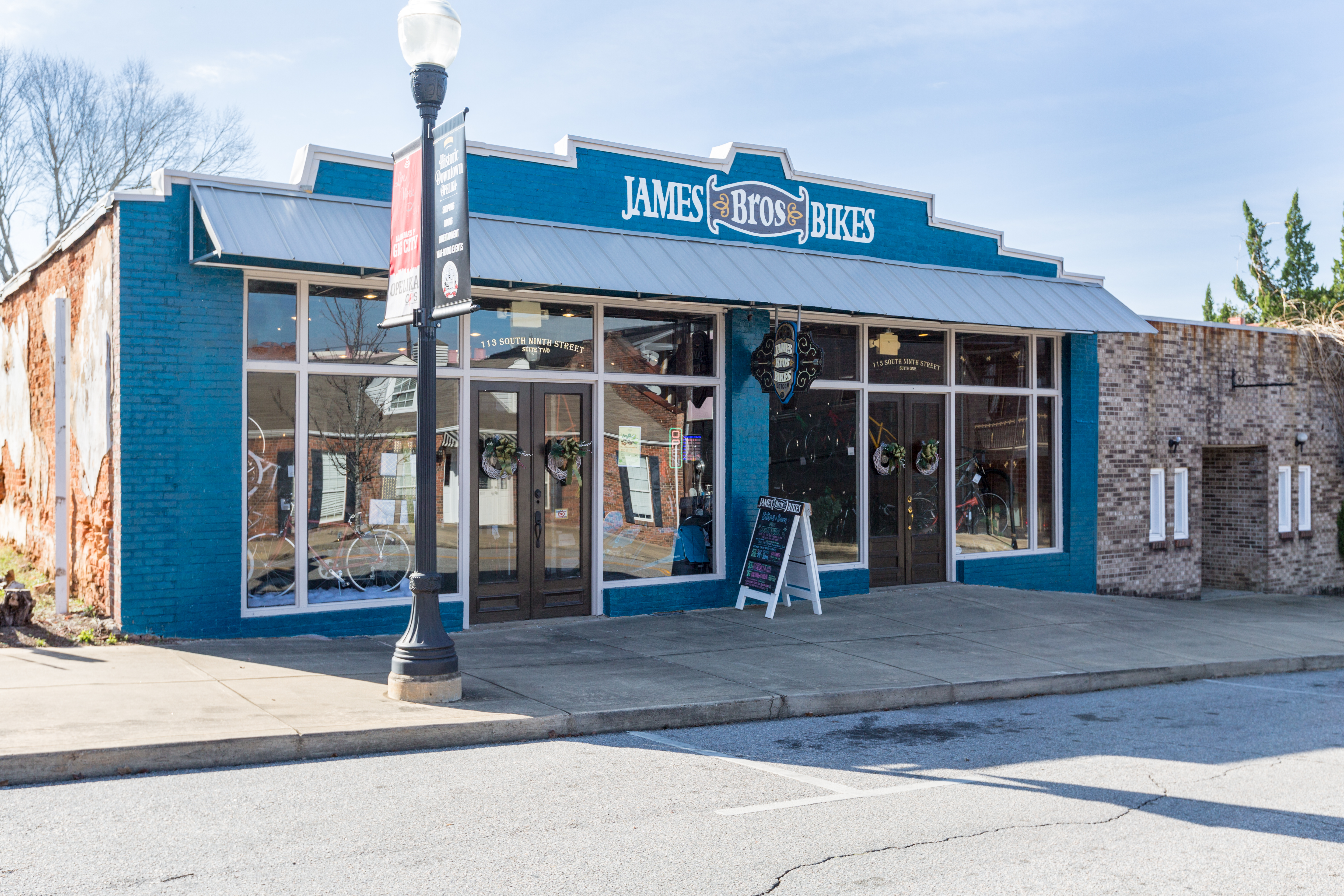
A phrase I hear multiple times during a long conversation in a 150 year-old restored warehouse. It echoes throughout the building and the 10 surrounding blocks of what was once a sleepy Alabama town. It’s no coincidence that the man behind that phrase is driven by a greater purpose and conviction to redeem that which was broken. It’s the story of his life and the story of the 200 or so buildings he’s restored to change the future of Opelika, AL.

Meet John Marsh, serial entrepreneur, CEO, and founder of Marsh Collective. Passionate about bringing about redemption and restoration to people and places, John and his team see value where others don’t. Taking what they’ve learned from their experience turning Opelika into the Gold standard for small town revitalization”, they are in the midst of restoring cities and helping people with a redemptive vision for companies, all over the country.

We sat down with John to hear more about decades of learned wisdom around business and life. Thankfully for myself, (and anyone reading this) I didn’t have to dig too hard to find gold.
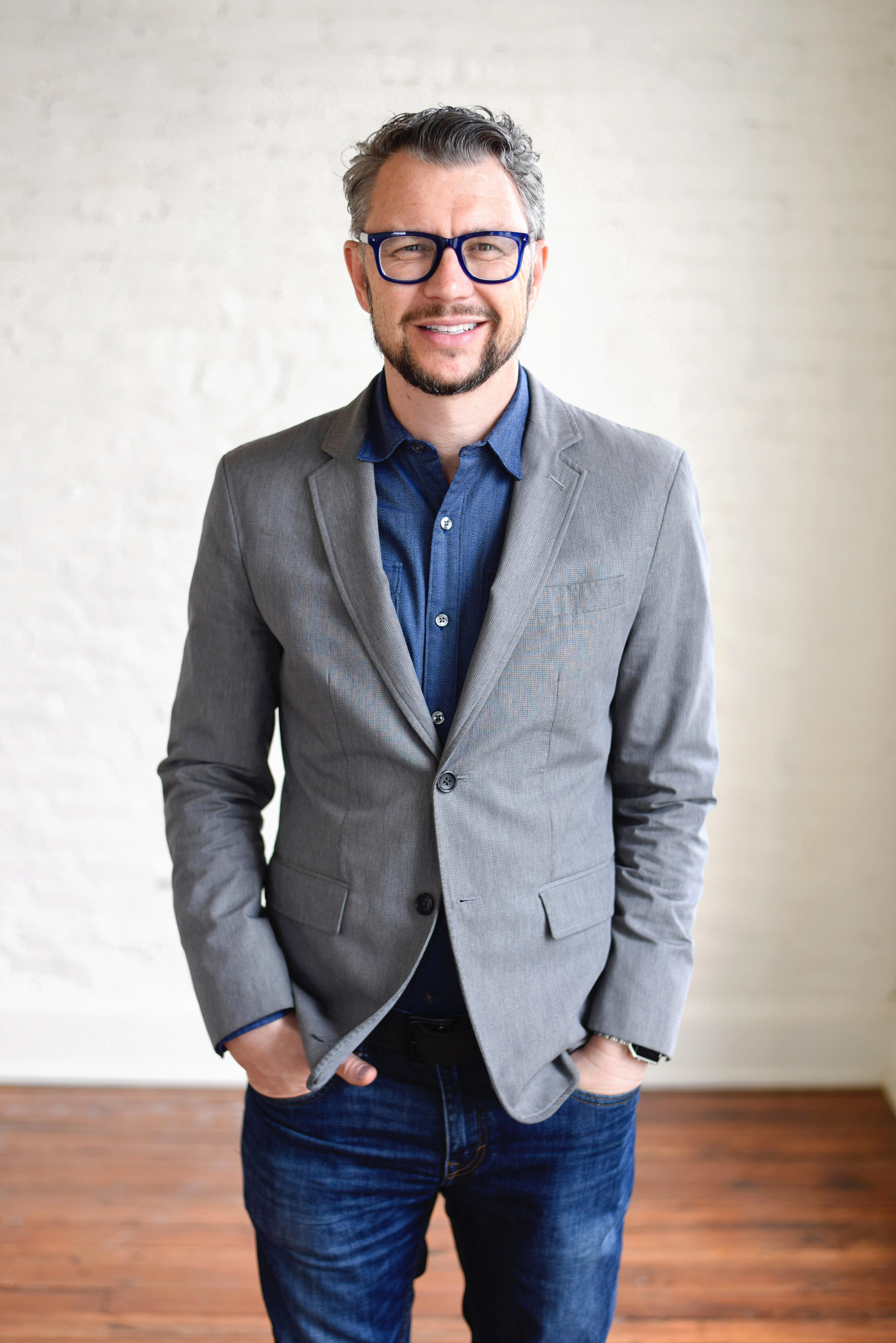
John Marsh

CEO and Founder of Marsh Collective

Opelika, AL

Tell me a little bit of your background. How did your upbringing influence your desire for entrepreneurship and redemptive work?

My parents tried for 13 years to have a child, couldn’t and adopted me. My mom had so longed to be a mama and I think that had huge impact on me. A lot of kids don’t have this growing up but my mom and dad told me growing up, “You can do anything. You’re amazing. You‘re a world changer.” and I believed them.

I didn’t really fit in school.  I made decent grades until I started chasing girls and lost my mind. I can remember feeling a call on my life all the way up until I did something I thought God and my parents could never forgive me for. I stepped across the line with a little girl. She was 12 and I was 13. I rode my bicycle to her house and we slept together and it changed everything. Once I began to rebel, I didn’t stop rebelling until it hurt too bad and cost too much.

So I had a huge benefit of a mom that loved me. I had this situation that happened to me that caused me to rebel, and by 17 years old I tried drugs for the first time and I was a drug addict until I was in my early 20’s and found myself at a really deep place.

One thing I can tell you is that we don’t change till it hurts too bad and costs too much and for a lot of people that’s slow. For me, I went fast. My dad said, “Son, you are going to have a lot of problems because motion creates friction and you want to go fast.”

So I ran into a wall at 20-something years old. My wife and I were going through a divorce, I was $1.5 million in debt, $99,000 overdrawn. I was about to hang myself and my whole life was transformed. God came and touched me and I wasn’t looking for Him. To be honest I wasn’t looking for anything, I was just in so much pain.

I kept hearing, “Kill yourself” and God kept going “die to yourself” and it sounded so simple. So instead of taking my life, I laid it down. I was absolutely transformed.  Lightning struck me and every hair on my body stood up in two hours for the first time in my life. I didn’t feel the weight, the pain, suffering, the regret I felt. I felt free. I came out that place forever on fire for the work that I was going to do.

So having someone that loved me so much with unconditional love and then crashing my life extravagantly early were two things that deeply impacted me in the work I’m doing.

There’s a creator and man plans his ways but God orders steps. And so everything I’m doing today came out of tremendous pain and brokenness. There’s beauty in broken things and I can say that and have hope because you comfort others with the same comfort you’ve been comforted with. That’s the story for me.

How many businesses since that time frame would you say that you’ve started or been really involved with?

40 something.

Ok. Wow

That was a learning process. I felt like I was running for the longest time what I called a rent-a-dream program. You’d have a dream and I’d be like, “Oh, let’s do it!” It was good because I learned about startups but it was hard because I had some real mistakes.

Number one was I thought that if you don’t think you’re anything, you’ll think that if you accomplish something, anybody should be able to accomplish it. I missed the fact I had unique giftings that allowed me to do some things that I thought anybody could do because I misjudged my own giftings.

So if you don’t know yourself, you can’t grow yourself and you don’t see the world as it is, you see it as you are. That cost me millions of dollars and cost us years of our life.  It was painful.

When did you find out what you’re really good at?

Six or seven years after being born again. First work I ever did was in the high-end audio business.  I owned a high-end audio business, did high-end car stereos. Then I went into automobile repair business building totals and had a salvage yard. Then I went in the restoring historic houses business and moving historic houses.

I started thinking, “Well, I’m gifted with my hands. I know how to work on stuff and I have a vision to get the stuff done, maybe I’m good with my hands.” That was true. I was pretty good with my hands, but that wasn’t it. So I had to start peeling back the layers.

What’s behind everything you’ve already been successful at?  There’s some real core things behind it and it’s hard to get to them. People wonder, “What am I good at?” The question should be, “what is it you’re made for by God that ends up showing up in the things you’re good at?” That is the question behind the question.

My unique gift is a gift around miracles. I love them. I want them in the lives of other people and in my life. My purpose is that people love Jesus more because they’re with me and that I leave a legacy on the hearts of men. When I’m doing that, whatever I do, I can’t lose for a minute.

I should have been bankrupt, drug addict, homeless and divorced.  I was saved at a very high price. That’s what I’m about and what I’m here for. I’ve been spending 80%+ of my time doing exactly what I’m really, really gifted at and it just keeps propelling.

I’d say I feel like a mosquito in a nudist colony. Every day is full. I’ve had so much fun today in every conversation, and every person I meet. Because I’m built for it and it doesn’t drain me, it restores me.

Going back to this number of businesses question. Of these 40, what was the general motivation behind all of them and did that change over time?

It really did. It started when I was looking for meaning and purpose and the feeling of doing something. Then money started coming in and I was looking for money. Money is a physical way you can measure someone’s belief in what you’re doing. It gave me some way to assess value to the things I was doing. I became hungry for that.

But then it changed and what was once my value, I became a victim to it. I had to learn that money has laws and principles around it. Still today, I care less about the money in the work we do than I do the meaning. I struggle often times charging enough, or scaling in the way exactly we should because I can’t think of a business I built for profit. We don’t grow tired of hard work, we grow tired of meaningless work.

I do it, not just because I need the money, I want stories.

I want to know how my life has impacted someone else so that living this thing well it is a bit of a testimony to the fact that it was worth the great price that was paid to redeem an idiot. So that’s what I work for, the stories of somebody who was impacted. It’s the value that was added to them and then they saw the world differently and their lives became better and that their children’s children may be different.
What has been the most challenging business opportunity you’ve taken on and why?

I think the most challenging thing is what’s been a part of a couple of businesses and that is the fact that money and economic principles are things like gravity – you can’t ignore them. I’ve had to learn without going to school, I’ve had to learn how to be thoughtful and disciplined in the accounting, operations and team-building and building a platform and not just products.

In the beginning, I would find the need and build what people wanted. But over time, I’ve needed to build a platform. So our platform is the accounting, HR, compliance, marketing – all these back-end systems and a team that are available to do whatever we’re doing. So if I’m going to start a restaurant, I’ve got the platform. If I want to start a car wash, I got a platform. If I’m going to start a technology company, I’ve got a platform.

So taking the time to do that and the sophistication of what that really looked like took a lot of time. My focus for the last 3 years has been to have my team ready for this next season. We’ve got new dreams. I’ve got a vision of new things I want to do and I want to add value to more people and make a difference on a different level. We are going from stewarding a city to stewarding cities.  We’ve had to retool to go from the work we did here with over 200 properties in our city and starting these 40 businesses to now helping 7 cities.

It’s funny. Every 7 years or so, I just had to retool and learn again. It’s really been difficult. You better love learning and changing and having to kill those old ideas and stuff you hung on to so dearly. So that’s been the hardest thing as building a platform. Building products and doing diving catches with smart people was easy.  To build something that will work and where everybody’s not doing diving catches every day to make something run is a completely different set of skills.

“I do it, not just because I need the money, I want stories.  I want to know how my life has impacted someone else so that living this thing well it is a bit of a testimony to the fact that it was worth the great price that was paid to redeem an idiot. So that’s what I work for, the stories of somebody who was impacted. It’s the value that was added to them and then they saw the world differently and their lives became better and that their children’s children may be different.”

What was the most common business advice you got when you’re in your 20’s? I’m guessing it had to be something like, “you need to focus on one thing and do that really well”?

I got that all the time and the fact is it looks like a failure to be as curious as I was. Nobody would have picked me to be somebody who has been able to do what we’re doing.

People would say, “You’re doing stereos? Man, there’s no future in that.  You’re going to be on somebody’s couch at the rate you are going.” Or “So you’re fixing up these junky houses in the hood? Who wants to live in the hood? That is dumb!”

You see what I’m saying? All along the way my heart was pulling me and I feel that you shouldn’t get trapped in how you use it. There’s gold in every person I meet. The key is digging for it. And once you find it, how do you use the gifts you have across multiple things not being trapped in a vertical of a career, but working skills and giftings? My love is for people. If I put this love I have for people in their growth, it’s going to grow.

The worst part of a gift is when it is unrestrained. The power is in focus, and so I would say focus on the gifts and not on the career if I can recommend something.

What’s it like to work for you?

First, I’d say it’d be hard to be on the other side of me. I don’t know but I don’t feel like most people feel like they work for me. I feel like they’re going with me. I don’t want it to happen to them. I want it to happen for them. But people tell me it’s exciting but exhausting.


I would think and I hope that it’s an environment where growth is modeled and expected.   People who have moved on to other things have told me how much they miss growing like that.

In your mind, what makes a great business leader?

I think first, you’ve got to know who you are. If you don’t know yourself, then you are going to be deceived. If you don’t know yourself, you are going to hurt people.
The second key is there needs to be some way to complete people and not compete with them. Most leaders compete with the rest of their team for who’s the most valuable, but when the leader feels like he’s the most blessed guy in the world to be with these folks, it changes the game.

I think leading the business is like a marriage. I tell people, “So, you want to know if I’m a good husband? Look at the face of my wife. You look in her eyes and if something that doesn’t look incredibly different, and no spark there. I’m not doing it. But I tell you what, if she looks loved and believe me a lady that’s loved look different.” The yard that looks loved looks different. Pick-up trucks that look loved look different, right?
Love is a difference-maker. So a leader without love, I think, can’t build anything great. He’s got to love his people.
What’s the greatest business failure you’ve experienced to this point and what did it teach you?

It’s hard to pick one. There’s such a big list. I mean we could do a whole series on this. It’s the fact that I went into business with people that I loved and were my friends and it didn’t work out and I lost the relationship. It’s happened a couple of times and I miss them dearly.

I still grieve it. I still grieve at people that I loved and the relationships I lost.  That may not have been lost if we didn’t do business together because it’s a volatile environment. Sometimes there’s no coming back from big business losses. Somebody’s got to be blamed.

What have you learned about choosing the right business partner or person to do business with?

I’m no expert on this. I’m an amateur. But with business, there’s got to be this common ground of a couple of things that are core.  I heard this teaching that TD Jakes did which really touched me. He said there’s confidants, constituents, and comrades.

Confidants love you and all they really want is you. They don’t want anything else and if you give them that they got what they want.

Constituents love what you love, and as long as you love what they love, they love you.

And as long as you’re going where they want to go, but if someone will take them there faster than you or loves it more than you, they’ll leave you.
And comrades hate what you hate. As long as you hate what they hate, they’ll hate it with you. But the minute you stop hating what they hate, they’ll hate you. I’ve learned that.

So I want people that love me, because I love them.  If I’m going to ask somebody to do business for me, to be a partner, I have a love for them. It’s like asking somebody to marry me. Love is the key. Love covers a multitude of sins. Love never fails, right? Powerful tool. I can’t say I got it down, but I’m trying. I mean, I don’t partner quick now.  I’m slow to partner.

What are some of your daily rituals that are really important to you getting things done?

I have a system that is called measure-manage-multiply, and it’s like a multiplication mindset. It’s based off of the idea that if I can measure something and I manage it properly, there’s power in multiplication.

I’ll give you an example. I started food journaling every piece of food I put in my body, I began to manage the type of food that I ate because the awareness came to it. And now it’s a multiplication factor in my life that I’m able to run with an energy source that most people at my age don’t have. They don’t feel like I feel. I’ve got almost abundant energy doing things I want to do.

Another way is I know what times of day I do what I do best. So my day is divided into three kinds of segments. The mornings are for practices. These are the things that don’t have an end. Reading, writing, filing, meditating, studying. That’s followed by some exercise because this body is built to move. Then I transition to some basic tasks like working on contracts or with different clients. The last part of the day is relationships, which is why we are all here.

It’s a big deal. Your daily disciplines determine a lot. When you look at my daily disciplines, they are aligned for success. My day is planned. I’ve got a hundred and sixty-eight hour, one-week framework and it has every category of everything in it. How much I want to sleep, how much time I want to spend with my wife, and how much time I want to spend with my boys, etc.

It’s all in there and then I just try to optimize to that. I could leave it to accident. I mean that’s how I used to live but an accident doesn’t work out that well. If they’re accidental, the results are accidental. I want to be intentional so I can get intentional results. I’ve been gifted this unique opportunity called life. I was born in America. I hit the dang lotto.

You’re designing all kinds of different environments and restoring a lot of stuff. What has been a big source of inspiration for you from just a creative design standpoint?

Huge one, Walt Disney.  He said you need a critic and an optimist and a realist and in every conversation to make good decisions. So I surround myself with that at the table.  But he’s inspired me because he said the artist should go first. Artists would paint something and he would force engineers to build to the art instead of the art built to the engineers.

And so I really use that as a continual thing. I’m not worried that people can’t build that and there’s more. We’re starting out with a design that makes my heart sing and will work back off of that.

So with your experience in restoring downtown Opelika and making that into what it is today, what are a few takeaways that someone should know from your experience doing that and what really mattered?

The overarching “why?” when looking back is God cares about places.  He said, “Go to Babylon and make Babylon flourish.”  So I believe flourishing is important for people and places. As far as some of the lessons I learned, there are 3 questions I wish I would have known in the beginning of doing it that I know now:

Who are you? Who do you serve? And who’s going to pay for it?

So, for who are you, Opelika is finally being itself instead of trying to be Auburn.  We’re funky. We’re artful. We’re food. We’re building and making things and we’ve got historic buildings in Opelika. Auburn is not that. Auburn is students.  We complete not compete.

So, for who do you serve, we serve people who want refined experiences or unique experiences. We are not franchised. Nobody goes to a city and says, “I had the most amazing meals at this place called Ruby Tuesday’s.” Nobody says that because it’s not awesome, right?

And then the third thing is who’s going to pay for it. We know that to build things, you got to have capital.  Capital should be patient, properly aligned and productive.

The number one mistake I made was believing renovation was revitalization and it’s not. So we renovated all the buildings and nobody came. Number two mistake we made is believing that once we built all this stuff – the city, or chamber, or somebody would come along and lease it all and I learned that cities are like wheelbarrows, somebody’s got to push them.

And then third thing is you can’t have this big dream without the right team and I didn’t know who was on the team. Now we say its patrons, proprietors, pioneers, visionaries, (which is the role we play most of the time) stakeholders, storytellers and salesmen are the minimum viable team it takes for saving a city. And so those are some of the biggest takeaways that I learned early on.

Why did you start your podcast (Redemptification)?

I said what if I could let other people be a part of the conversations I’m having and the people I’m meeting?  I mean, they’re dropping wisdom on me like rainwater. How do I let other people be in this? So that’s the reason.

I don’t want the biggest thing that people see about us to be what we have online or what’s in the videos. I want to be bigger on the inside than I am on the outside.

What are some of the filters or thought processes you used to decide whether or not an opportunity is worth pursuing?

It’s a really big deal and it’s really great question. Opportunities are everywhere, especially if you’ve longed for opportunities your whole life. And when you get them how do you have a way to filter those? Because everything you say yes to, you’re saying no to a bunch of stuff.

So now, if all of my team doesn’t sign off, or if Ash doesn’t sign off, (she’s got the veto power over everybody) And then if my mentors don’t give it a nod, then I don’t do it. I don’t care what it is. It’s like a board of people who see the world differently.

I’ve spent a lot of my time trying to sell things I want to do but it’s been helpful. There’s no telling what would happen if I did everything I want to.

What are the next 3-5 years look like for you? What are you looking forward to in this?

We’re looking for more margin: financial and time. We’re going to say no to a lot more and yes to a lot less. We’re going to do more convening here in Opelika more because I traveled 150-something days last year. People want us all over America but I want to all of America to come here. So we are starting to say if you want what we have, you’ve got to come here.

I’ve spent a lifetime doing push-ups, getting content distilled into things that really do work. So starting to get that down and transferring it. We will be selling some companies and transferring the leadership of the day-to-day operations to Ty, who I’ve been mentoring for about 8 or 9 years.

Once that’s lined up, I’m planning on pressing the gas heavily, you know. I’ve got a lot of dreams and we haven’t even got started with the stuff I want to do.


For more information on John and Marsh Collective, be sure to check out the following:

marshcollective.com

Redemptification Podcast

Simplicity, Steve Jobs, and Creating Unforgettable Experiences: A Conversation with Blake Smith of Walden Retreats

I find it fascinating that everywhere around us, you see people striving to live more simply. It’s taken hold of just about every aspect of our lives whether it is the food we eat, the clothes we wear, the technology we use, the things we do in our spare time. Seriously, think about it. At what period of time would you ever find people obsessed with sparkling water with subtle hints of passionfruit and no other ingredients.

I’m not sure if the pursuit of simple is a fad, but I do think there are deeper motivations behind the attractiveness of the idea. There is real beauty in simplicity. I’m not referring to being simple minded, but rather distilling the complex into the simple. It’s what made Steve Jobs and every single Apple product so genius. He understood what people wanted, how they wanted to interact with technology, and most importantly, how to think through every little detail and present in a way that could be easily understood and enjoyed.

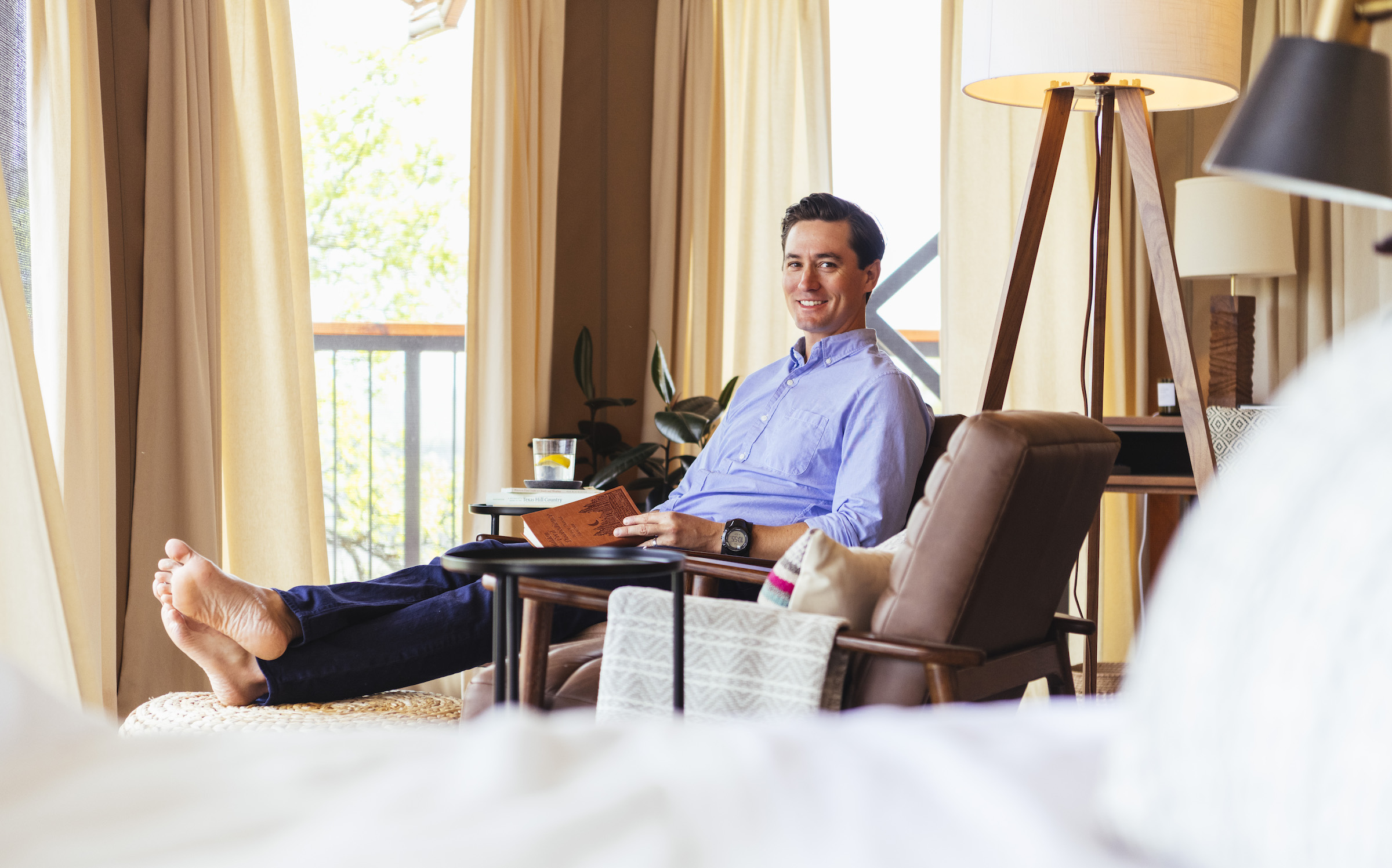
Walden Retreats is not only a concept that taps into our desires to live more simply, but it is a business built on thinking through thousands of details and distilling those into a relaxing weekend getaway. Spend any time with their founder, Blake Smith, and you will quickly realize his precise nature permeates throughout the beautiful, African inspired lodges that sit on the grounds of Walden Retreat’s first property.

Pretty early on in our conversation, I realized how thoughtful Blake had been in planning the entire business.  He went into great detail to describe every minute required to run Walden to the point that I now know how long it takes to vacuum each lodge (it’s 15 minutes by the way). Impressive? Yes, but not as impressive as the desire to do all of this in order to give people an unforgettable experience. I was fortunate enough to spend some time with Blake to get a behind the scenes view of what inspired Walden and what he is learning about turning the complex into the simple for everyone else to enjoy.

Blake Smith

Founder & CEO of Walden Retreats

Austin, TX

How and why did you start Walden Retreats?

The why behind starting Walden has both personal and opportunistic components to it.
Personally, I was looking to start a business that would fully utilize my strengths and passions. I am an outdoor enthusiast with a passion for building and creating things that other people enjoy. I have always enjoyed hosting people and providing environments for them to create memorable experiences in. So, hospitality seemed like a natural fit. I spent just as much time thinking about what I was meant to do in this season of life as I did thinking about what good opportunities were out there because I knew that if I wasn’t fully committed to it that it would never fulfill its potential. Fortunately, I feel like I found a once in a lifetime opportunity that is both personally fulfilling and has a lot of exciting potential in front of it.

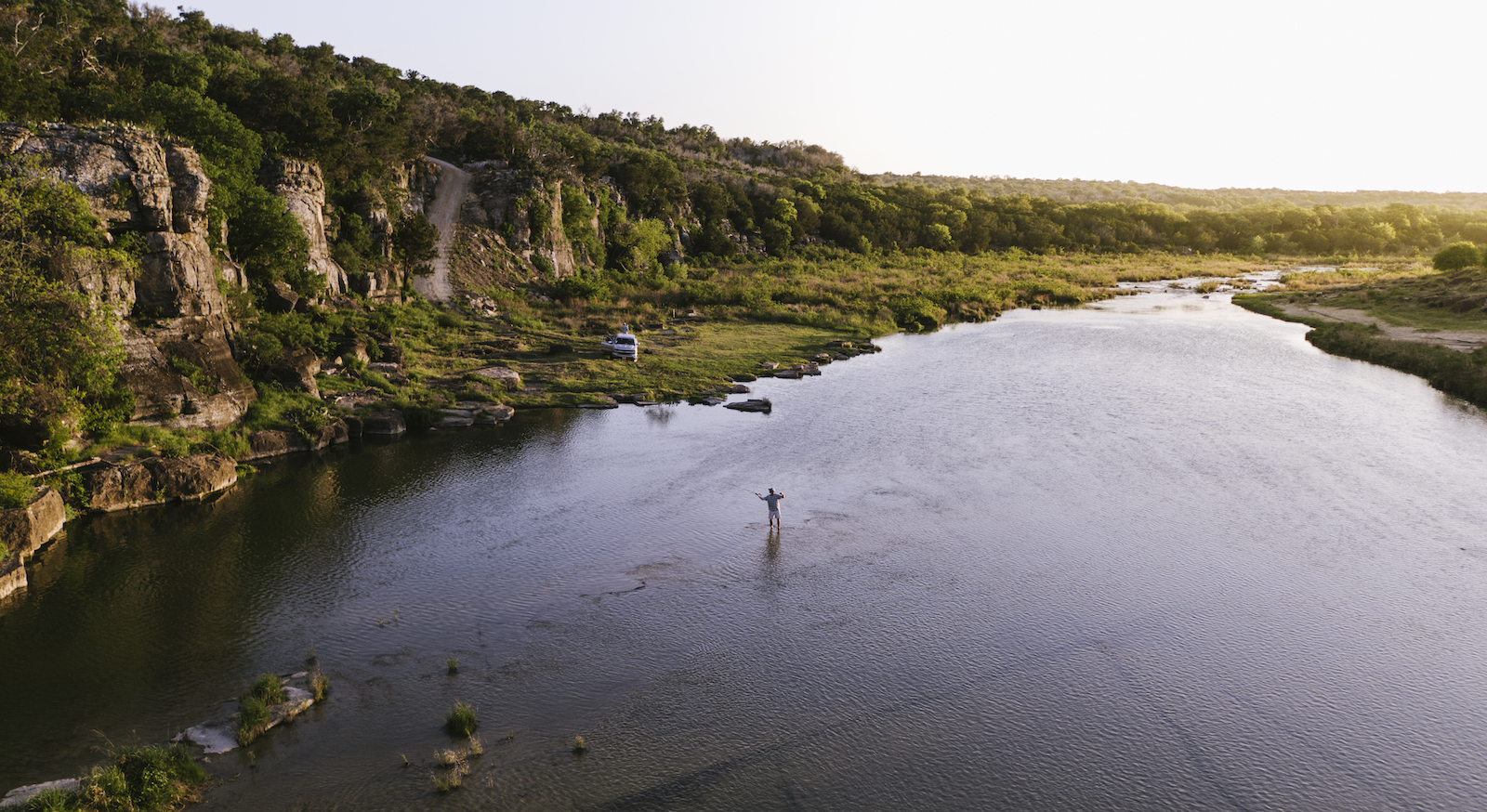
On the opportunity side of things, the concept for Walden took shape during my time at the Acton School of Business in Austin. Prior to school, I worked for 6 years as the co-founder and Executive Director of a social enterprise in Uganda called the Akola Project. During my time there, I traveled to many of the eco-lodges and high-end safari camps throughout East Africa and wondered why there were not more unique lodges like that in the US. When it came time to come up with a business idea to pitch during my venture class at school, I began researching the glamping trend that had started to catch on in the States. What I found was that a lot of the sites that were being started, were mom and pop type of properties without the style, refinement or attention to detail of a high-end hotel. In fact, there were only two other multi-site glamping brands, both of which had properties in hard to reach places like Montana, Colorado or Utah. I felt like positioning exquisitely designed properties 1-2 hours from major cities would provide people with an easy and convenient way to have an outdoor experience.

At the same time, the concept of giving people an easy, comfortable but real outdoor experience made a lot of sense to me. We live in such a nonstop world these days that finding time to slow down and really reflect on where we are going in life seems harder and harder to do. Camping is one of the best places to do this and I just didn’t see why getting out into nature meant that you had to spend hours packing up gear only to sleep on the ground and not take a shower for three days.

After school I began talking with industry professionals, friends and potential investors to get their input. I got a lot of positive feedback and decided I wanted to give it a shot. From there I began looking for properties around Austin and raising seed money to get the first rooms built and test the concept. Getting a prototype up and running quickly has proven extremely valuable.

And by prototype, you are referring to your first location outside of Austin, right?

Yeah, you could look at it as a prototype. Right now, it’s just two rooms, and two rooms are never going to make any money. We will have to get this property to 16 or more rooms and have it pretty full for it to work out. But building two tents was important because a lot of people don’t really understand the concept and what the tents would look like. Having something that people can physically see and touch has really helped us learn a lot about what it costs to build and how to do it right. Most importantly, I also think it has given us a lot of good input from customers.

So, would you say it’s been a relatively cheap experiment or has it been more than you were expecting to spend?

I would not call it a cheap experiment but in terms of expenses, we were actually pretty on point with our budget. I spent tons of time, researching every little detail that was going to have to be done, every piece of furniture that was going to go in the room, how much it would cost, etc.

We went out and raised about $900,000 and a good portion of that was to put a down payment on the property. So, we’ve got equity in the land alone, but I’ve made sure to mitigate my risk by making it a really attractive piece of property in case it doesn’t work.

You mentioned a lot of things taking shape while you were at Acton School of Business, what class did you away take the most from during your time there?

100% “Customers” class. I am definitely a believer in the idea that if you don’t have customers you don’t really have a business, you have a hobby. Because Walden is a “build it and they will come” idea, I had to offset that by really understanding what people wanted to do and would pay for. I knew something like Walden alleviated a lot of barriers for people to go camping. I also knew that in order for this to be successful it had to be a dramatic place and it had to be visually attractive to people.

Initially, some people said, ‘Why don’t you just go get some really cheap piece of land, lease it from somebody and put up a couple tents there to see if it works.’ I knew doing it that way wouldn’t be a great way to test demand because I didn’t think people wanted to pay for that kind of experience. I think you’ve got to give them something that’s really enticing and unique.  All of these thoughts and ideas were coming from assessing and understanding what the customer wants which is all part of what I learned during that class.

How many people have stayed at the property at this point?

65, and our calendar is pretty booked up already. I think we have one or two weekends available throughout the rest of the year. It’s pretty much been that way since three weeks of opening.

That’s impressive for such a short period of time, and it seems like you’re really onto something. Up to this point, what has been the most rewarding aspect of running Walden Retreats?

Getting to see the expressions on the faces of our guests when I show them into the tents and knowing that they are going to get a weekend they won’t forget. One of the key reasons I wanted to get into the hospitality business is because I’ve always gotten a lot of pleasure out of getting friends and family together and providing them with a good time. So, to be able to do something that I enjoy and that gives joy to others is really amazing.

What does a typical day look like for you?

I typically wake up around 6:30, have some coffee, and plan my day before having breakfast with my wife and son. After that, there’s not really a “typical day” but I do have a pretty typical week. Mondays I am out at the property cleaning the rooms from the weekend and doing various maintenance projects. Tuesdays I’m in the office communicating with guests, planning for our Phase 2 expansion and managing the typical administration of the business. Wednesday-Friday I’m out checking in guests and cleaning rooms. Every evening from 7-10 I am keeping up with emails and other admin work.

Is that the kind of day or week that you envisioned when you started this business?

Yes, but I did not expect it to be this busy this soon. Now that we have a pretty full calendar it’s great because I know exactly where I have to be on what day.

In the planning process of the business I thought through how every little thing would affect scheduling. For instance, “When do people want to check in?”, “When do they want to check out?”, “How long does it take to clean the room?”. I seriously went through and timed out how long it takes to change the sheets, vacuum the room, etc. I definitely did this all with a lot of precision.

So, we had to think through all kinds of logistical details about how to make sure that the first guests get a really great experience. I also wanted to make sure that we wouldn’t treading water, making it up as we went because we didn’t have a plan.

What has made starting a business like Walden Retreats more difficult than you expected?

Starting a business from scratch in Uganda was far more difficult than what I’m doing now and really prepared me for the journey that I am on with Walden. One thing that is especially challenging is the sheer number of decisions that I have had to make on my own over the past year. At times, it can feel like an impossible burden not only because is it mentally draining but also because the potential for the business to succeed or fail comes largely from the decisions I make.

For those of us that are unfamiliar with Akola project, what was the goal of the social enterprise and what lesson learned from that venture has helped you the most with Walden?

The goal, well, we didn’t really have one. That was a huge lesson learned.

To summarize, when I came into the organization, the founder was helping provide the resources to build an orphanage for a local facility in Uganda. When I came in to help finish that project, we began wondering if we should be doing something more. We met a few people who proposed the idea of us teaching women to make jewelry so that the organization could be more sustainable (keep in mind this is right after the crash of 2008 and it was very hard to raise money from donors).

The goal turned into making the organization more sustainable and to work with women or people in a better way to provide income and other benefits. However, we didn’t have a very clear vision of how to do that. When we would hire people, we’d give them a long, complicated explanation of our vision, but it wasn’t very distilled into something people could easily understand. Having that kind of clarity is critical for people to know what they are working towards every day.

You have to have a vision. You have to have it in writing. People have to understand it, there should be no confusion about it. That predicates and dictates everything else you do.

When thinking through Walden, I spent a lot of time doing that. And even though it’s a new company, it’s there. It helps inform what I do, what it’s going to become and it really casts a path forward.

Is social enterprise something that you ever see yourself going back to or is what you are doing now satisfying that itch that initially drew you to social enterprise?

I loved the work that I did overseas because I was serving people in a much different way. What we were doing was radically changing lives by giving someone a job and income. It was an amazing thing to be a part of and I feel super lucky and fortunate to have been put in that spot. It’s hard to find something that is so crystal clear as to why it matters. I never had to ask myself “Is this worth doing?” But being in hospitality and giving people a really unique experience that they cherish, but also need, is fulfilling and rewarding. I know that people are able to relax, unplug, and have important time together during their stay. That’s all really fulfilling to provide in its own right

Who/what have been the inspirations in your life that have pointed you in the direction to where you are today?

My favorite inspiration as it relates to entrepreneurship is from an interview with Steve Jobs back in the 90s where he states that “Life can be much broader once you discover one simple fact: Everything around you that you call life was made up by people that we’re no smarter than you and you can change it, you can influence it, you can build your own things that other people can use.” I find inspiration in this for a couple of reasons. First, it’s 100% true and it tears down the idea that you have to be super smart or from a certain background to succeed in business. As I have learned and I think many other entrepreneurs will tell you that having courage, persistence and always be willing to learn new things along the way is far more important and something just about anyone can do. Secondly, it frames life as a world of endless possibility and that we can change what our lives become.

A last source of inspiration is a quote from Teddy Roosevelt that says “Far and away the best prize that life has to offer is the chance to work hard at something worth doing.” I really like this because too often I get the impression that working hard is somehow drudgery. I see work as a natural expression of one’s skill and talent and could find nothing more important than to exhaust myself with the one life that I’ve got.

What are some of your daily rituals that are really important to you getting things done?

This year I purchased the Productivity Planner and it’s been life changing. As the lone employee in the company, there is just never enough time to do all the things I’d like to in one day. So every morning I take 10 minutes to write down the 5 most important tasks I’m going to work on that day and commit myself to achieving them before working on anything else. It isn’t always perfect but this process has reminded me that all mountains are climbed one step at a time through small actionable steps.

I have also made it a habit of exercising 3 days a week. This is really a must for me just like eating or sleeping. I’m really not my best self if I don’t exercise, and re-committing to this has been a really positive decision for who I am at work and at home.

How have you learned to balance the demands of your career with demands of family/personal life?

I see everything through the lens that life is a never-ending learning and refinement process. So, as it pertains to work/life balance, I’ll happily say that I’m still learning but here are a few thoughts. I don’t believe in work/life balance in a strict sense, but rather see life the same way the seasons move throughout the year. Sometimes there will be months or years that require sacrifices to be made to personal or family time for the sake of the business. I’m willing to make those sacrifices because I know the why behind what I’m doing and have had many conversations with my family about it. We have a 1-year old son and my wife has a business of her own as well so it’s been a steep learning curve for us on many fronts. But, we know the goals we are working towards and why they are worth sacrificing for, which always provides perspective when we go through tough seasons.

Wow. Two businesses in one family. Just curious, what is her business?

Sarah has a home goods company, Ara Collective, in which she works with artisans from around the world, specifically those in Central and South America and some groups in Mozambique. She takes a lot of their traditional crafts or weaving techniques in just redesigns them to fit a more modern home.

What one thing are you really into right now?

The Ketogenic diet. It’s had a profound effect on my energy level throughout the day.

Ideal weekend road trip?

I’ll keep it local and share a few of my favorite spots around Austin. First would be a stop at Salt Lick BBQ in Driftwood followed by an afternoon at Hamilton Pool. Then heading over to Jester King for some large format beer and pizza. I’d then drive out to Walden to spend the night and spend the next day visiting wineries along the 290 wine trail. Capping off the weekend would be a concert in Luckenbach.

If someone should know anything about your experience starting Walden Retreats what should they know?

It’s been a lot of fun and I have learned so much along the way. To get to do something that I love, that gives others joy and is always an adventure has been a tremendous privilege. It’s not always easy but knowing that I am working hard for something I believe in has made all the difference. One key lesson I learned in business school is to begin with the end in mind. I took a lot of time to write about what I wanted Walden to become in 10 years and really put my vision into words. While this is certainly nothing more than a prediction of the future and things certainly won’t go how I plan them to, it sets the path for the journey and always gets me back on track when I get lost.

Last question, any next location or plans that you can share as far as what the next year or so might look like for Walden?

No other locations that I can say with any confidence, but right now I’m working on a plan to expand the property into 16 rooms. We will probably have a pool and a pavilion for events, weddings and even corporate off-site weekend retreats and meetings. I plan on developing the property into a fully developed lodge and running that for a couple years so that I can use that as a template for other places.

I think the next location that comes to mind is Atlanta because I’ve lived there, I’m familiar with the area and you can get up to the mountains within an hour or two, so it checks a lot of those boxes. There’s also not really much in the way of this type of experience around there either. However, we’ve got to make this first location top-notch before we think about other properties.


For more information about Walden Retreats visit their website at Waldenretreats.com

All pictures credited to William Graham Photography